The first stop on our tour of Lecce yesterday was the underground Jewish Museum. It is underground because a private palace and the huge Baroque complex of the Basilica of Santa Croce were built over what was believed to be the city’s only synagogue in the Middle Ages.
The synagogue, along with a thriving Jewish neighborhood of 1,000 residents, vanished in the Inquisition around the middle of the Sixteenth Century.
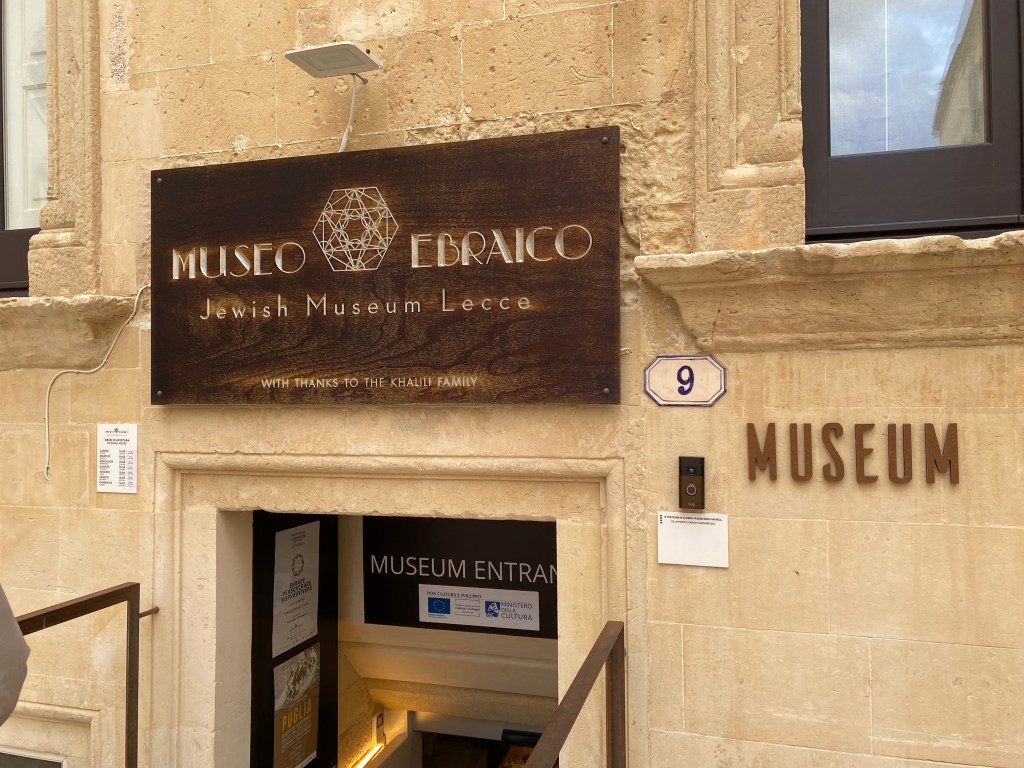
Our tour guide, Max, told us something I found even more remarkable: There are no Jews living in Lecce today, he said. In any case, Wikipedia says Italy has about 27,000 Jews, less than 0.05 percent of the 58 million people living in Italy.
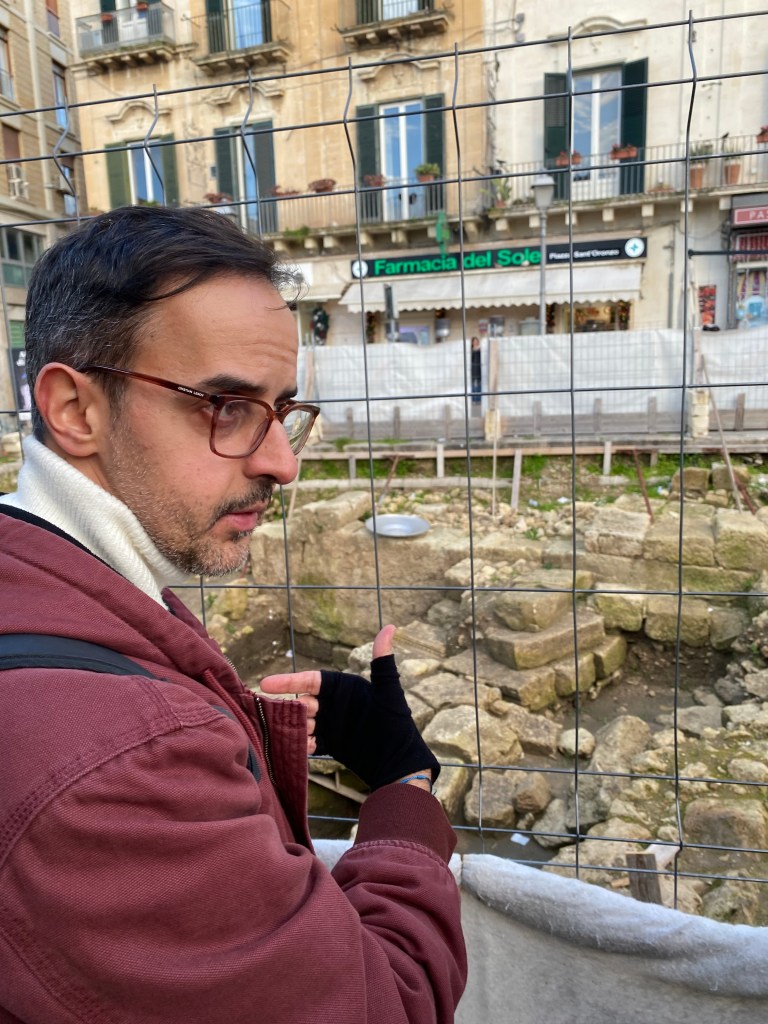
It’s not that Italy isn’t welcoming. Rather, this crossroad peninsula between the Adriatic and the Ionian Sea has been layered by a long history of conquest, expulsion and settlement. The Roman Empire has been dug up in the center of Lecce with parts of an amphitheater (a stone stadium for gladiatorial spectacles) and a Greek-style theater. Even the Normans (the tall blond conquerors of England in 1066) invaded and ruled here for nearly two centuries.
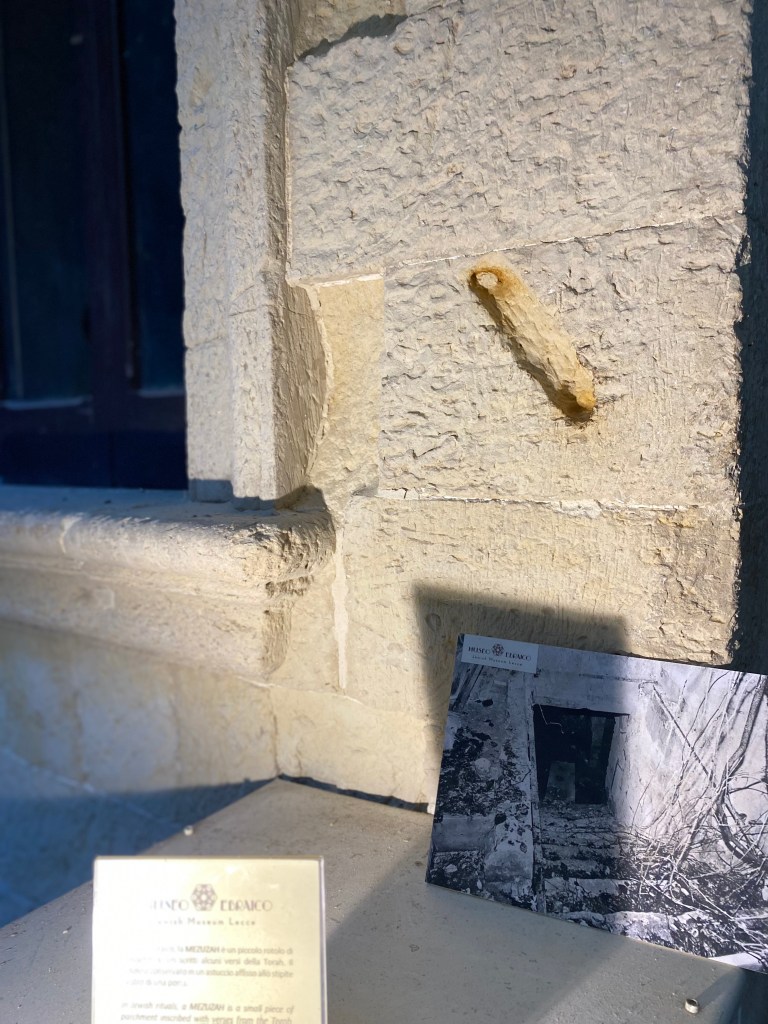
So, deep in the Jewish Museum, we saw two stone receptacles thought to have been used as mikvaoth baths, for ritual Jewish cleaning. Outside, almost no signs of the old Jewish district remain. In a small hollow niche in the palace that houses the museum, Max tells us, was a Mezuzah, the scroll of scripture that Jewish families keep attached to a doorway to bless the home.
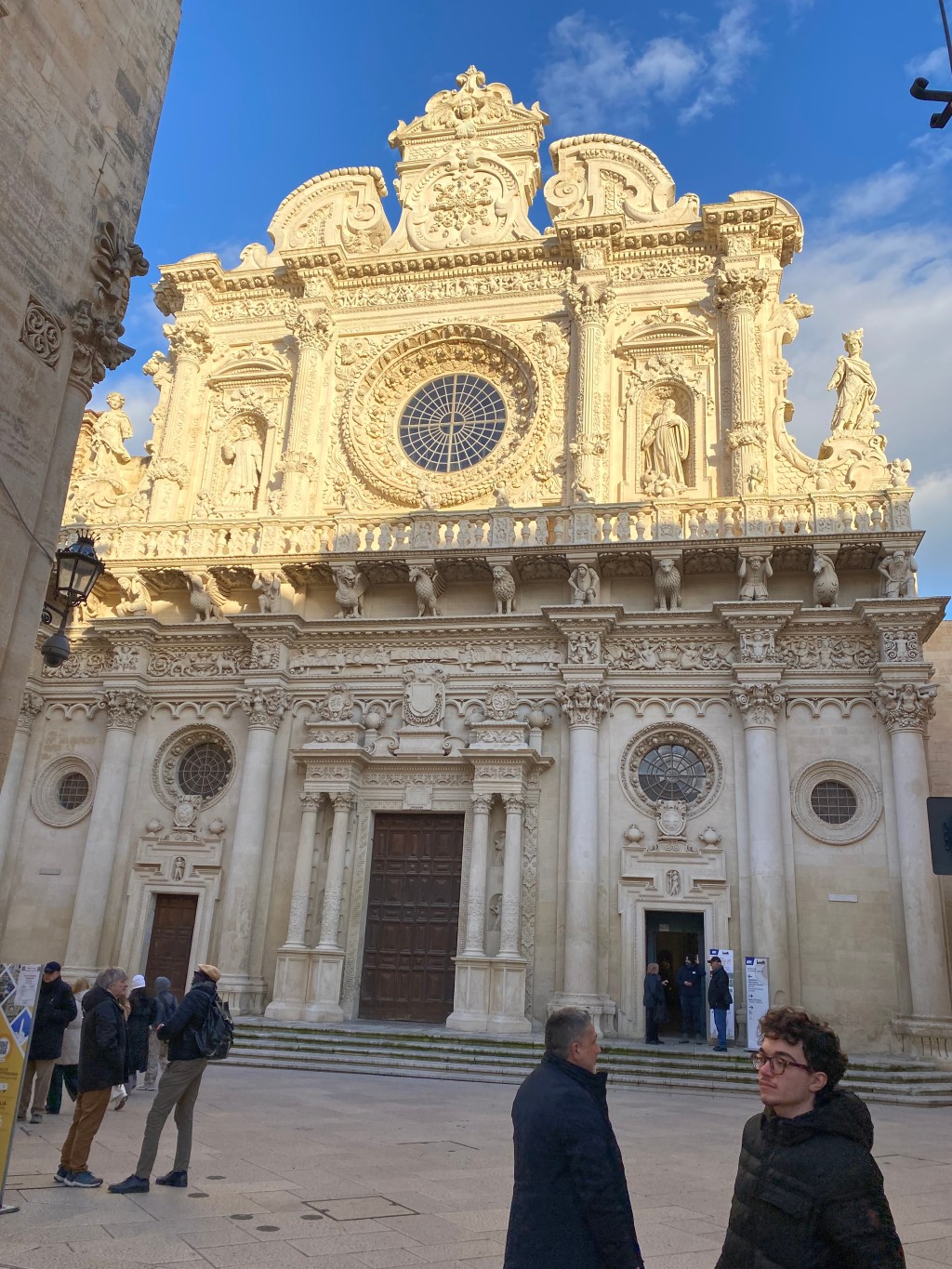
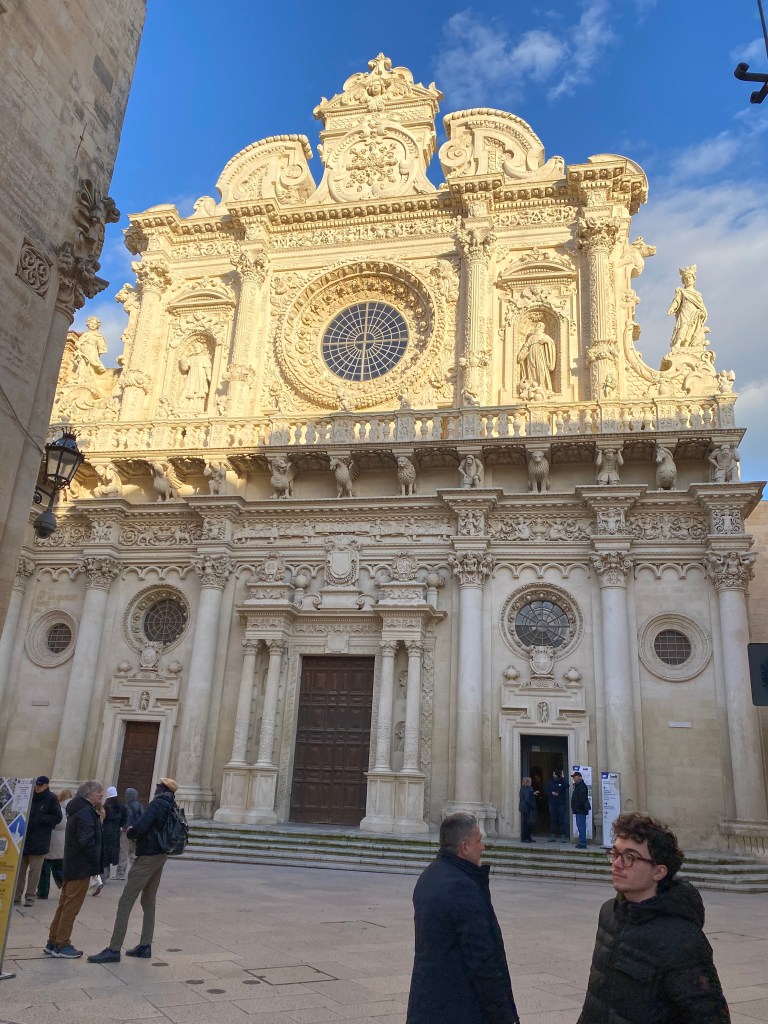
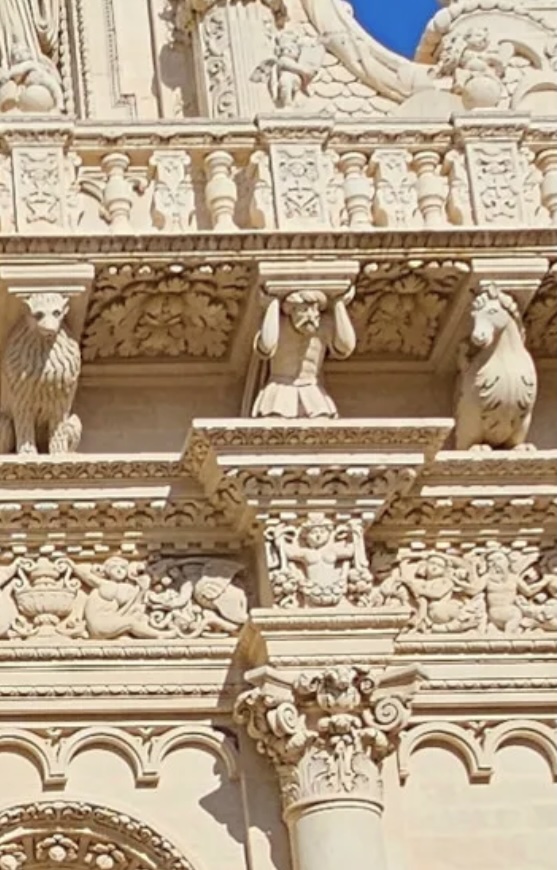
Layers of history are also displayed in the grandiose façade of the Basilica of Santa Croce, which we see now smote with the late afternoon sun as if with choral voices. High baroque style, they call it. The local limestone, undersea millions of years ago, is pliant for the elaborate carvings, storytelling and scrollings of 17th century baroque. Plus, this was restored with cleaning only a few years ago.
The façade of Santa Croce displays symbolic propaganda. On one stratum, you see the animal representations of Italy’s powerful city-states, and in between, the burdened faces of the conquered holding up their share of the architecture. Max says those atlas figures are Turks, the enemy conquered at the Battle of Lapanto in 1571. But the last one of the right, he says, is a Jewish man.
This peninsula of Apulia (Puglia), called Salento, claims a sort of redemption for its 16th century expulsion of the Jews, along with the shame of its alliance with Nazi Germany. The coast around here was used by the Allies, from 1944 until 1947, to set up camps for thousands of Jewish refugees who survived Nazi Germany but were displaced persons in a state of suspension.
Then, in 1948, the new State of Israel was declared, and almost all found their home there.
In the Lecce museum, that period of the refugee camps is described this way:
“For the local population, [the Jewish] presence was an opportunity to discover the horror of the concentration camps and the joy of welcoming others. Human relationships soon developed between the refugees and the local people, sometimes turning from assistance and cooperation into friendships that transcended the boundaries of history and geography.”
It’s impossible for me to read the politics of Israel or antisemitism in Italy today. I see the Palestinian flag in a few windows. But I also sense a deep longing for world peace. “Basta” – enough – repeated Pope Leo XIV about the wars and other divisions in the world today. He was speaking to multitudes on Il Giornata della Pace, the Day of Peace, New Year’s.
In the crowds, on TV, I saw one of the most powerful symbols for the situation in the Middle East. Someone had tied an Israeli flag and a Palestinian flag together. That knot says it all – a complex binding that nothing but hard work and divine guidance can untie.


 An American journalist heads for Italy to see his country changing from afar.
Leave a comment