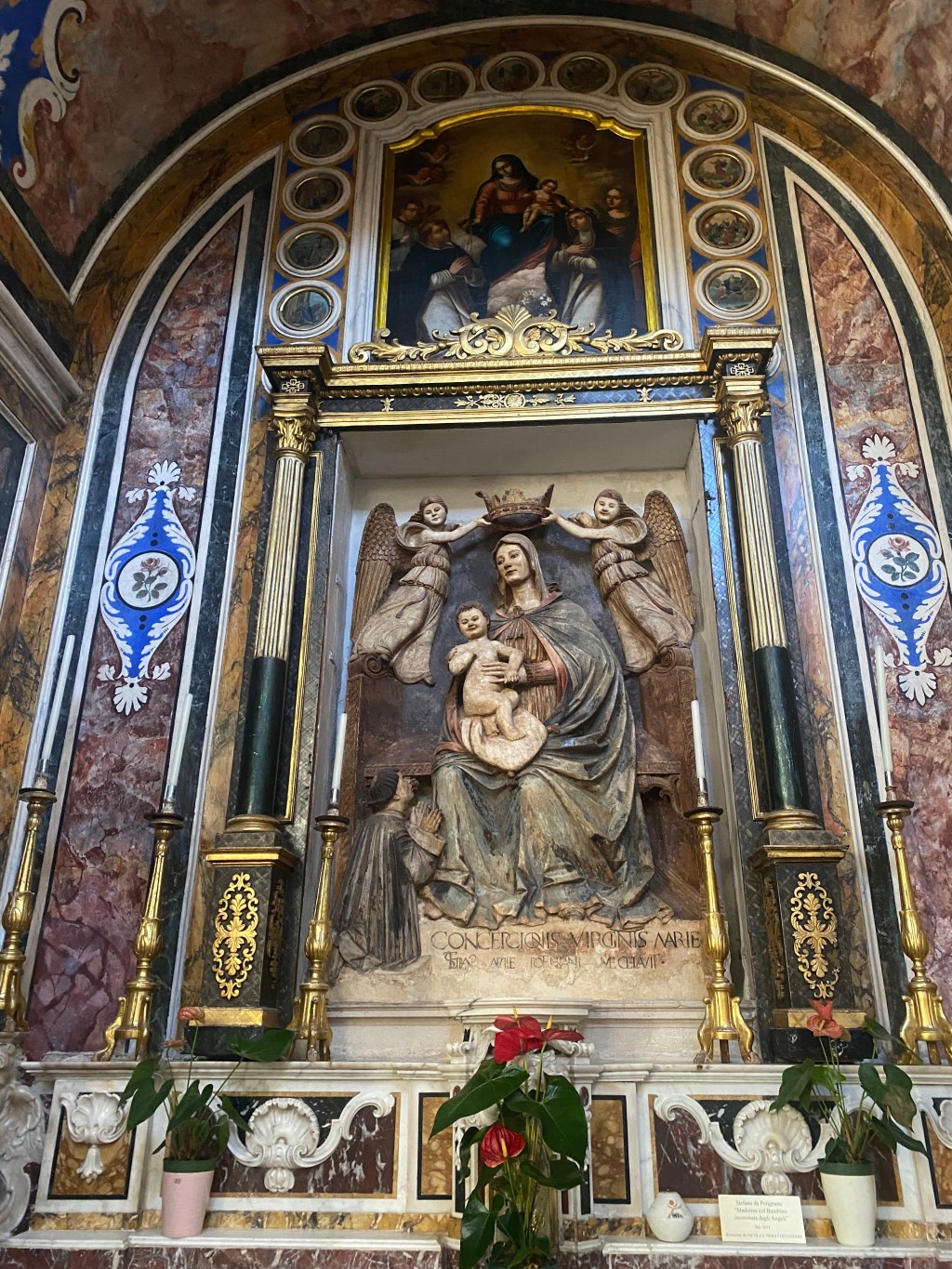
Through an ancient stone portal in the Adriatic city of Polignano a Mare, in the boot heel of Italy, you walk into a small piazza and then enter the 730-year-old Church of Saint Mary of the Assumption – Santa Maria Assunta. Inside, you might be overwhelmed by every style of Western Art, from the marble floor up to ceiling paintings that seem to open to heaven itself.
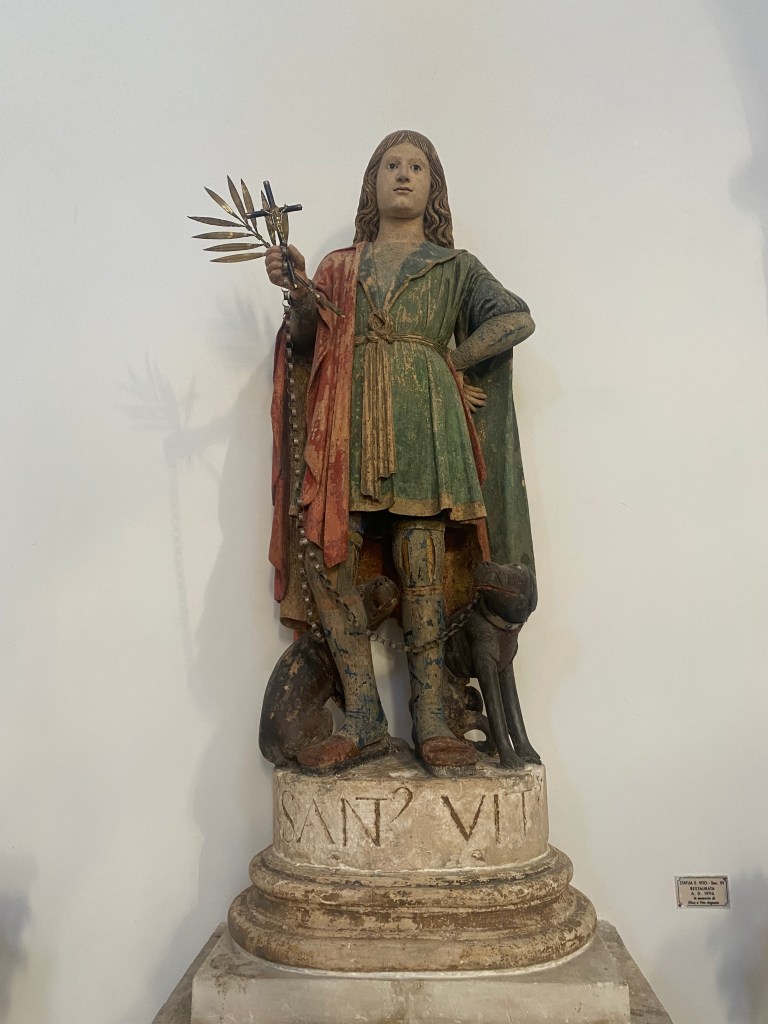
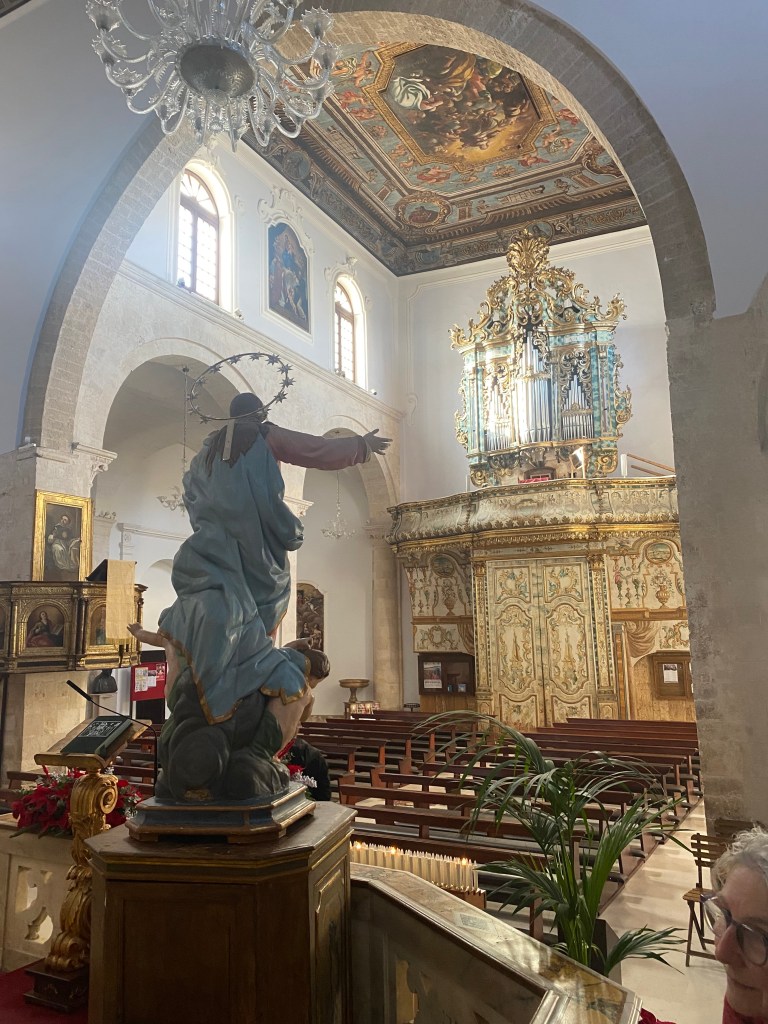
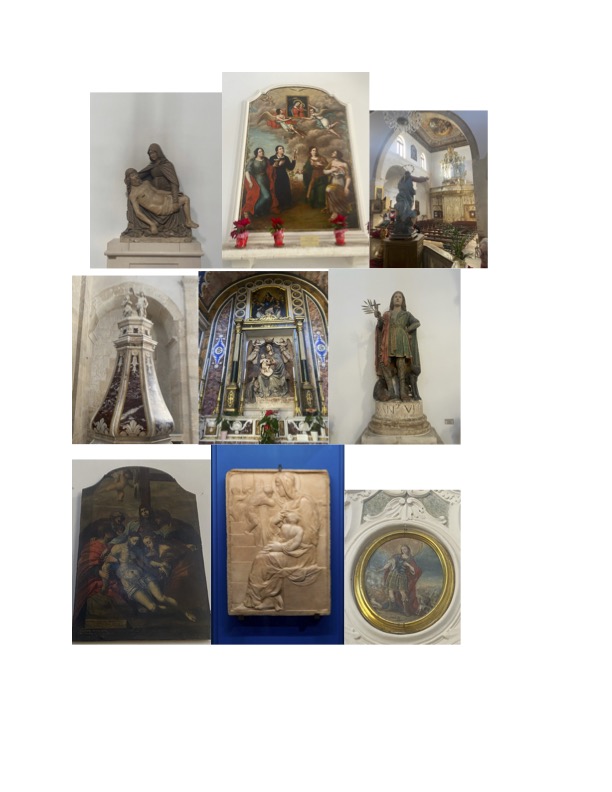
There’s a marble nativity scene from the 1500s (with many limbs sadly missing), a marble Pietà, many giant crystal chandeliers, a large painted angel, a towering and polished marble baptismal font, Christian paintings of all sizes and conditions, saints and the Virgin Mary ascending through clouds, and over it all, a wilderness of 18th century Baroque ornamentation that puts Trump’s Mar-a-Lago to shame.
“Down to the Puritan marrow of my bones/
There’s something in this richness that I hate.”
Those lines refer to a New Englander’s reaction to the lush springtime of Maryland’s Eastern Shore.
But they could apply to an American Protestant who visits too many of the art-filled Catholic churches in Italy. It’s not just that the relics, stories and adorations have no place in the Bible. The problem, for this son of the American Protestant South, is the sheer material weight of all this religious art.
It’s not bad art, really. It’s not like the fake Louis XIV gold leaf that has vandalized the neo-classical White House. The art in Italian churches and cathedrals is mostly the work of serious artists who labored, in various eras, in studios modeled on the immortal work of Giotto, Raphael, DaVinci and Michelangelo. I think of what was happening in America when these artists were working in the 17th and 18th century. Life was hard, simple, colonial. Here, the Renaissance was producing its long glorious tail.
In so many Italian cities and towns, you can find an open church on every other block stuffed with art that these half-forgotten artists produced. That’s thousands and thousands of original works, much of it cared for and restored. Much of it beautiful, really.
The question is whether the spiritual inspiration for all this extravagant art remains alive and real.
I was impressed that almost every visitor to these churches devoutly genuflected and crossed themselves as they entered. Something is still alive, though the art may seem like beautiful seashells that remain after the soft-bodied life of faith has passed.
As G.K. Chesterton wrote, Christianity has died many times, but like its central figure, always rises again from death.
We may have witnessed this in last Sunday’s service at Santa Maria Assunta in Polignano a Mare. It was Holy Innocents Sunday, so a bunch of teenagers led the service. The music was produced by about a dozen boys and girls playing guitars and percussion. I was transfixed, in particular, by the girl playing flute and another girl singing in a mic, who also read the lesson from the Bible in beautiful Italian.Their faces and dark wavy hair looked so much like some of the saints and angels in the church art, I wondered at what I was witnessing. The art may have been too old for me, but the lyrical Italian language, and reverberations of the flute, seemed outside of time, not just in beauty but in the spirit of hope.


 An American journalist heads for Italy to see his country changing from afar.
Leave a comment