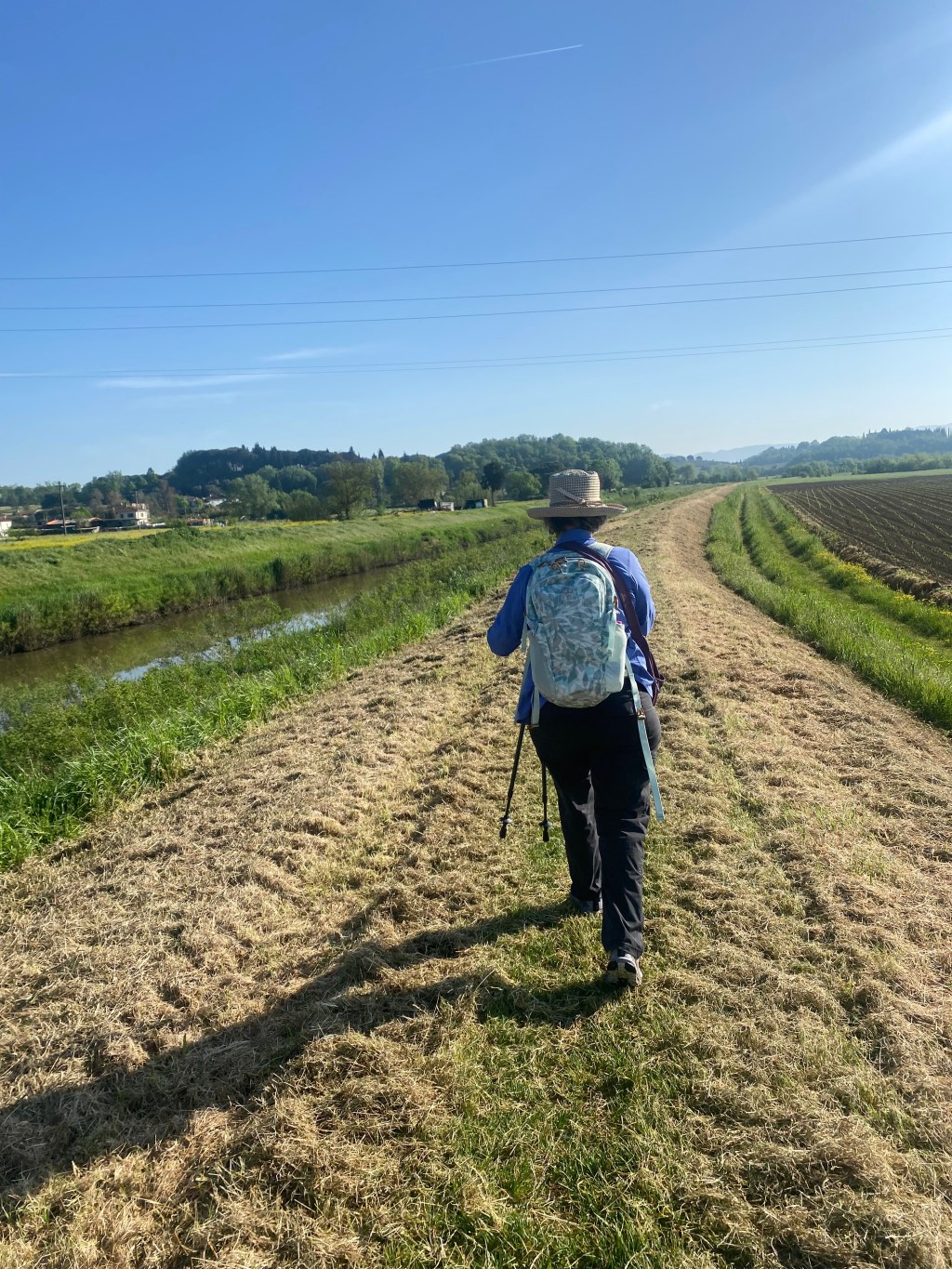
Wayfaring through the old towns and narrow footpaths of Tuscany.
We are two pelligrini, daypacks on backs, knitting the ground with adjustable walking poles bought outside Lucca. Fueled by a hotel breakfast and two cappuccinos each. CaminoWays, a service company that supports self-guided tours like ours, is invisibly hauling a heavy suitcase from one hotel to the next.
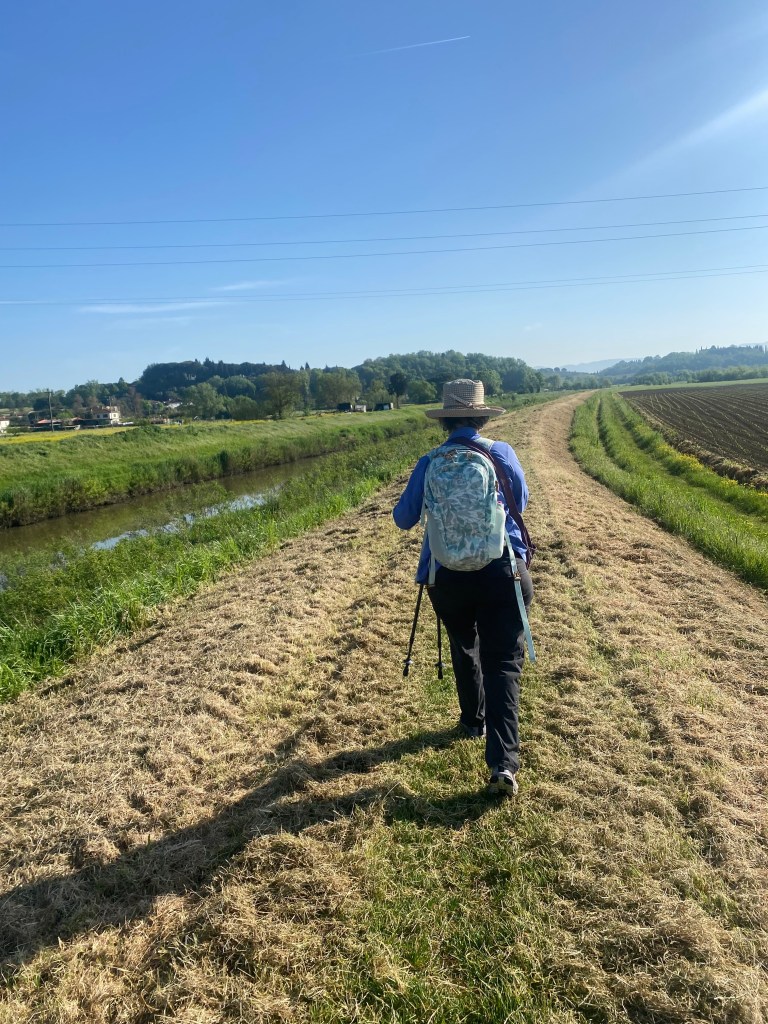
Hotel Diana on Wednesday night. Then Hotel Paola in Altopascio. Now at Hotel San Miniato in the ancient hilltop town of San Miniato.
We meet few other pilgrims: A lost gentleman from Florence, with pack and poles. In Porcari, a dusty couple with packs on two furry mules, sojourning from Switzerland to Rome (if the creatures don’t get hit by an Iveco truck). Beyond the canal levy from Ponte a Cappiano and crossing the Arno, two women with full packs. At dinner, in the little tables outside Piccola Osteria Del Tartufo here in San Miniato, they recognize us brightly and we learn their story. They are sisters from different cities in Holland. They each discovered the joy of walking, the way it centers the body and sheds some of the tensions of modern life. So they are expanding their repertoire and spending time together in the most ancient of walks.
European Christians, it turns out, did this for 1000 years, starting in the sixth century. The road to Rome through France, called Francigena, became economic lifeblood for these towns we pass through. A whole order of monks, called the Knights of Tau for the Greek letter resembling a walking stick, established Ospitali and became a kind of Chamber of Commerce. Bilingual historical markers suggest this business model helped evolve European commerce (and a global economy, with the Holy Land as a further destination) and developed the habits and culture of Western Christian identity (apart from, though not necessarily in conflict with, the message and theology of Christianity).
Walking and walking, you savor every moment, noticing and feeling more than usual. But an odd effect of this is that you don’t remember where you’ve been on this journey. Even the names of the towns you’ve passed through are quickly forgotten, which is why I have to look them up to write them down in this blog post.
Our purpose now is not to learn the history or geography. A museum to the pilgrim-hospitality culture in Fucecchio had a sign outside that translated the icon of the walking pilgrim, “Vado pelligrinado per trovare la pace.” I go on a pilgrimage to find peace.


Leave a Reply