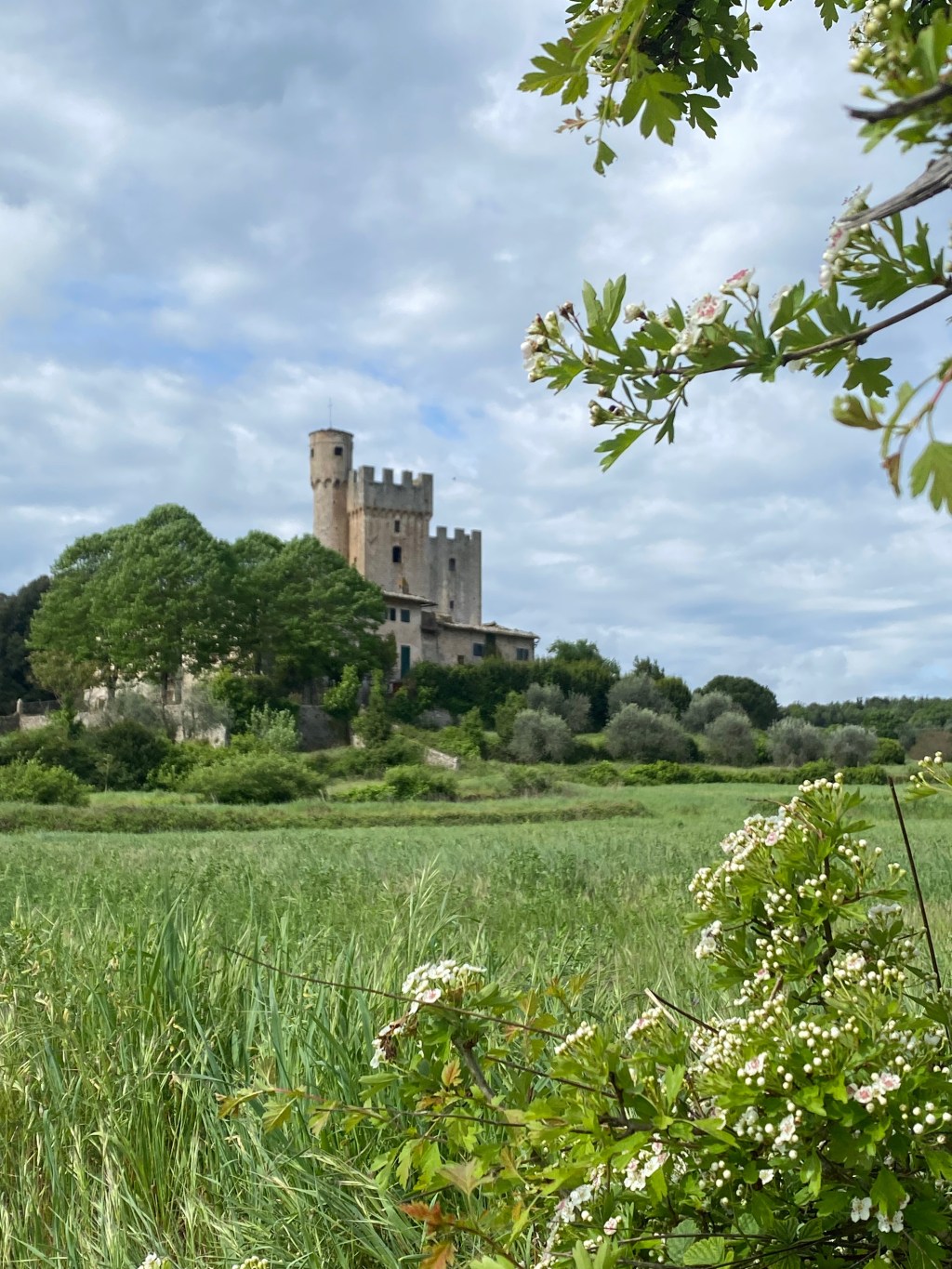
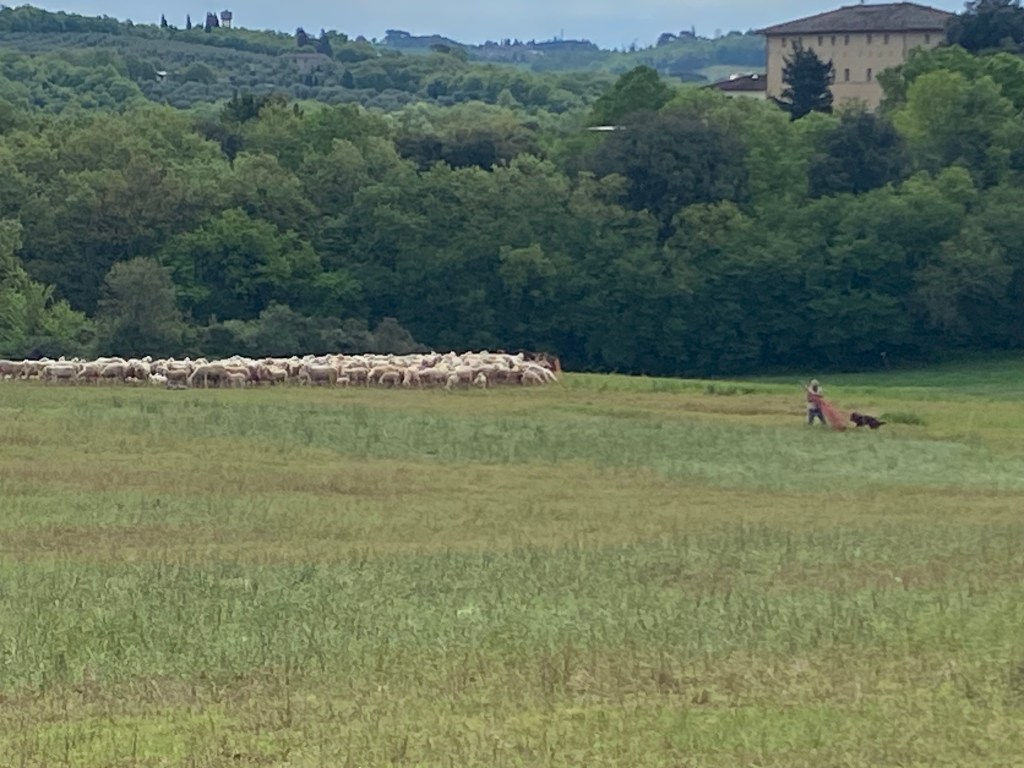
The footpaths from Montereggioni to Siena are so enchanted, you wonder if the way was staged by some Romantic poet. April birdsongs fill the hedges and woods. Wildflowers of yellow (rapeseed and broom), red (poppies), star white, lavender and heavenly blue dot the borders and foam the fields. A shepherd and his dog check the unmowed part (beans?) while their huge flock of sheep feed in a clump on a slope. A castle peeks over the hills.
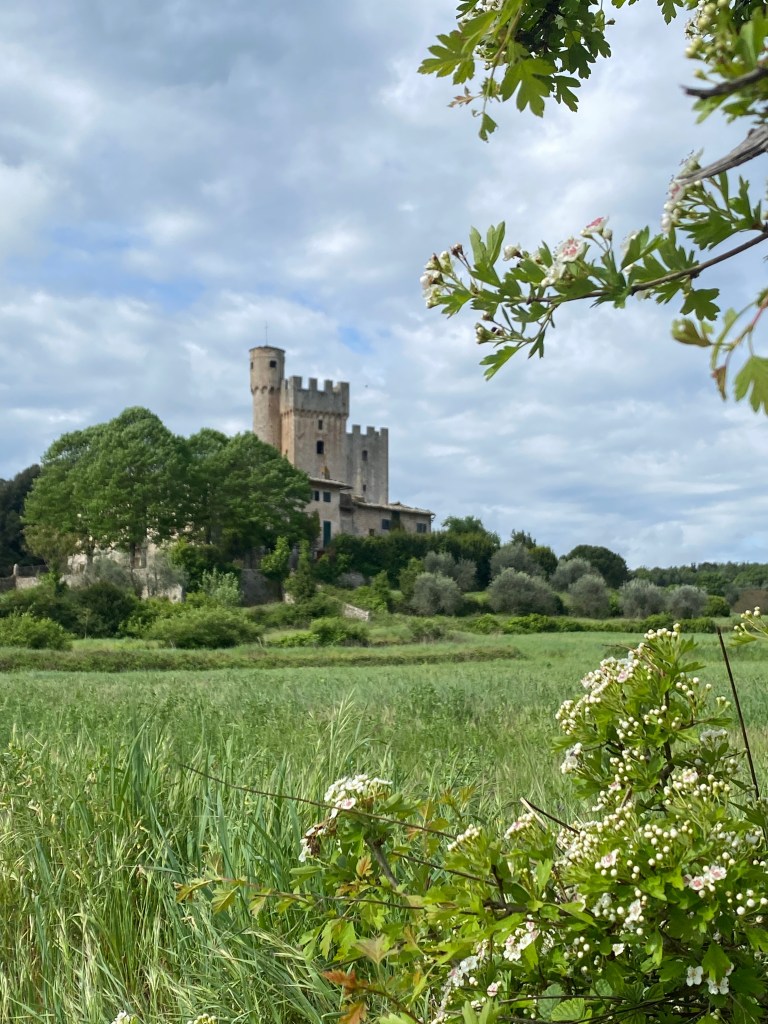
The freshly plowed fields are dark red, more like Georgia than like the hard-baked white clay we walked through further north. How could this be?
Not the blood of battle or plague, although this area was where Siena lost its centuries-old fight with Florentine armies for dominance. The Black Death culled the city of a quarter of its inhabitants and half its pride.
In a clearing in the woods, we come on a worn stone obelisk, or “stele.” A garbled translation explains that it was erected in the late 1700s by Pietro Leopold, a “noble duke” of Tuscany who became one of the last and most progressive of the Holy Roman Emperors. The duke’s obelisk honors “the recollection works and witnesses human efforts to control the nature.” Reading on, I figure out what this means.
This area was a desolate miasmic swamp until it was cleared by human effort in the 18th century. Natural drain holes were kept clear and an underground canal converges the rivers. The disease-bearing swamp of summer was turned into the neat red and greening fields we see today in their spring productivity and crop rotation. Every bit of land is used well, saving woods and roads for pilgrims and horseback riders.
Sitting on a step of the obelisk, I have this inside-out thought: What if the entire human race disappeared and left these field, flowers, sheep and horses alone? Many today would say good riddance, we have made a mess of the earth. But here in Tuscany, in April, I am touched by a strong feeling that our brother creatures and sister plants would be overwhelmingly sad. They would wonder, where did Man go? They would weep, each in its own way, and all cry together with God: Come back, O Man.


Leave a Reply