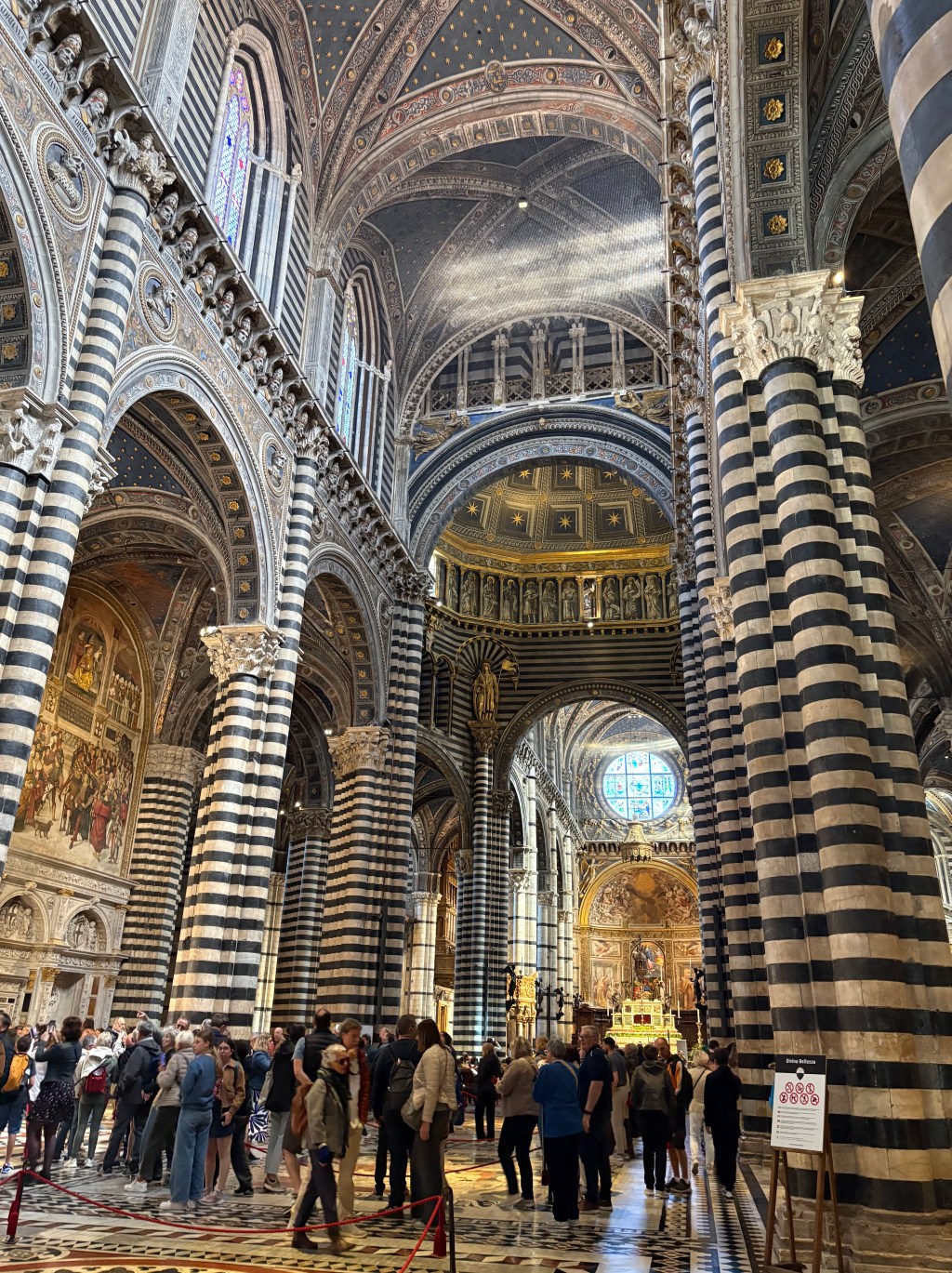
Tourism is one thing; pilgrimage is another. The pilgrims and Catholic devotees seemed outnumbered a hundred to one yesterday in the enormous Duomo of Siena. Cameras with long lenses or inside iPhones were clicking away everywhere as tour-group leaders held up their identifying poles and described the religious art in a babel of languages.
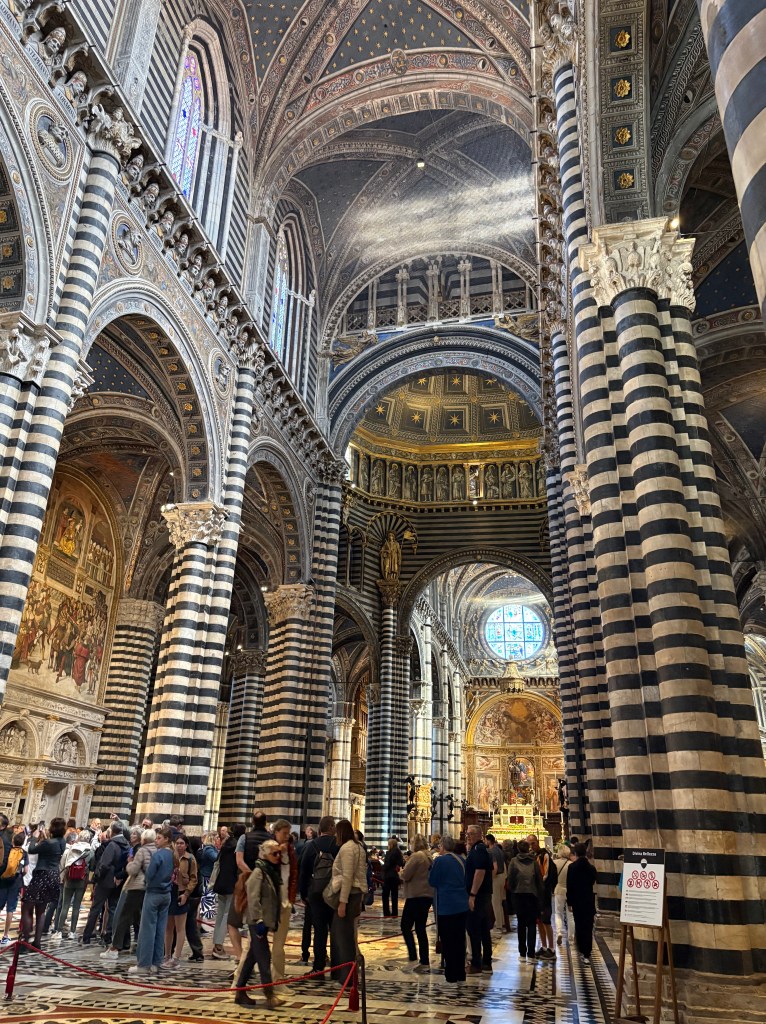
Siena was the end of our pilgrimage. Eighty miles of walking (and another six in Siena itself). We made it!
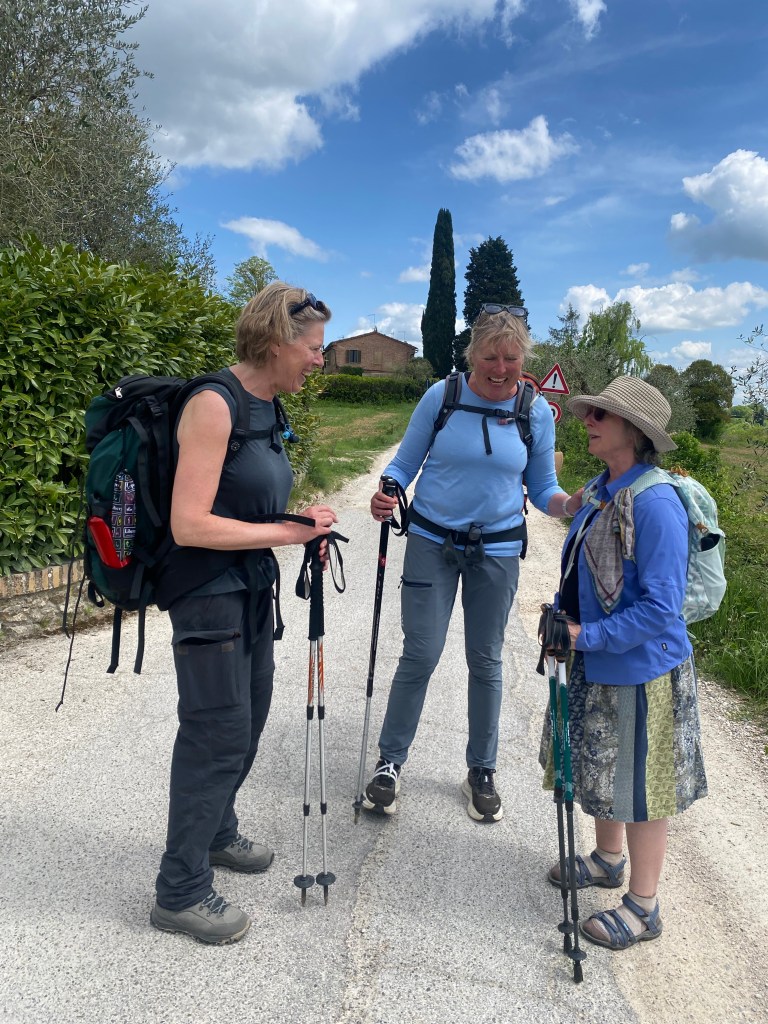
But asked by a fellow Pellegrino, a Russian living in the Netherlands, “Why are you doing this?” I didn’t know which answer to give. A spiritual search? Healing from the loss of our daughter, Sarah? Another answer is “Education.”
Education was the point of what was called The Grand Tour that was popular with a certain class of Americans in the nineteenth century. This was how my great-great grandfather, Joseph Bryan Cumming, “The Major,” came to spend two years in Italy in 1857. Such a Grand Tour was how a “gentleman” completed his education, which in the Major’s case included the University of Georgia and Harvard Law School. His father, Henry Cumming, had spent even more time in Europe during the Monroe administration, buying books in French and Italian (I kept a few from an attic in Augusta, Ga.) when he was to have reported for duty at the U.S. ligation in Spain. Henry combined a diplomatic appointment with a Grand Tour.
The Civil War was a bad time for Southerners who might have taken their Grand Tour.
I just received the scan of a five-page single-spaced typed memoir by a grandfather from another branch of my Southern family. It was apparently written in the late 1940s. In it, he relates how his Grandfather Wright organized a Confederate company from East Tennessee and led it in western campaigns such as Vicksburg. Returning to Madisonville, Tenn., after the war, he faced mistreatment by Union loyalists – East Tennessee was violently divided over secession – so he moved to Rome, Ga., and set up a law practice there.
The story of my other great-great, Joseph Bryan Cumming, “The Major,” is also one of that old North-South divide.
The Major had a romantic sense of history. He somehow acquired a heavy rock of marble from around the Forum in Rome and had a local sculptor render it into a fine bust of Cicero. He also charmed an older New York couple spending time in Italy with their eligible daughter, Katharine.
In 1860, Cumming married Katharine Hubbell in New York. He then took her home to Augusta, a “Northern Daughter, Southern Wife,” as a family history is titled. She spent some of the war years visiting her husband in battle encampments.
They had a long and distinguished life in Augusta after that, raising two children, both born during the war. They never made it back to Italy.
Maybe the right answer to the question, Why are you doing this?, is something we read scrawled on a sign at a little farm along the way:
La vita é
Sognare
Amare
Camminare
Life is . . . to dream, to love, to walk.


Leave a Reply