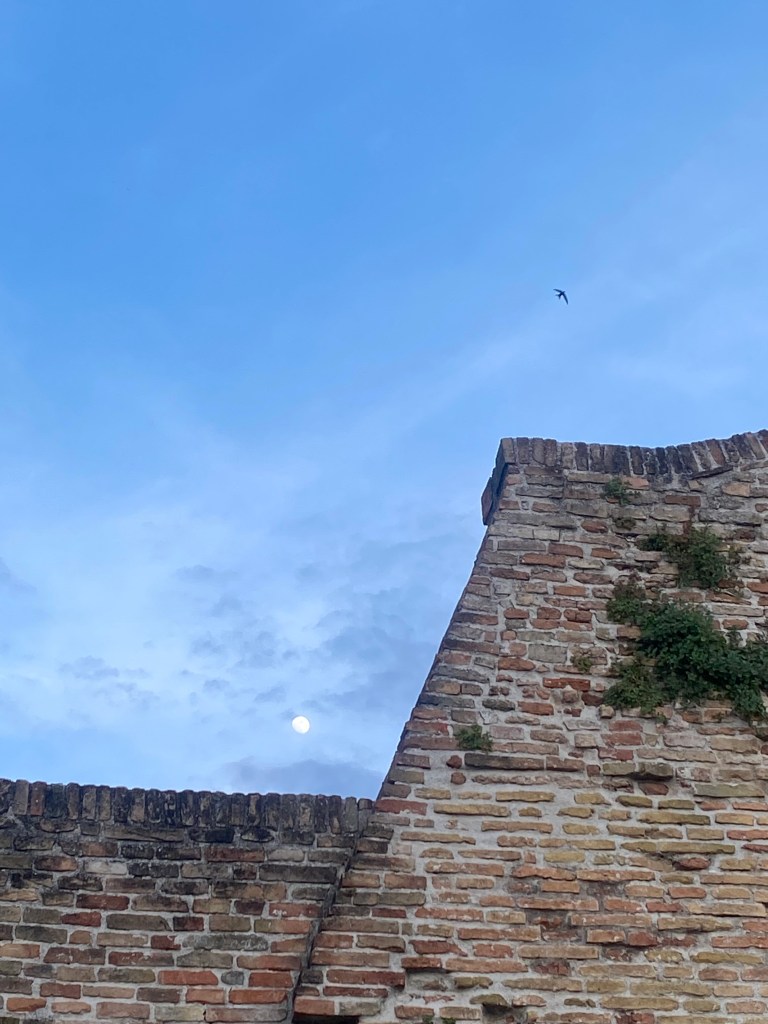
We went out at dusk to look for the moon. “Sunset” in Italian is tramonto, “between” and “mountain,” and we imagine the sun somewhere between the Apennines and the sky behind us far to our west. We were walking east toward the sea, looking for the moon to rise there behind the fringe of Renaissance-painting clouds. (The days have been cloudless blue since we arrived in Fano on Friday.)
But when we reached the bridge over the railroad tracks, we saw that the moon was rising not ahead of us, but to our right. So we turned that way, toward the 16th century Bastione at one corner of the wall around this not-square, non-grid city.
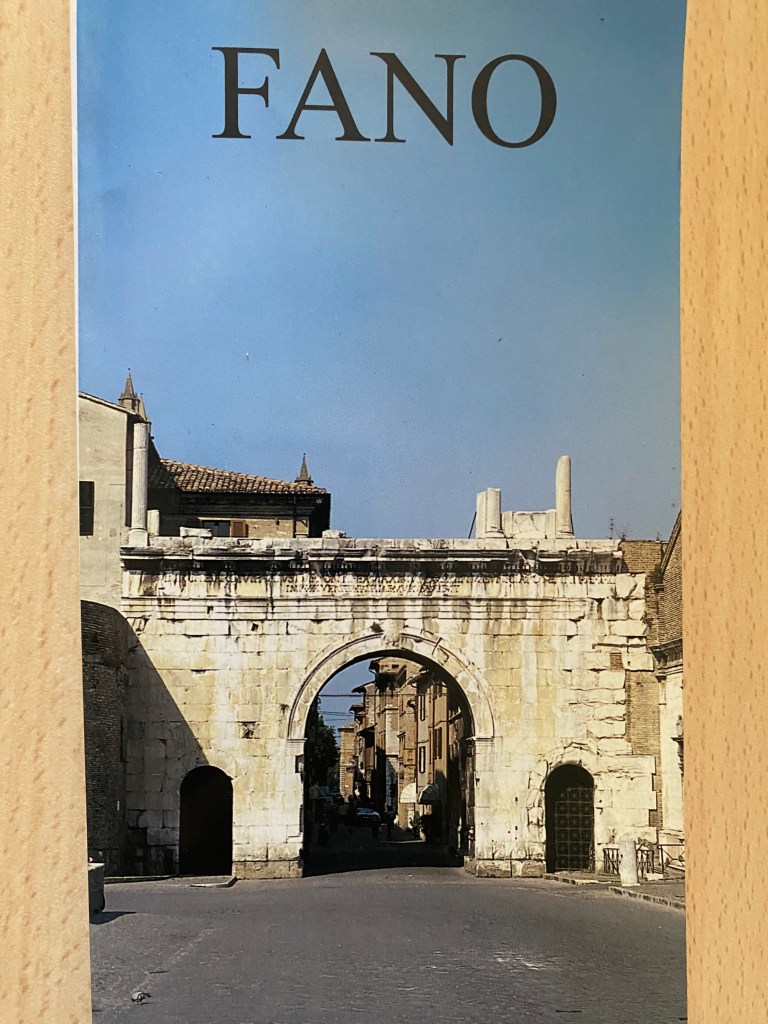
We’re getting oriented. The problem is that Fano was a Roman town, with an “Arc of Augustus” Caesar still dominating our street and a newly identified basilica by the “father of architecture,” Vitruvius, a contemporary of Augustus Caesar. Fano is also a medieval town, with cobblestone streets, piazzas and a wall built catawampus to the Roman plan. And it is a beach town and seafood port, on the other side of the train tracks, as Italy goes diagonally down the Adriatic Sea, a boot drawn back to kick Sicily down the Mediterranean.
So walking toward the moon rising over the Bastione Sangallo, then finding our way through the narrow streets back to our apartment, didn’t help orient me to the town’s layout.
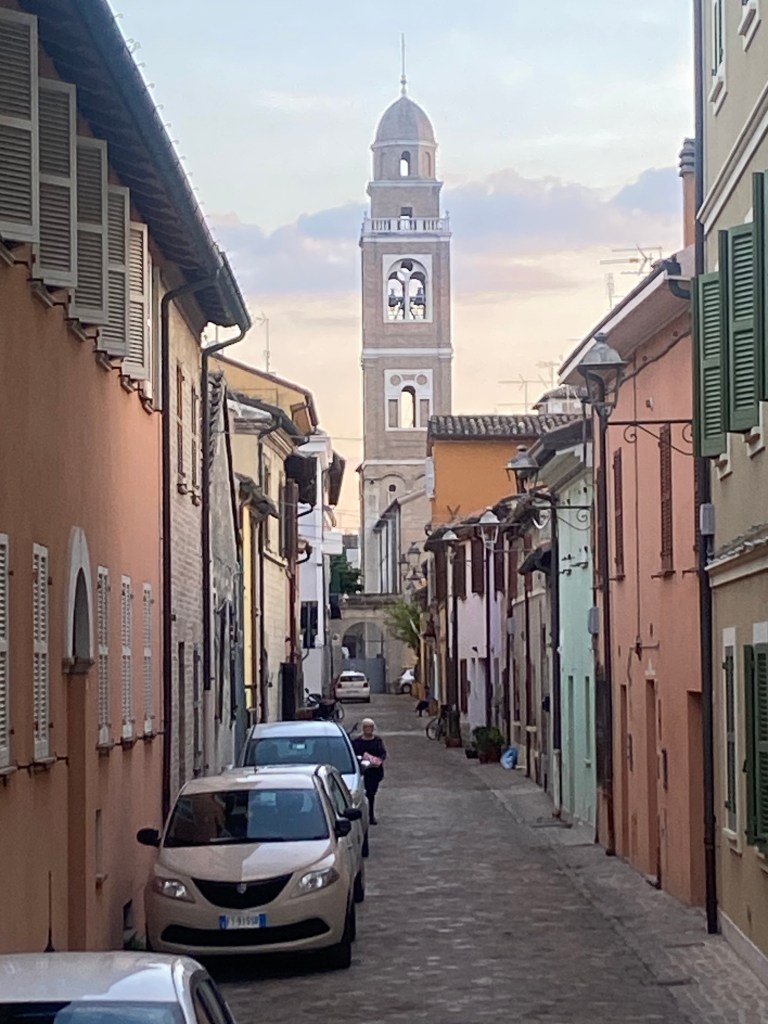
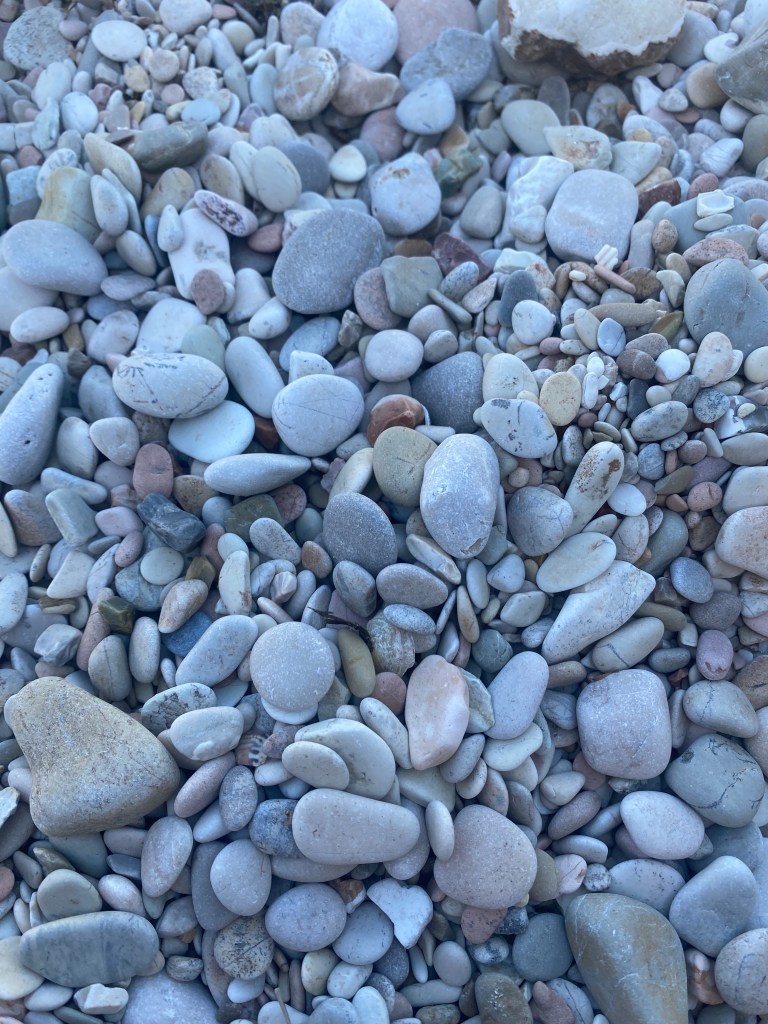
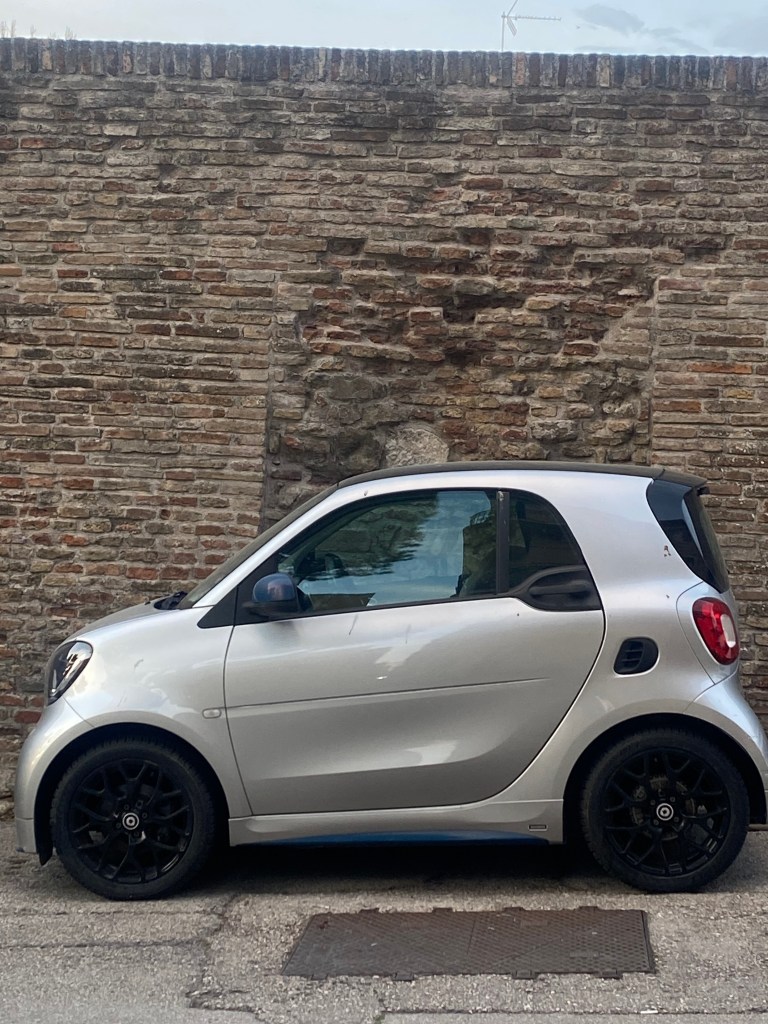
But we’re getting in the spirit of strolling senza fretta, no hurry. Earlier, we walked to the beach of beautifully smooth pebbles. Walking back to our apartment on Via Arco D’Augusto, we listen for bicycles, motorcycles or little cars coming up the narrow streets behind us. We walk straight, or press against a building on the side. We exchange “buona sera” or “salve” to other walkers. We feel a little more a part of the other Fanese on their passeggiate, these little walkabouts.



 An American journalist heads for Italy to see his country changing from afar.
Leave a comment