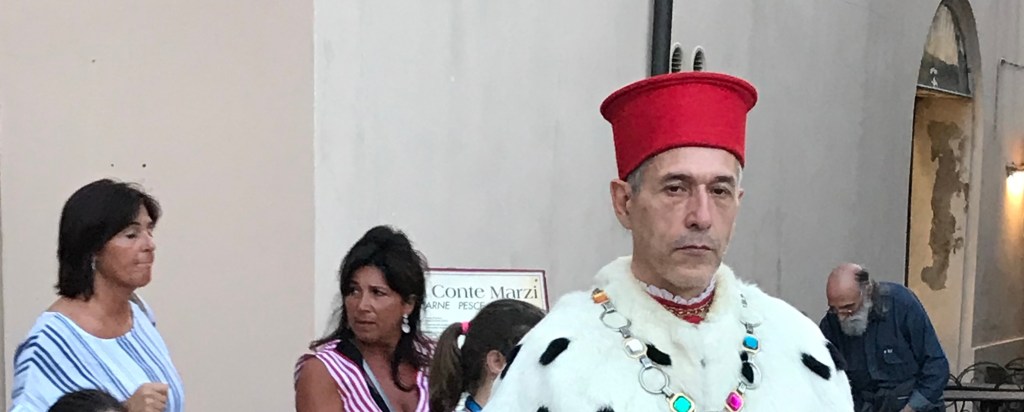
The Italian who invented political science, Niccolò Machiavelli, is not much appreciated outside of certain academic types who admire and debate his famous 16th century book “The Prince.” A bookstore I visited yesterday on Fano’s main piazza keeps paperback copies upstairs, not on display. I find no streets or monuments named for Machiavelli here, in contrast to the names of saints, heroes of Italian unification and the many Catholic churches Machiavelli hoped would have disappeared by now.
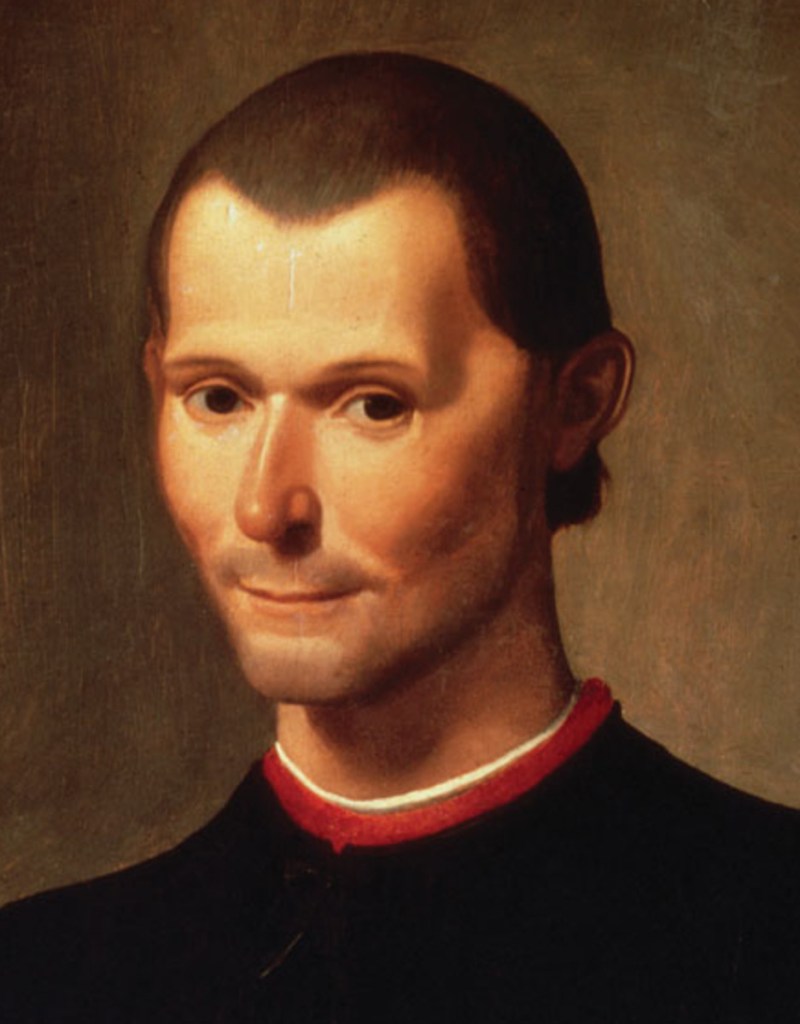
Machiavelli’s books were initially accepted, or ignored, by the Catholic Church after his death in 1527, and publication of “The Prince” in 1532. But after 1559 his books remained on the Church’s forbidden list for at least three centuries.
Behind the popular notion that “Machiavellian” means ruthless, selfish and conniving, students of Machiavelli marvel at his insights into the reality of politics and power. He was a man of action and experience, having more diplomatic appointments than anyone during the height of conflicts between Borgia popes and independent Italian city-states under the Medicis.
His little book “Il Principe” (not to be confused with “Le Petit Prince”) was written as advice to Lorenzo de Medici (the Duke of Urbino and grandson of Lorenzo “The Magnificent” of Florence) on how to rule a principality.
He said, in effect, forget what the Church teaches. Here’s the real way to resolve conflict, which is inevitable in a world where everyone is selfish by nature. First, negotiate. If that isn’t called for, take them to court. Or trick them by lying. Or run away. Or beat the hell out of them, so they can’t get you back. It all depends on the situation. These are universal, scientific laws, he claimed, and he may have been right.
A brilliant observer of his times, he was also a historian of classical Rome (another important book was his “Discourses on Livy”) and an admirer of pagan virtù (a kind of manly strength, especially in contrast to Christian love of one’s enemies). He wrote in a clear, entertaining style. In a way, Machiavelli stands as an intellectual link between the Roman Empire and the modern philosophy of Realpolitik, that is, resolving conflicts pragmatically without the fog of ideology (whether liberal-democratic, Christian, communist or right-wing nationalism).
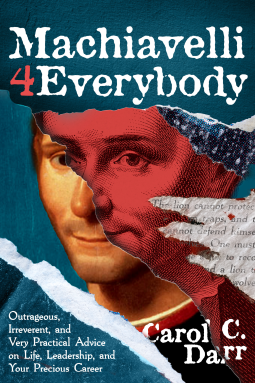
A friend of mine, Carol C. Darr, has been determined for years to make Machiavelli accessible to everybody (especially to soft-hearted Democrats). Now she has done so, with a book she titled “Machiavelli 4 Everybody: Outrageous, Irreverent, and Very Practical Advice on Life, Leadership & Your Precious Career.” Her book is being published next week by Koehler Books.
Coincidentally, Machiavelli was born in Florence on May 3, 1469. Sunday is his birthday.
“Machiavelli 4 Everyone” is a fun, entertaining book, organizing Machiavelli’s theories into a 21st century how-to manual. Carol, who lives in Black Mountain, N.C. with her husband, former political journalist Al May, role-plays Machiavelli’s voice as if he were setting us straight today. “Even after five centuries,” her Niccolò writes, “I’m still the advisor whom leaders secretly consult.” His fans have included Henry VIII, Joseph Stalin, and Benito Mussolini.
“And not just scoundrels, I hasten to add. Winston Churchill liked The Prince so much that he sent copies to his friends. And I had a big influence on the Founding Fathers, including Benjamin Franklin, Alexander Hamilton, and Thomas Jefferson. John Adams was a huge fan. So was the rap artist Tupac Shakur.”
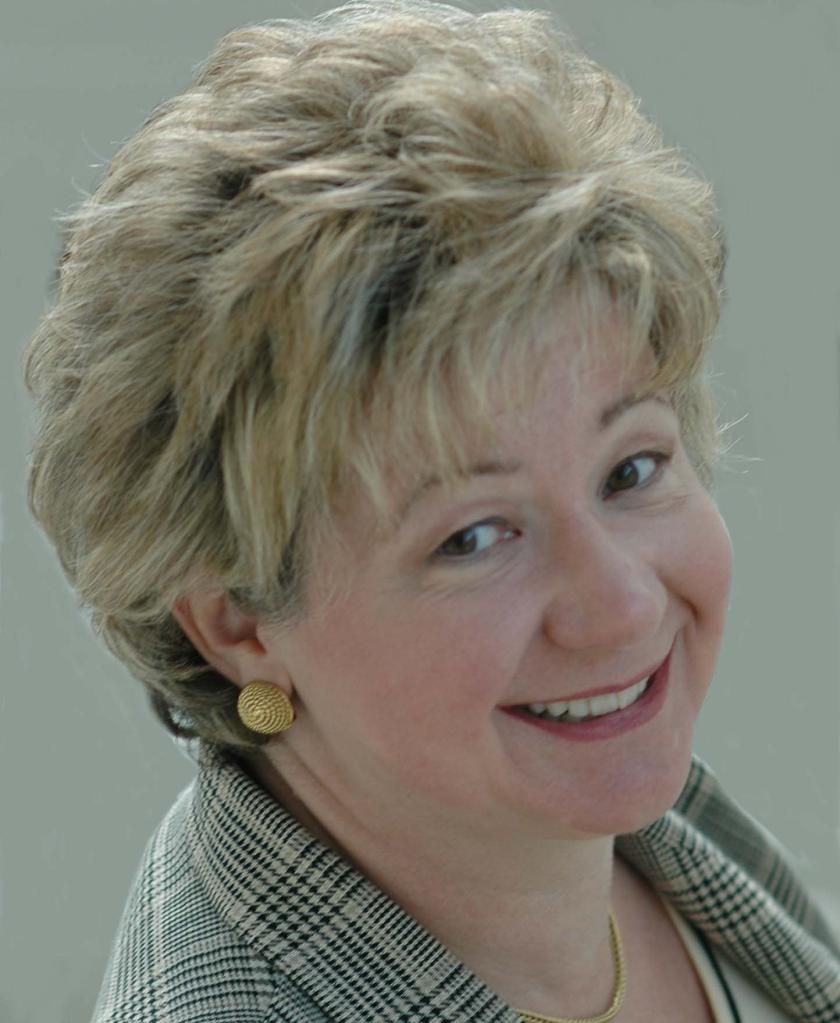
To match Machiavelli’s experience, Carol had four decades of work in the real world of national politics. She was general counsel to the Democratic National Committee, counsel for two presidential campaigns, and a political appointee in the Clinton and Obama administrations.
Also, as her hero Niccolò was a scholar of ancient Rome’s political history, Carol has been a serious student of Machiavelli since she first fell for “The Prince” in college. She moved to Cambridge University to study under the highly regarded political historian, Quentin Skinner, and to write a book-length thesis on Machiavelli while earning her master’s degree.
To her, Machiavelli seemed to expose a bright, shining truth that was avoided by her Southern family and hidden by her Catholic teachers in Memphis, Tennessee.
I told her it seemed like Machiavelli was a kind of one-man Protestant Reformation in his day, without the theology. That’s pretty close, she said.
But his ethics, or lack thereof, is troubling. Where are democratic principles? How are Machiavelli’s recommendations different from what we’re seeing in the lawlessness, power trip and con jobs of President Trump?
I’ll save that for my next post.


Leave a Reply