I am not a fan of shopping in America.
Unlike those who enjoy it, I am a snorkel diver, swimming through my search or shopping list as if I might run out of oxygen before I reach checkout.
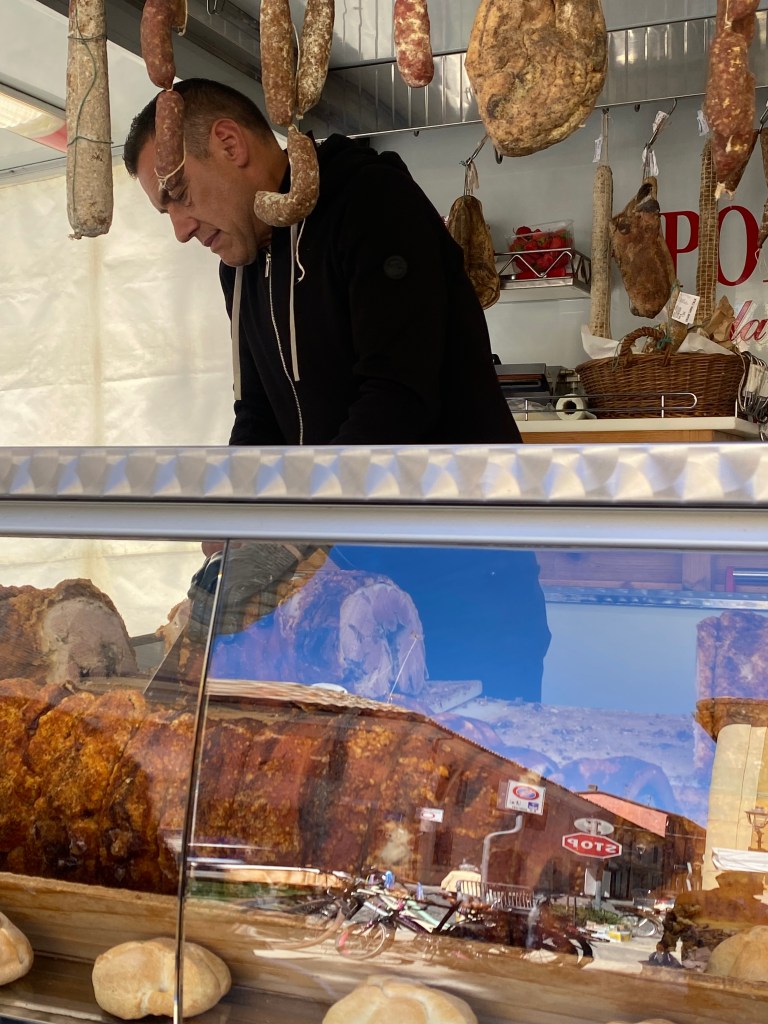
Street markets in Italy feel more like a day at the beach.
Here in Fano, as in hundreds of other Italian town and cities, a crowded open-air market of tents and food trucks fills the piazzas on certain days of the week. Here, it’s Wednesdays and Saturdays.
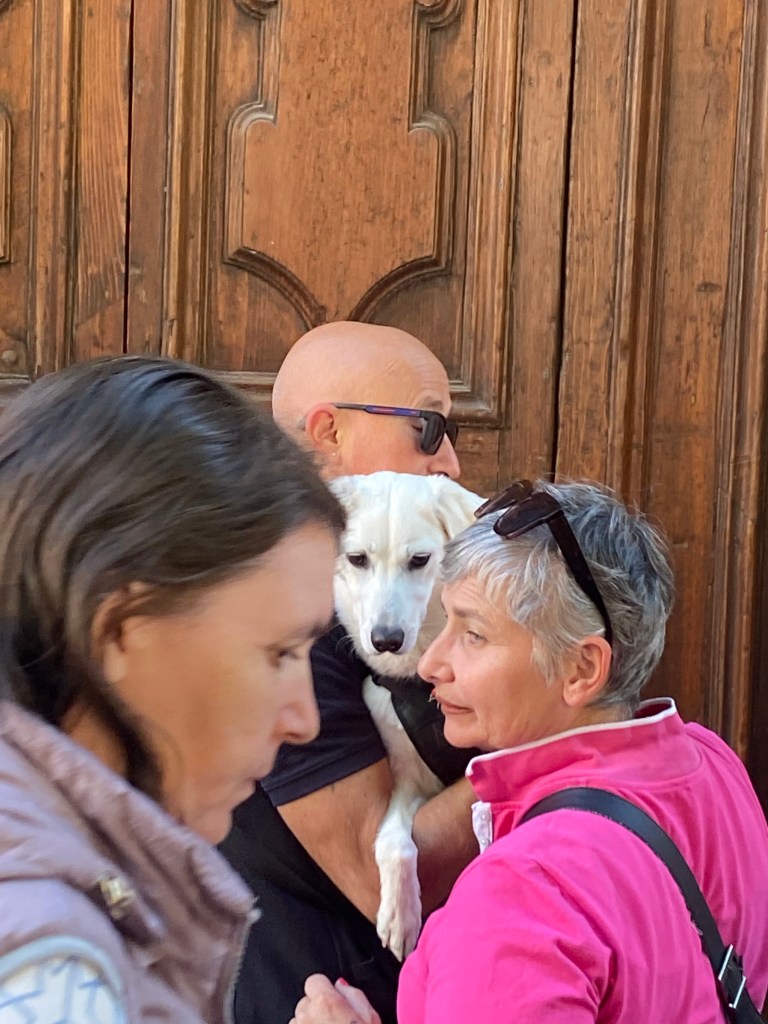
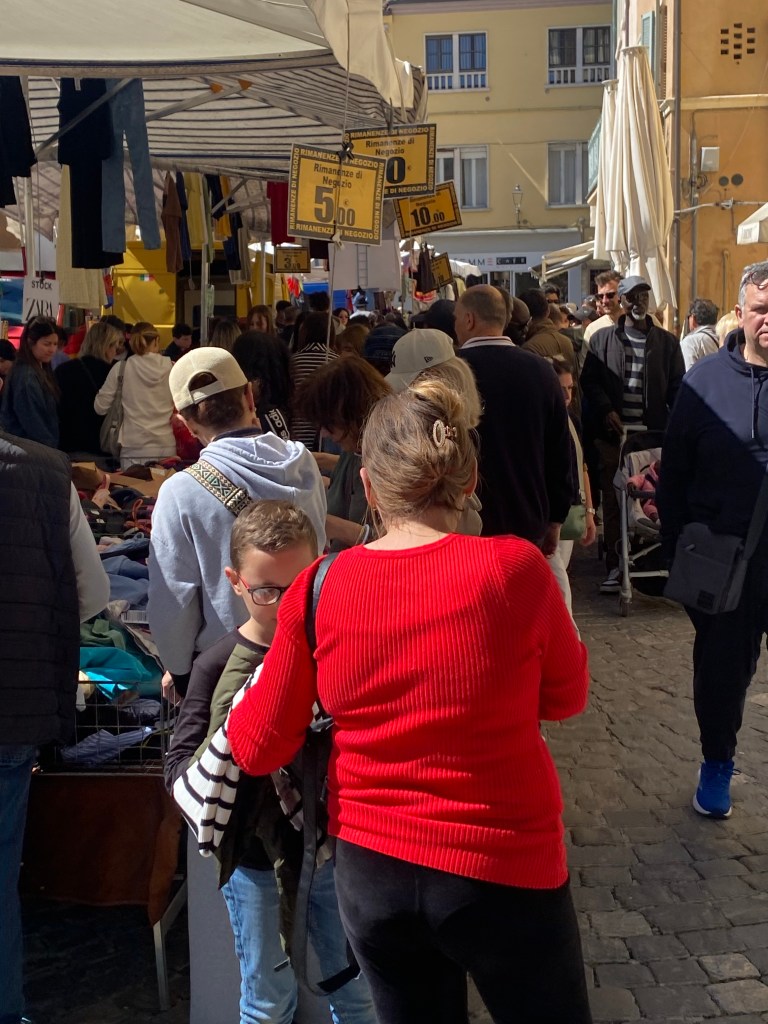
The shoppers are an amazing, endless throng – old timers, families, parents with their children, women in clusters or alone. Dogs and bicycles add to the crush, and an encounter with a friend, which is more common on other days, is a louder delight in this crowd.
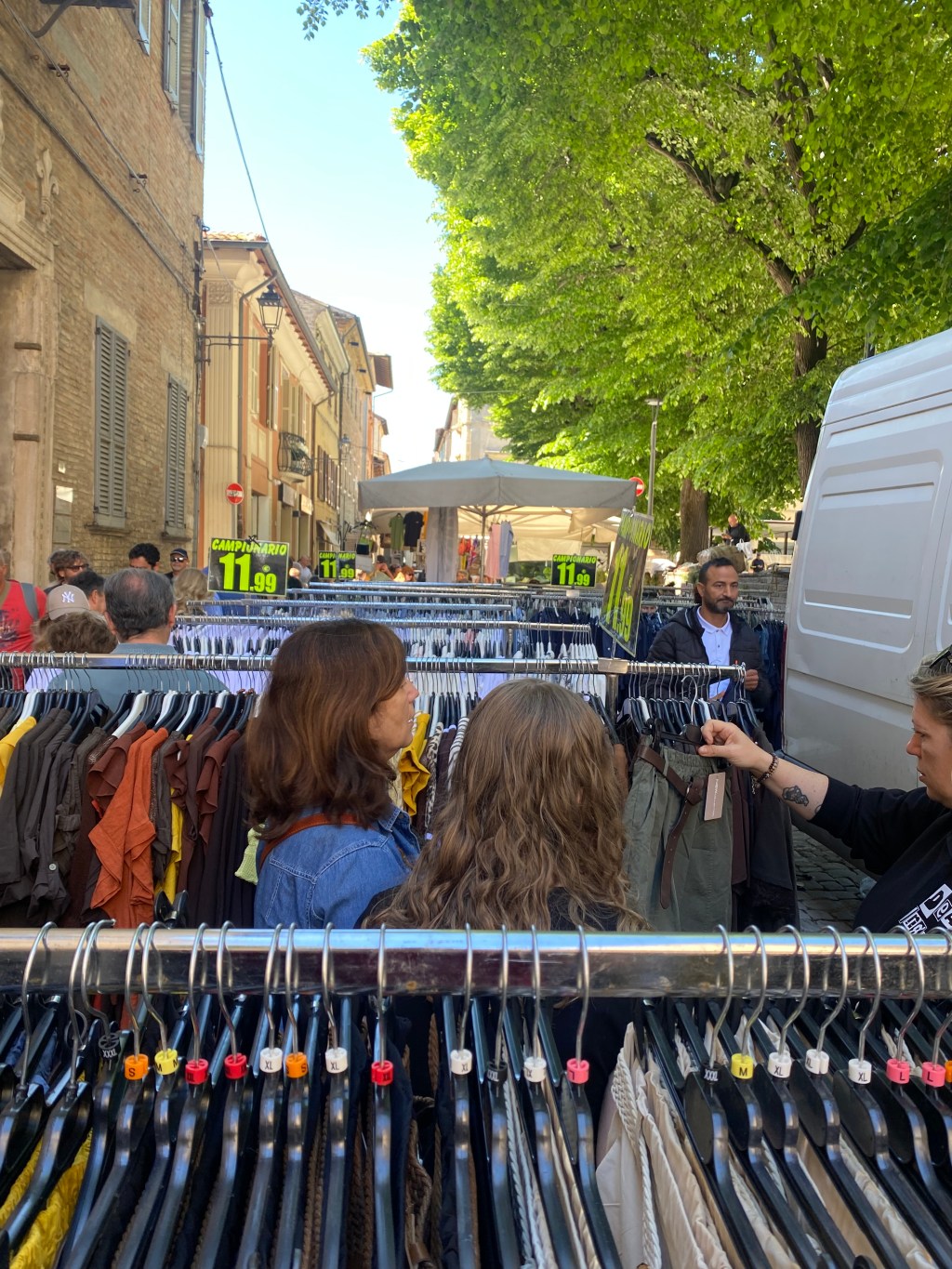
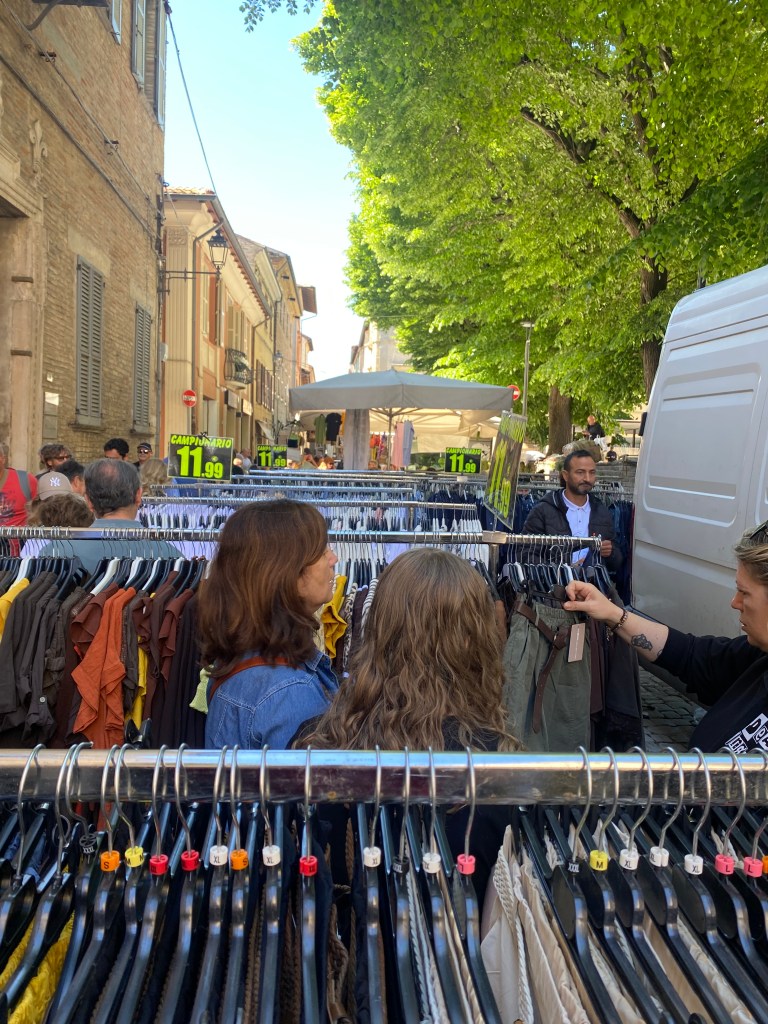
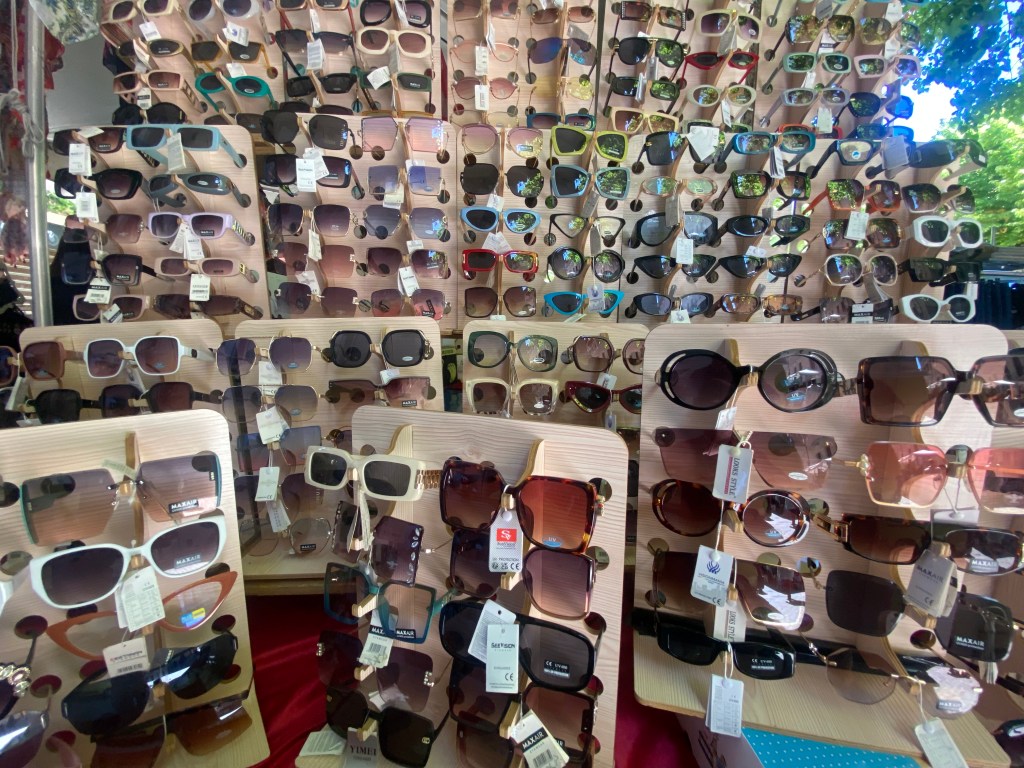
Clothing, handbags and other durables fill the main piazza. It’s a miraculous transformation of the vast cobblestone open space of last night, which will be back by this evening, and clean by Sunday morning.
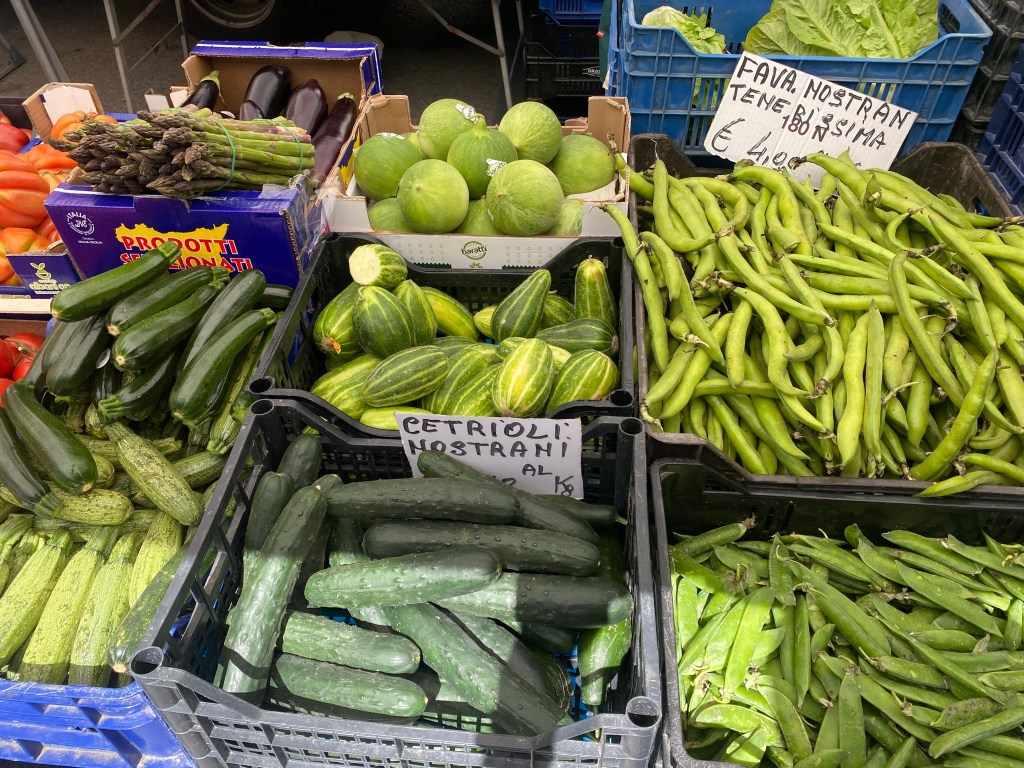
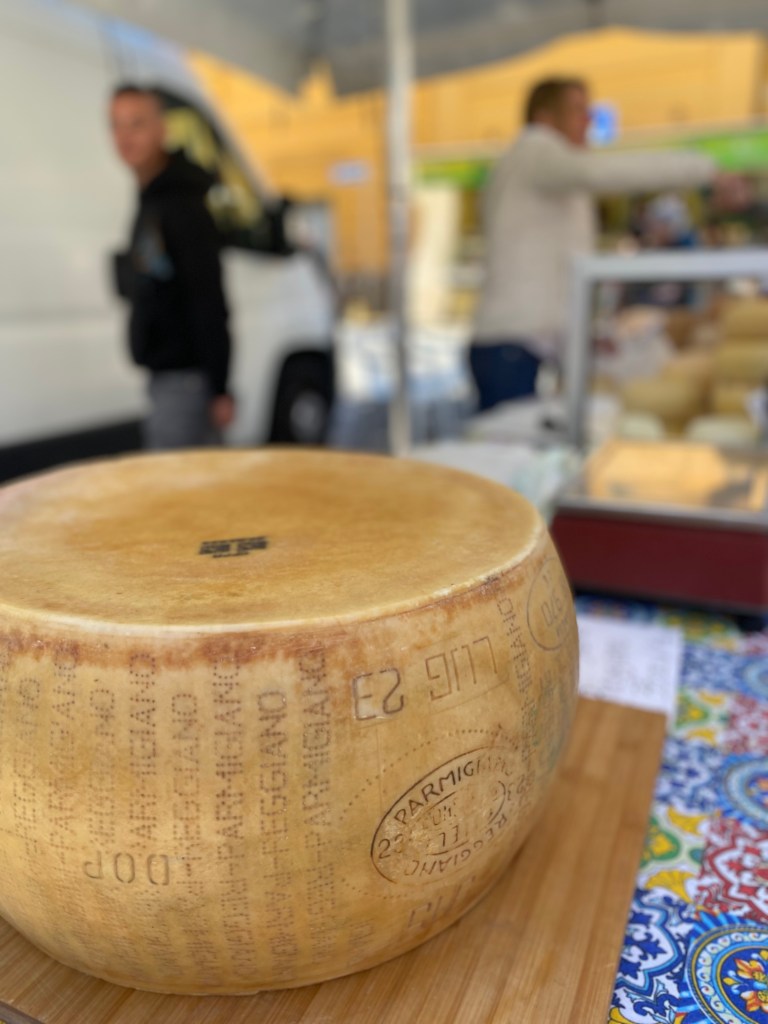
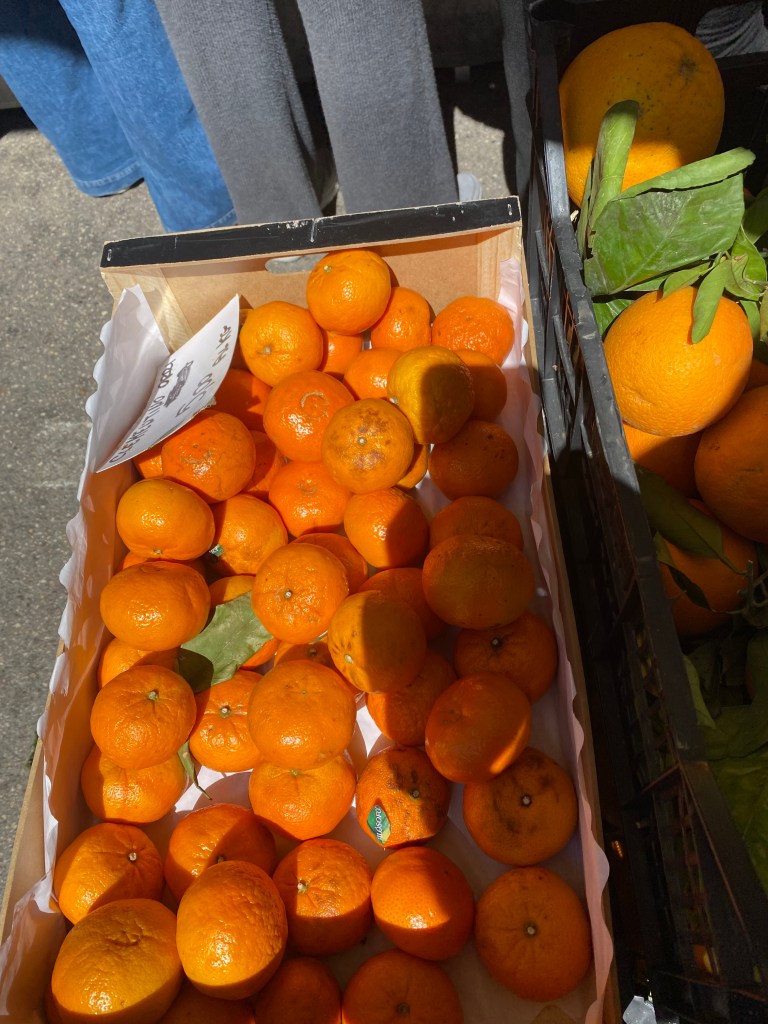
In a smaller piazza a few blocks away, after passing through the sea-smelling fish markets, we come to the farm-fresh vegetables, fruits, flowers, jars of jellies, cheeses and meats.
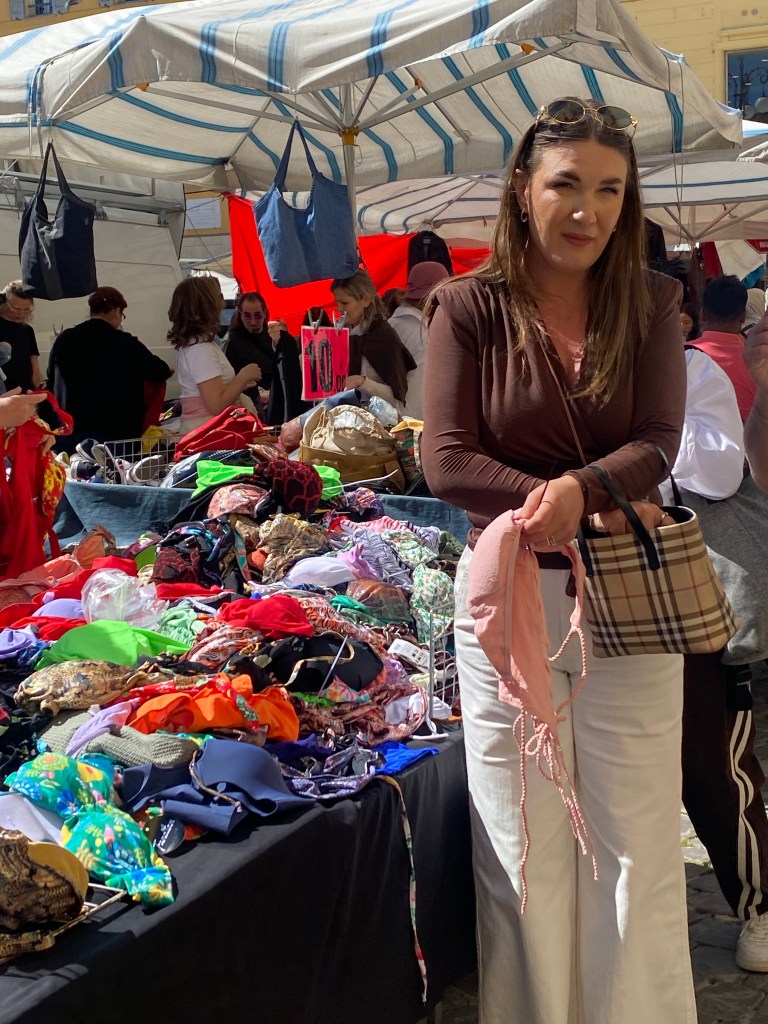
What I notice about the shoppers is how unhurried yet focused they seem, pawing through clothes, unemotionally eyeing the symphony of food choices, waiting patiently for their turn to pay the merchant, card or cash. They may have questions, but there doesn’t seem to be any bargaining here. Prices on the clothes are quite low, but set. It’s “fast fashion” with no fitting rooms. The food prices were not cheap, but they seem reasonable.
The merchants, too, appear unhurried and self-assured.
There is some kind of common understanding about this sunny Saturday market in May. I sense a general trust in the way the system works. The lady selling us a jar of ginger spread (Zenzero) for six euros left her station empty to get change for our €20 bill from a neighboring booth. Customers are trusted – at least those with no Italian. There are no sales taxes and no tipping.
The shopping here is for real consumer goods, not trinkets for tourists, and it supports more merchants than you’ll find in a typical American mall. But there is something else going on. It’s not primarily about the buying and selling, it seems to me.
A Saturday market in Italy is a kind of ritual practice in embedded relationships within the public square. Everybody knows the dance, and the tempo.
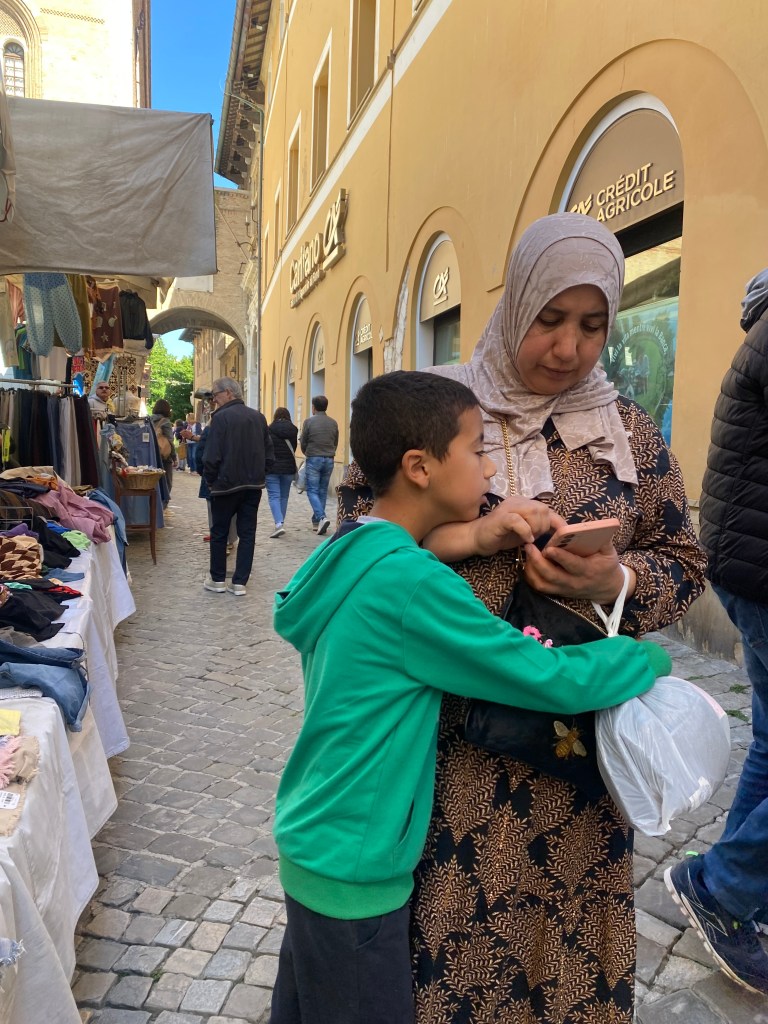
It confirms the human values of the culture. Fair prices but “buyer beware” (which has Italian roots: caveat emptor). Shoppers and merchants from foreign lands, Africans and Muslim women, appear to be included as a perfectly natural part of the trade.
This is how markets began in Europe 500 years ago, or more. Some of these open-air markets have been going on steadily since they began here, we read. No advertising or websites are involved.
This is shopping on a very human level. It is both international and deeply local.
I like it.


Leave a Reply