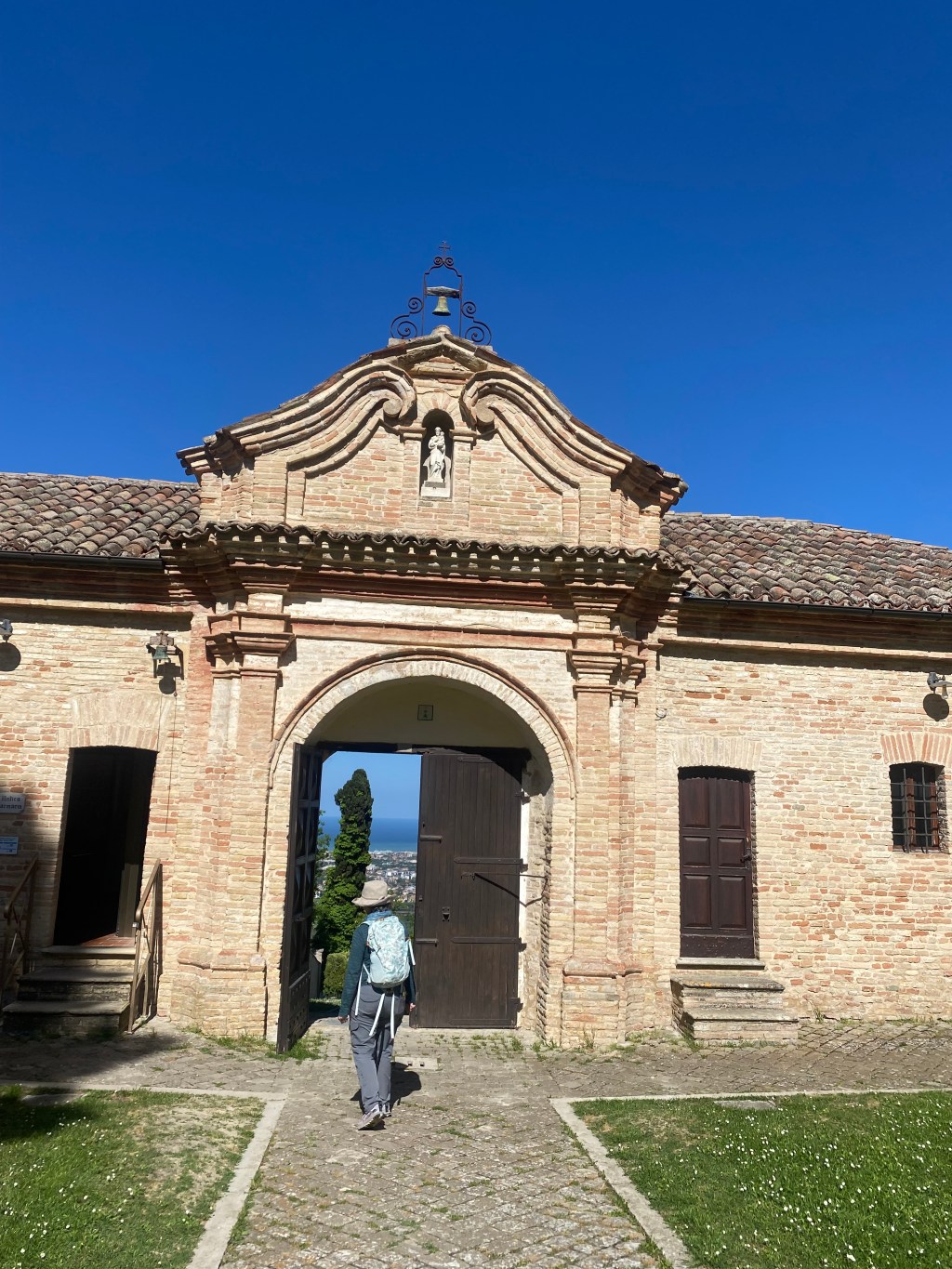
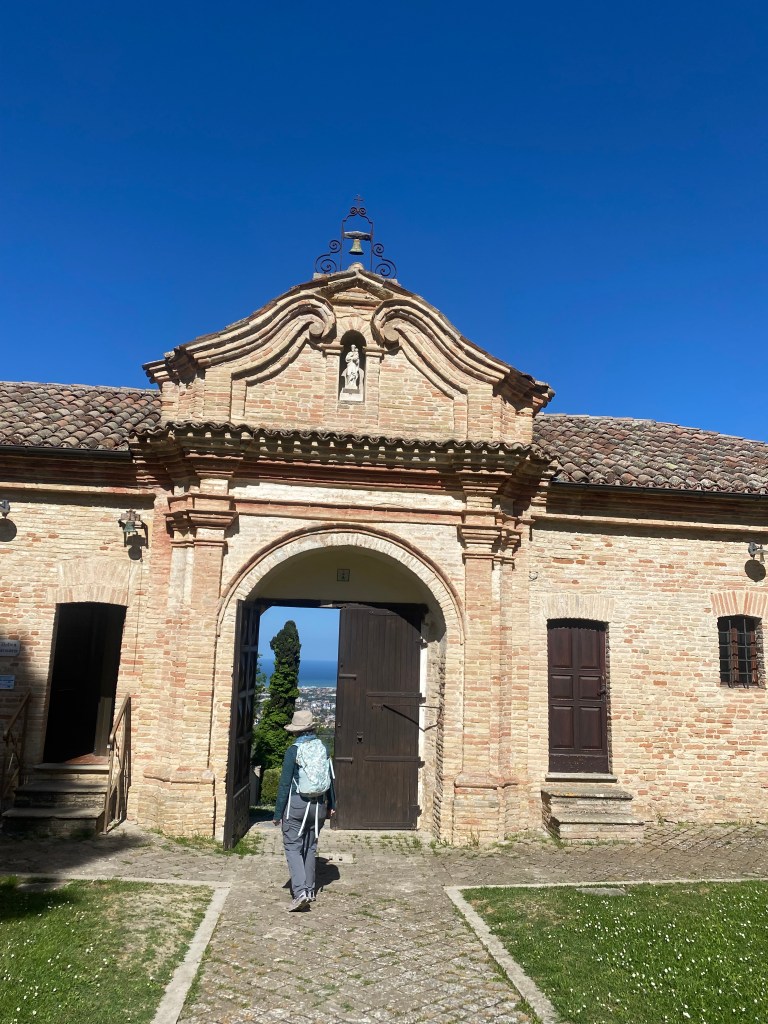
A Benedictine monastery with a pagan name, Eremo Monte Giove (Mt. Jove Hermitage), offers a breathtaking perspective on the area around it.
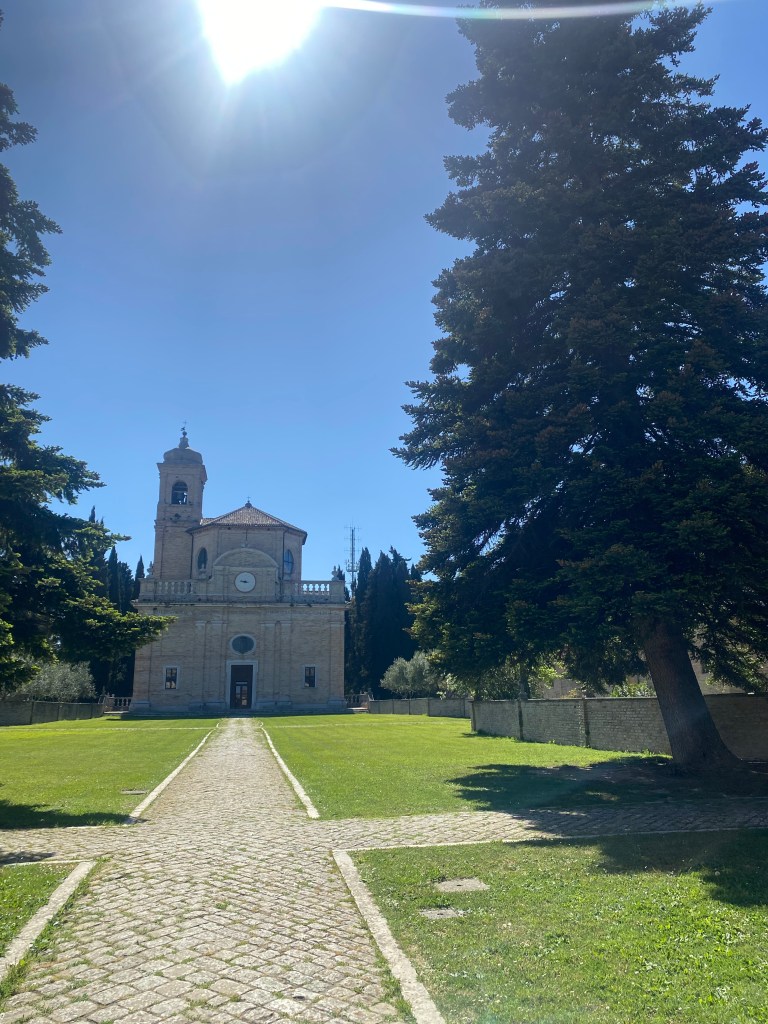
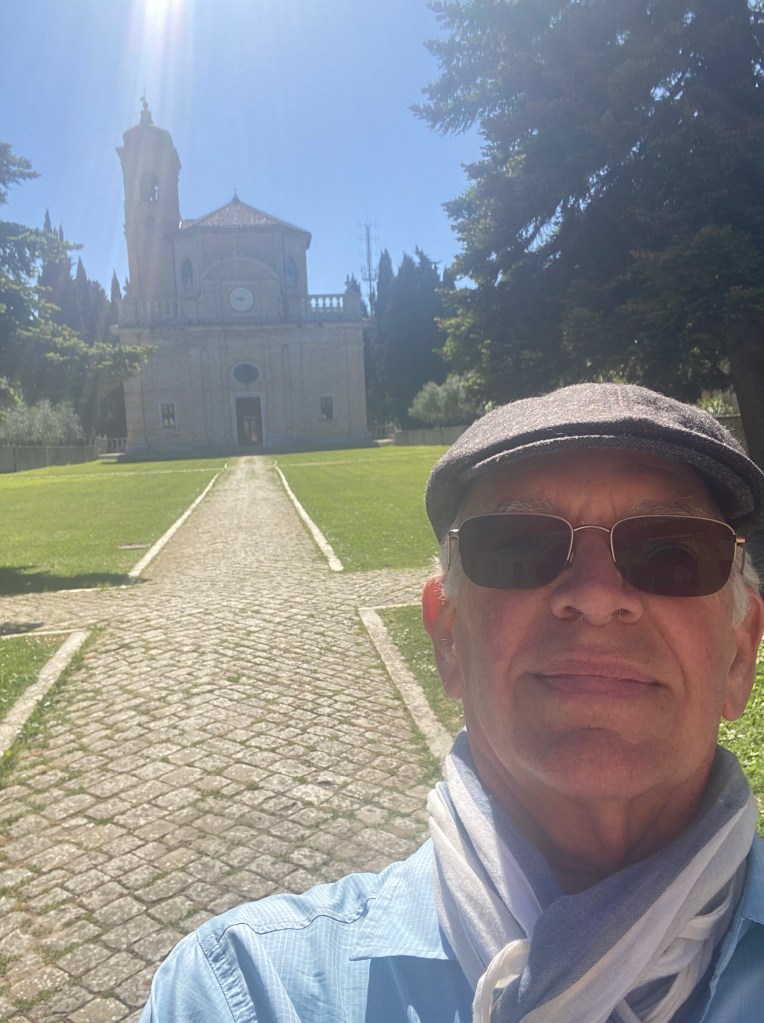
After you hike up the steep quiet road from where the bus lets you out at Rosciano, you come on a deeper quiet that is stunning. The mile-long hike through rough, bird-singing nature suddenly comes on an ordered serenity of bricks, mowed grass, a 400-year-old architectural plan and delicate Catholic images and crosses.
“Ora et Labora,” the Latin for St. Benedict’s rule to “pray and work,” has been manicuring this place for centuries, and you can feel it.
But there are no monks to be seen, contemplative or otherwise. Those who are here withdraw for the hours when we can visit – two hours in the morning and three in the afternoon, Thursday through Sunday only. Gift shop open.
We visited last Thursday, alone except for the German couple ahead of us on e-bikes (one of whom fell over trying to re-start on the road’s slope).
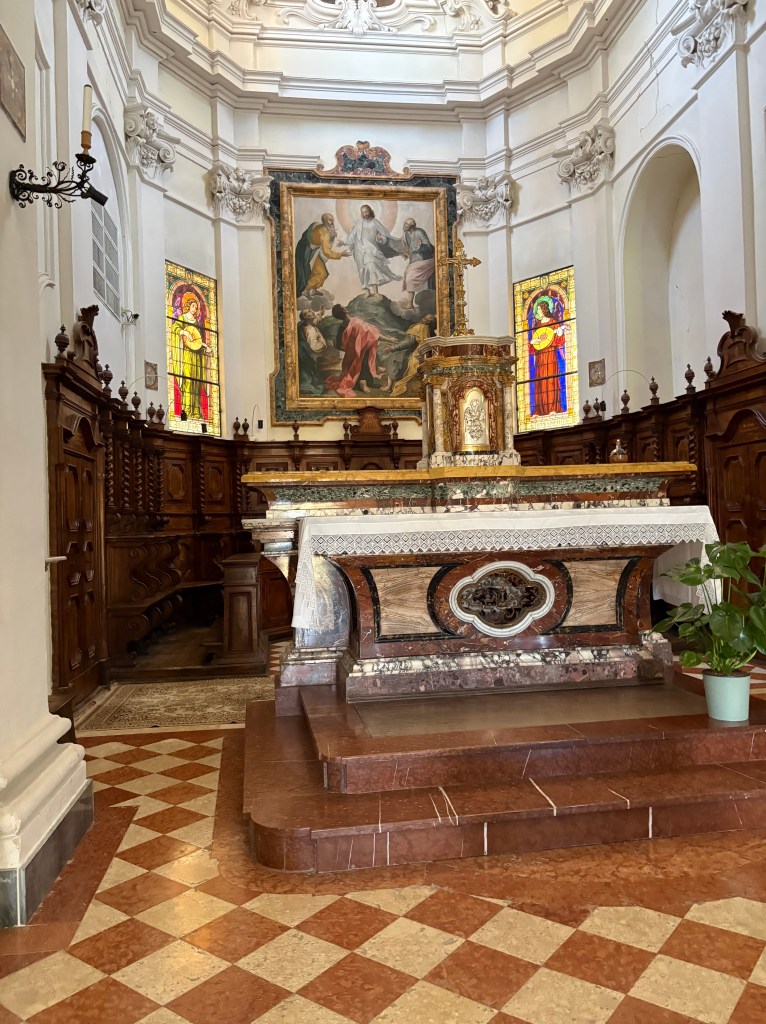
The peaceful order of the place, which we contemplated inside the art-filled 18th century church, seemed to come from a serious side of Christianity that history has left behind.
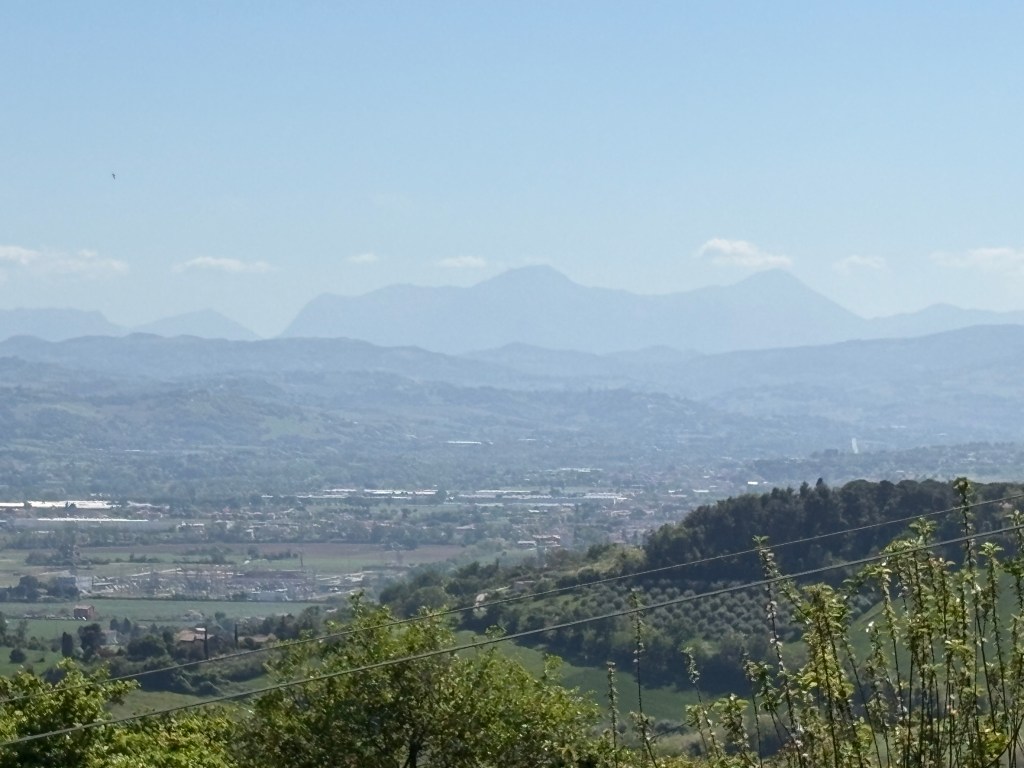
Outside, around the walls, the perspective was not chronological but geographical – and equally dramatic. In one direction, we could see many miles of beautiful Italian agriculture all the way to the mountains featuring Mt. Catria, with its 5,584-foot peak that we reached years ago.
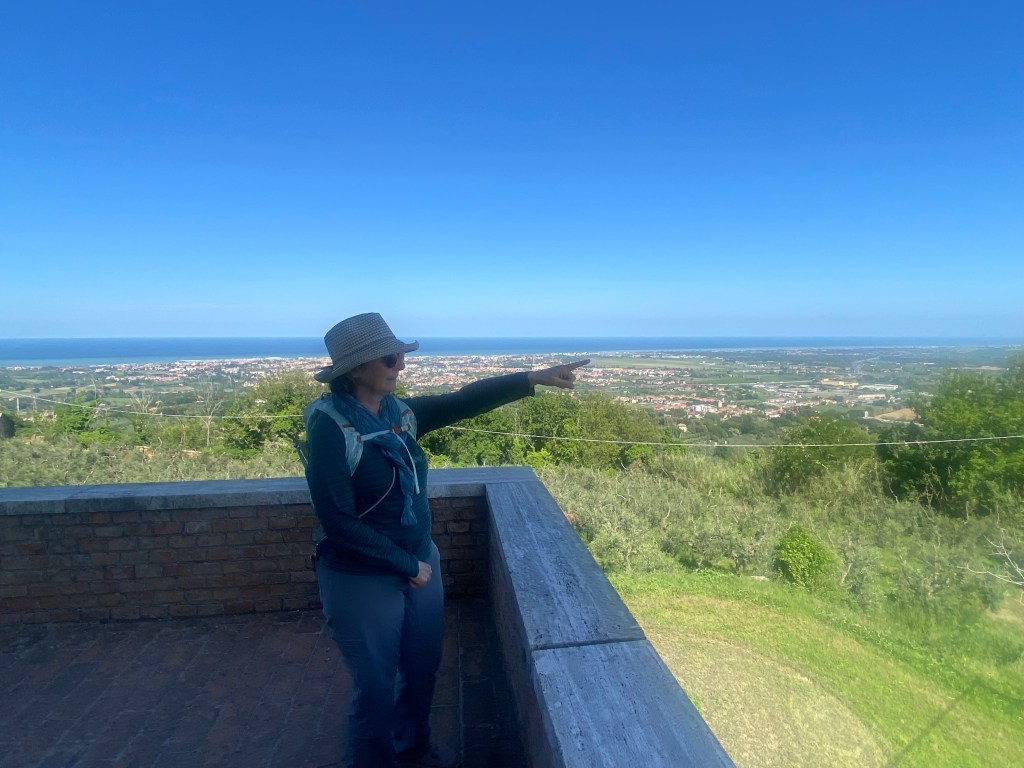
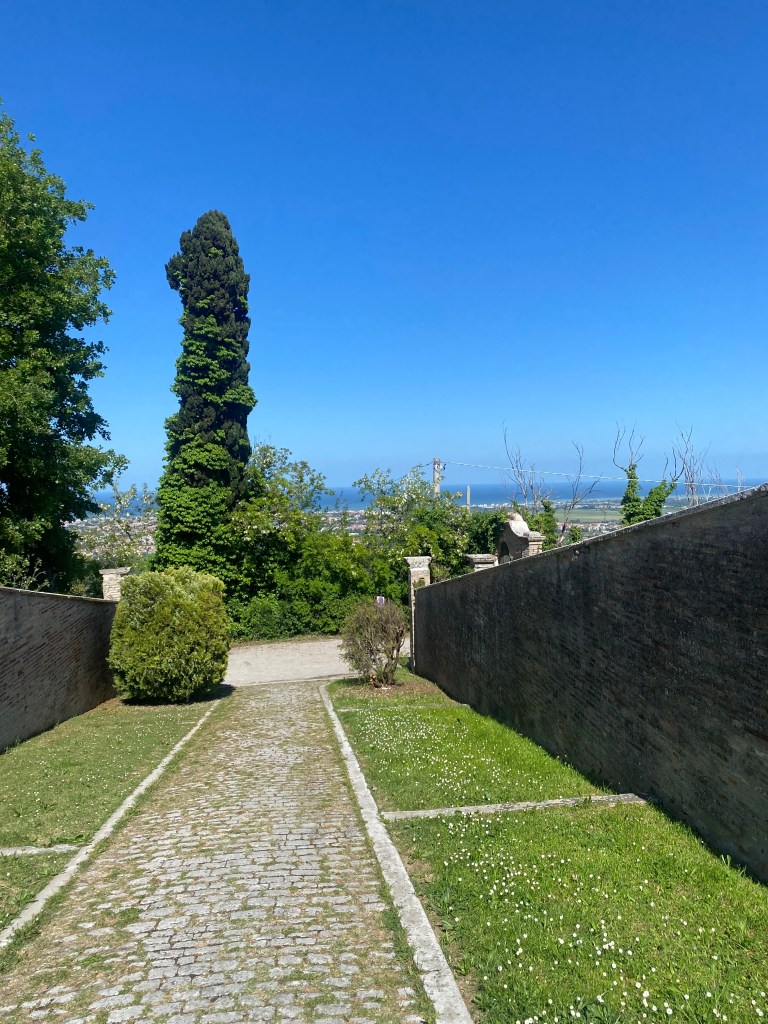
In the other direction, we could see Fano, the city where we’re staying, and the blue Adriatic and bluer sky. It gave us an informative, micro-circuitry view of Fano, though we weren’t quite sure which of the towers was the one near our casa.
“I have climbed the hills of view/ I have looked at the world and descended/ I have come by the highway home/ And lo, it is ended.” The Robert Frost poem came to me with the panorama.
On the other hand, our perspective on the Benedictine life was – and this may be unfair – that it is too quiet. Lo, it is ended.
I have heard about something called “The Benedictine Option.” It is the title of 2017 book by the conservative commentator Rod Dreher, who argues that liberal secular culture is so morally corrupt, the best option of Christians is to give up on politics and withdraw into their own intentional communities of faith.
Look up the book, and you’ll find that Dreher’s idea about Benedict comes from a sentence in a book that I respect, though struggled to understand. That book, “After Virtue,” is by philosopher Alastair MacIntyre.
MacIntyre’s main point – I think – is that our language of right and wrong has lost its underpinning, which is not originally Jewish or Christian but – hold on, I said he was a philosopher – “Aristotelian.” A classical Greek sense of human “virtues” as practice, as a way of being, is lost. So any moral argument – he uses the example of abortion – has no resolution today because the arguments are, his word, “incoherent.”
But the sentence that Dreher picked out was this: “If the tradition of the virtues was able to survive the horrors of the last dark ages, we are not entirely without hope … We are waiting not for a Godot, but for another—doubtless very different—St. Benedict.”
But MacIntryre has complained the Dreher misunderstands the sentence. The monastic life that St. Benedict nurtured was not a retreat, MacIntyre said, but an alternative to the feudal order and those monastic orders brought civilization through the dark ages. “By the skin of our teeth,” it has been said. It brought us to the Enlightenment. And what that civilization is today, it seems obvious to me, is liberal democratic, diverse and scientific, full of a variety of religious faiths.
A few years ago, I was in the offices of the Jesuit magazine America, and asked the editor about the Benedictine Option. He said Jesuits look out at the world in another way. They believe in engaging in the world, learning how it was, and is, and can be.
I have looked at the world and descended.


 An American journalist heads for Italy to see his country changing from afar.
Leave a reply to browncow44 Cancel reply