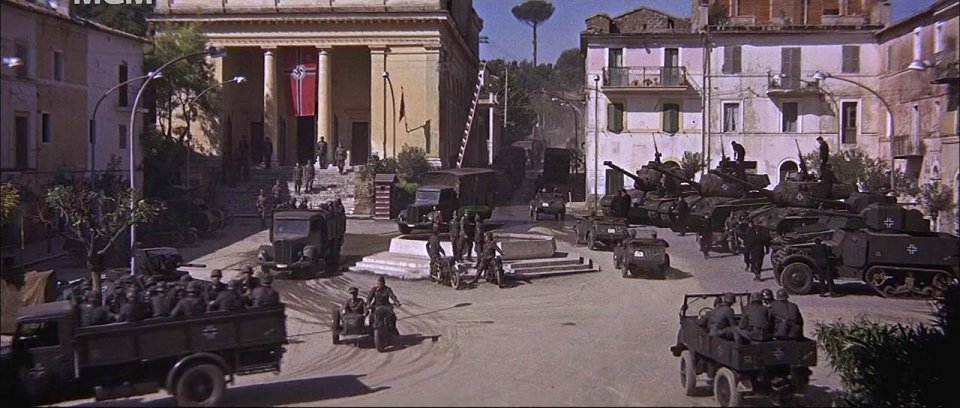
Near the end of the 1969 movie “The Secret of Santa Vittoria,” the psychological battle between the Nazi captain and the slyly submissive mayor of the Italian town (played lovably by Anthony Quinn) reaches a tense climax.
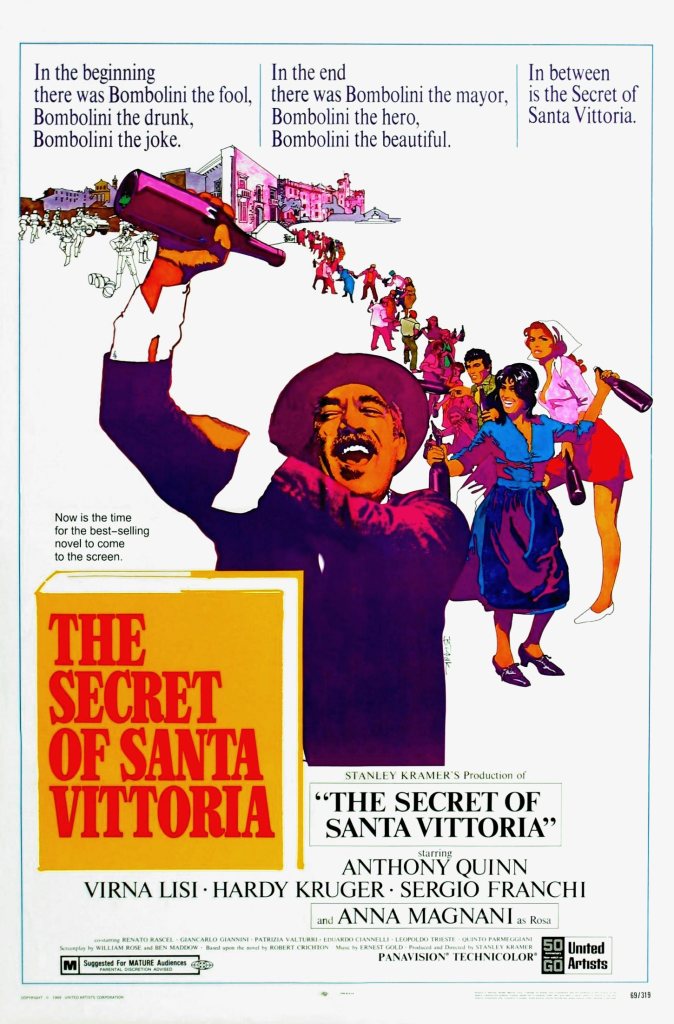
The two men stand beside the fountain in the center of Santa Vittoria. It’s like the piazzas of so many other rural Italian towns we’ve seen, and in fact was filmed with hundreds of local extras in the Italian town of Anticoli Corrado, outside Rome.
The townspeople have gathered around the edges, keeping silent with their secret about the million bottles of local wine. In long bottle-passing lines, the entire town had hidden the wine in sealed caves before the Nazis came with orders to confiscate it. Now, the Italians watch implacably as Quinn’s wine-guzzling Bombolini tells Captain von Prum, “There is no wine.”
Bombolini had never heard of Machiavelli, being uneducated like almost everyone from Santa Vittoria. But when given a copy of “The Prince,” he quickly learned a few tricks.
Von Prum is sure they are hiding the wine, and puts their lying to the ultimate test. He jams a German Luger to Bombolini’s head and tells the townspeople he will shoot unless someone says where the wine is hidden. Everybody remains silent, expressionless.
“My God,” says von Prum, whose own secret is that he is coming to respect their Italian virtues. “What kind of people are you?”
The Nazis leave, defeated by this Resistance. Bombolini, wine bottle in hand, scans the gathered population that would have let him die. He shouts to their silence, “What kind of people are you?” and then laughs, and the celebration begins. Music and dancing break out all over the piazza.
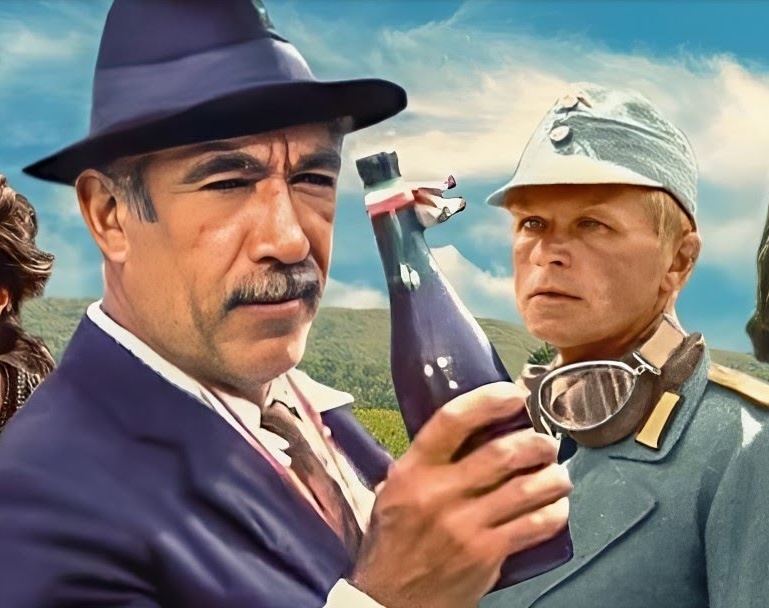
The story seems too good to be true, and in fact, was made up in the 1966 best-selling novel “The Secret of Santa Vittoria.” It’s fiction, but I think the American novelist, Robert Crichten, spent time studying (and admiring) Italians. He fought in Europe during WWII, went to Harvard on the GI bill, and after two non-fiction books, wrote this very successful first novel.
It’s a good question, impossible to answer: “What kind of people are you?” Italians also wonder: What kind of people are Americans if they can elect Donald Trump as their leader – and twice? But then, the Italians elected Benito Mussolini as their leader. Most of them believed in him.
“The Secret of Santa Vittoria” is about the hypocrisy, trickery, and finally, communal bravery that the town demonstrates in its scramble to navigate the sudden end of Mussolini’s Fascist government. It is a dramatization by an American novelist and American director of one of Italy’s brutal turns of history.
I wondered, when we watched it here on Netflix the other night, how it answered the question, What kind of people are they?
An Italian man who heard us speaking English at one of our favorite little restaurants here in Fano came to our table to talk. Our friend from Virginia, Marcy, was with us, her last night of visiting.
The Italian man had spent time in the United States, so wanted to practice his English. We invited him to join us. He left his girlfriend alone at the only other occupied table, so we invited her to join us as well. The five of us talked long after we finished dinner, and the man then treated us to after-dinner shots as we ate our gluten-free tiramisù.
His name was Simone, a large man of 46, bug-eyed behind framed glasses. He was proud to be from Rome, and proud of the superiority of Italians in everything from fashion to science. We were put off by some of his opinions, but they didn’t fit predictably into the American right-wing mold.
He said Trump was terrible, a Mafia-type boss who reminded him, exactly, of the late Silvio Berlusconi, Italy’s former prime minister and corrupt media mogul. Simone was glad to talk to us because we were “enlightened,” he said after learning we were not Trump people. He blamed American voters for their appalling “ignorance,” particularly of history and geography.
He also said that feminism was imported by “the Rothchilds” (an absurd twist on an old antisemitic trope) to increase income taxes from two working parents, not just the man. (Women were not given the vote in Italy until 1946). He said immigrants in Italy won’t work because they get free housing and a daily allowance. (Most of the people who look African or Middle Eastern to us seem well employed and Italian-speaking, though a few are panhandlers.) He supports Italy’s conservative Prime Minister, Giorgia Meloni.
I didn’t trust his generalization about Italian people. But his explanation of the effects of history seemed a plausible answer to the question of what kind of people Italians are.
Italians are many things. A mix of hard-working and unhurried. Disciplined and sensual. Friendly and private. Kind and kinfolk-loyal. You recognize a distinctive style in family outings, market days, cafés, weddings, football matches, and their colorful ceremonies for conveying honors and titles.
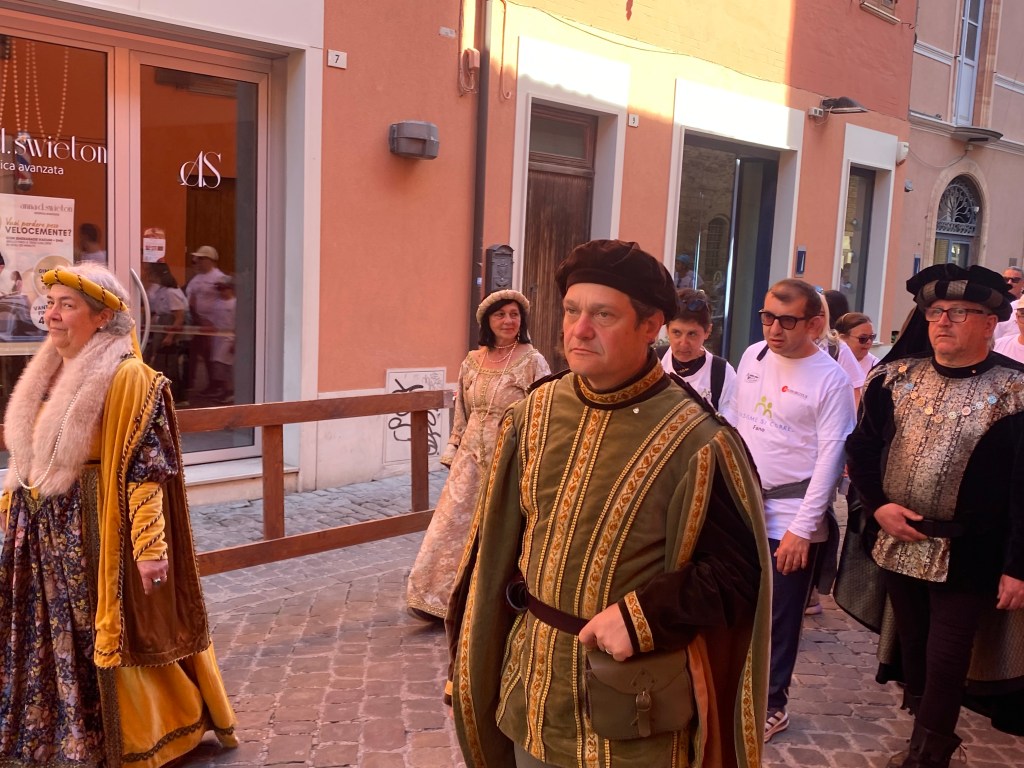
Simone said Italian people, in previous centuries, had to submit to invasions and occupations by a succession of inferior outsiders such as Normans, Franks, Germans, Ostragoths, what have you. The people know how to submit, evade, and continue enjoying being Italian. They know their history, and they know geography. They know things will change. So why not just enjoy being Italian?
I do think history has given Italians a maturity that Americans lack. They know about fascism, and they don’t seem interest in trying it again. I think they are not naïve about war, being closer to Russia and Iran. They are going electric as fast as they can, because of their dependence on gas and oil that must be imported.
History may or may not have made them cagey and sly in the Italian style exaggerated by the buffoonery of Anthony Quinn’s Bombolini.
But I know history makes them proud and smart. And cautious.


Leave a Reply