Italians don’t just drink coffee. They administer it.
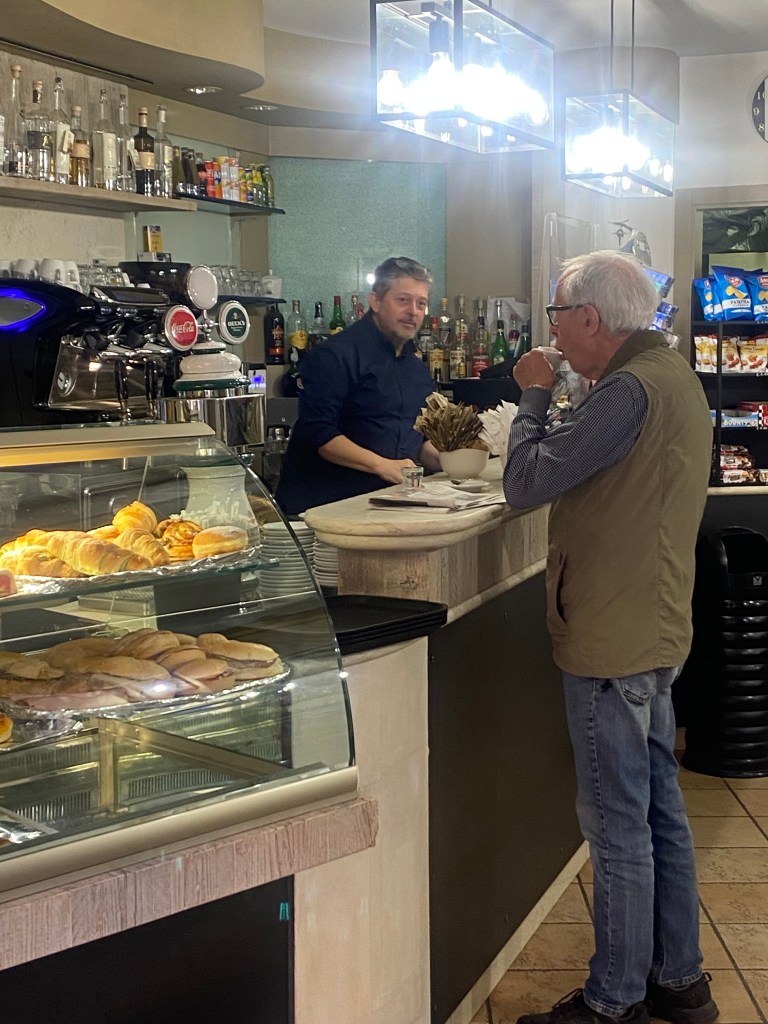
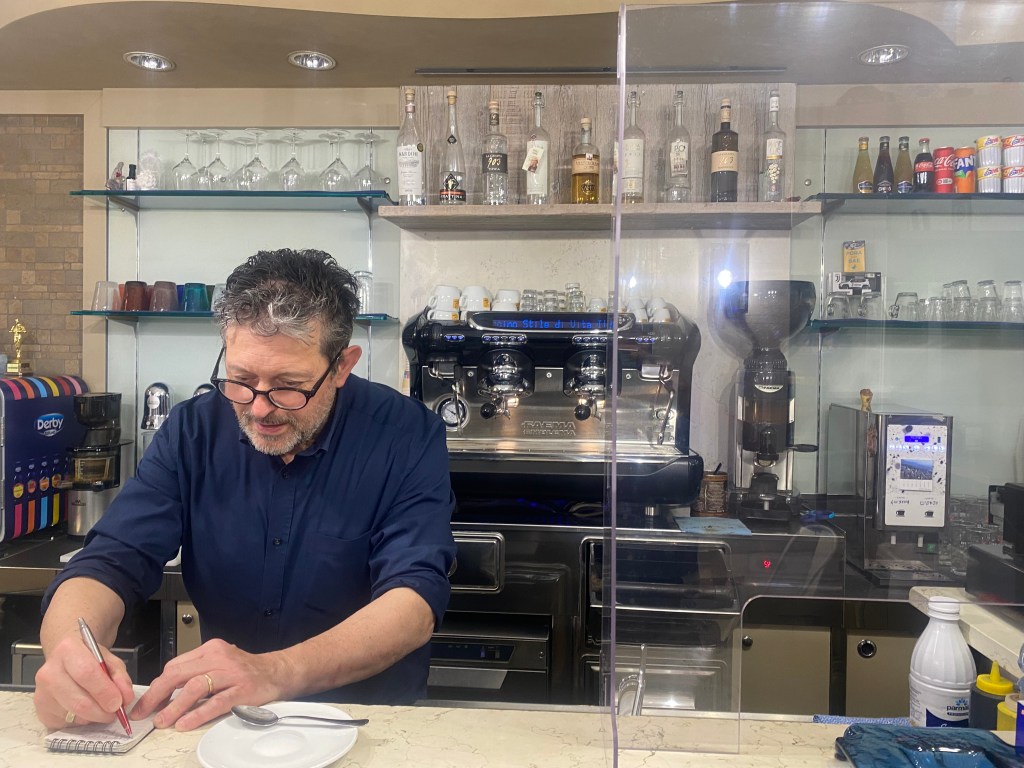
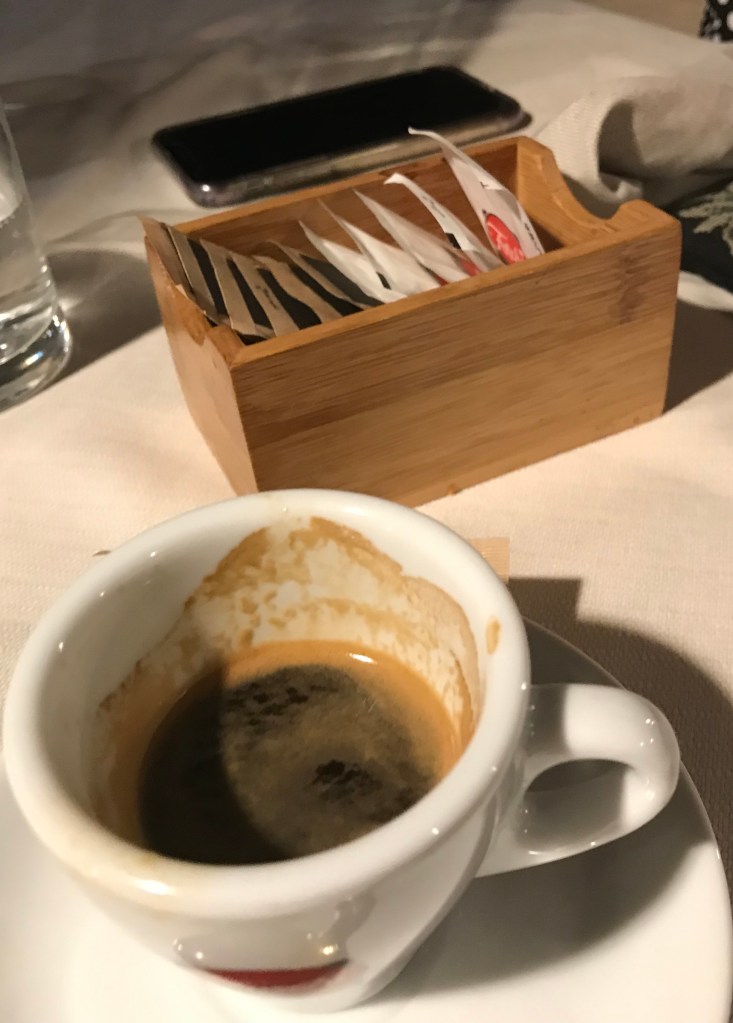
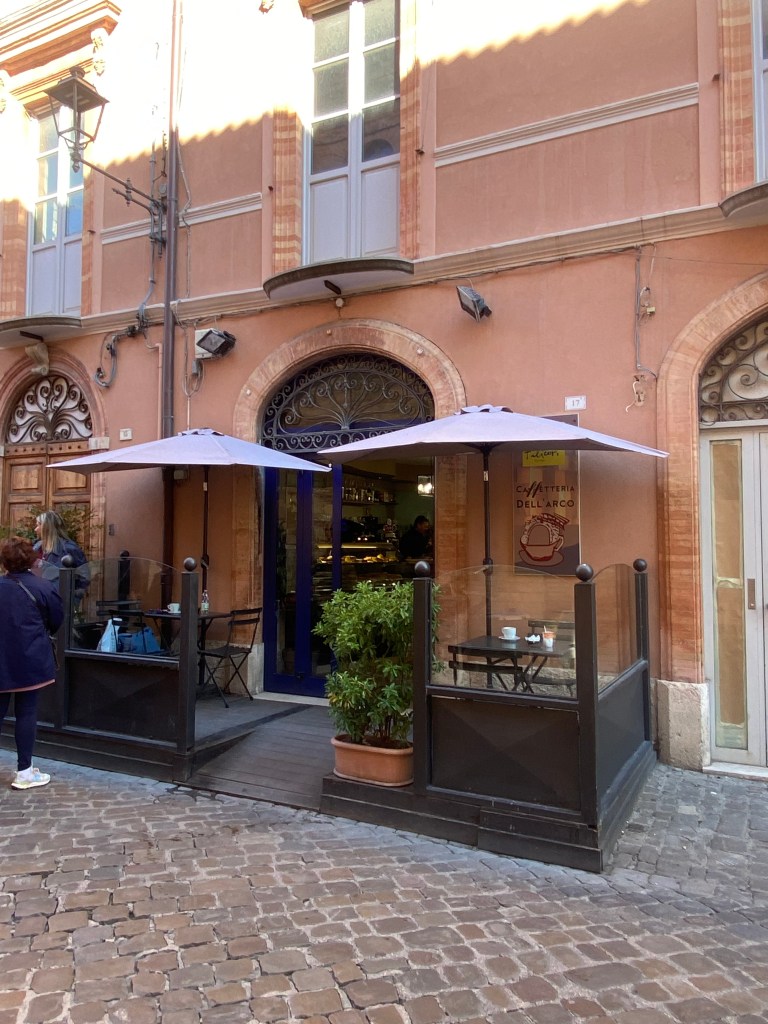
A barista like Daniele, the man who runs Caffè Dell’Arco in Fano, administers what we call espresso – the drink they call un caffè. Some regular customers stand at the counter and down their dose of the dark black drug from the bottom of a tiny coffee cup. They might add a little sugar to cut the bitterness.
Regulars will come in all day for their coffee fix until he shuts down around 7 p.m. (After a restaurant dinner as late as 9 or 10 p.m., the waiter will ask you if want your coffee now.)
Some customers at Caffè Dell’Arco sit at a table inside, or on the front porch under umbrellas, or across the cobblestone street, talking in pairs. Others will just take their hit standing alone at the counter. Daily papers are available for free.
It’s like any café in Italy.
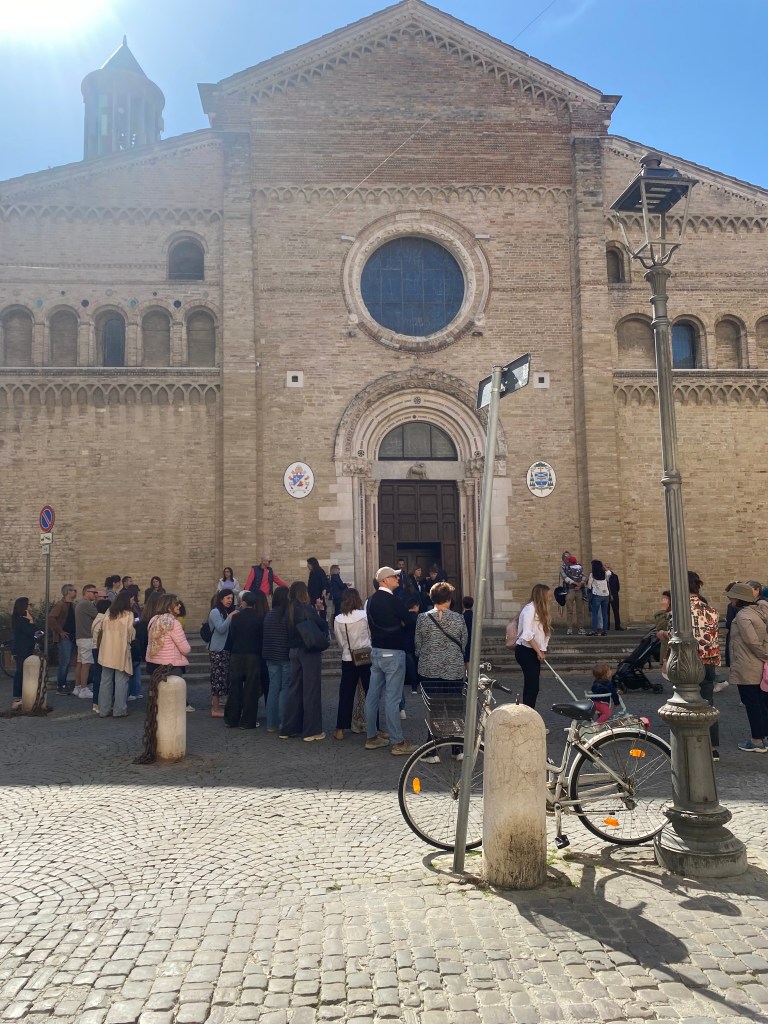
Except the Caffè Dell’Arco happens to be about 20 yards from the Piazza Clemente VIII in front of Fano’s relatively modest Cathedral where Pope Clement VIII was baptized. Born in Fano in 1536, Ippolito Aldobrandini is said to have become the first Pope, as Clement VIII, to drink (and enjoy) coffee.
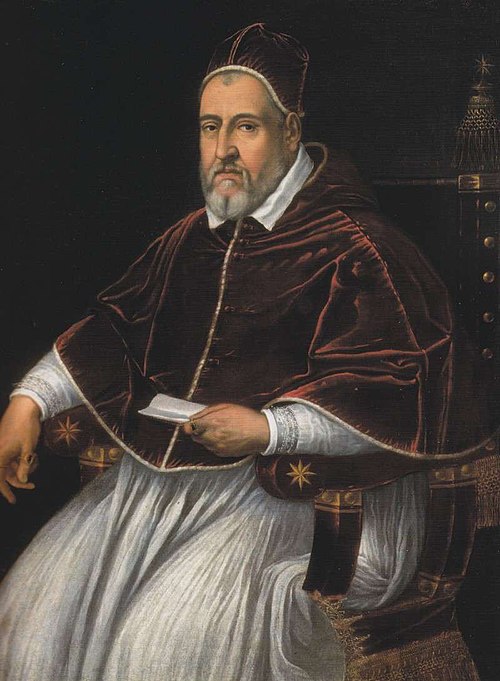
It’s a legend that’s too good to be true. Here’s the legend.
Throughout the Middle Ages, Christian rulers and church authorities thought of coffee as the devil’s drink. It was dark, made people act differently and came from “the land of the infidels,” the Turks.
“Coffee beans had arrived in Italy through the Venetian trade routes with North Africa and the Middle East,” according to a website called Catholic Coffee. “It was spreading throughout the Christian lands, and had strange effects on human behavior…depending on who you asked.”
Pope Clement’s advisors wanted him to declare coffee a satanic sin to be avoided. With his training in law, he decided to taste it first. He liked it, and continued drinking it regularly. From then on, according to the legend, Italian Catholics had permission, and they took it. All day.
The effect of coffee on society is said to be somewhat revolutionary.
Beer or mead make the masses sluggish, and happy. Coffee makes them alert to oppression, and energetic enough to do something about it, says the Coffee Catholic.
But it wasn’t coffee alone that may have brought on the changes that shook the politics of Europe from the 17th century on. It was the coffeehouses, places where newspapers could be read and discussed, or read aloud to the illiterate.
Charles II of England, one of the last “divine right” kings, saw the danger of coffee houses and newspapers together. His “Proclamation for the Suppression of Coffee-Houses” of 1675 read, in part:
Whereas it is most apparent, that the Multitude of Coffee-Houses of late years set up and kept within this Kingdom . . . have produced very evil and dangerous effects; His Majesty hath thought it fit and necessary, That the said Coffee-houses be (for the future) Put down and Suppressed.
The suppression didn’t last. In 1695, the Licensing Act lapsed that had given English kings control of printing presses and the power to censure. Within a generation, the number of periodicals quadrupled, full of criticism of government.
Meanwhile, during the 18th century, London came to have about 3,000 coffee-houses.
Could it be that this mixture – a free press, coffee-houses and COFFEE – is more responsible for the explosion in constitutional and democratic revolutions than any writings from John Locke to Karl Marx?
That, in a nutshell, was the theory of a German political philosopher named Jürgen Habermas. Habermas, who died on March 14 at the age of 96, had begun his career as a Marxist and follower of the radical “Frankfurt School” of scholars. But in his paradigm-shattering study of coffee-houses and the press of the 18th century, mostly around London, he embraced an optimistic, even conservative, view that constitutional democracy came out of the cultivation of what he called “the public sphere.”
The embryo of the public sphere, he argued, was the 18th and 19th century coffee houses of European and American cities.
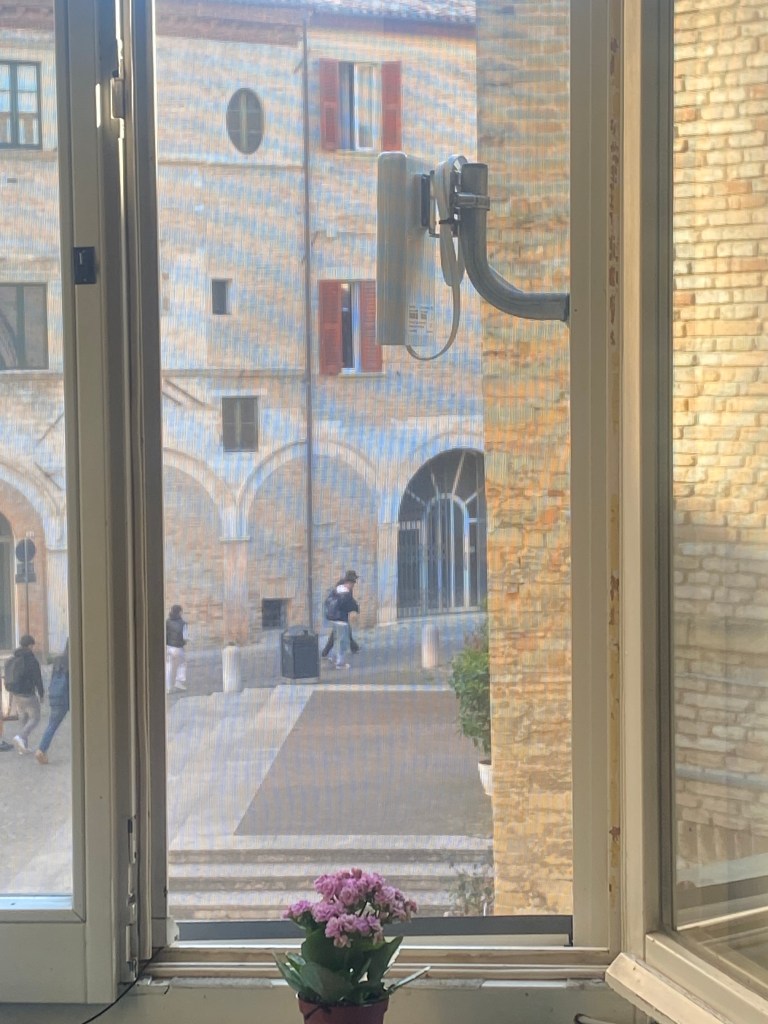
I like to think that Pope Clement VIII helped seed this civic space by enjoying his coffee. I look out of our apartment window on Piazza Clemente VIII, hear the Cathedral bells, and walk across the street to the Caffè Dell’Arco for my morning cappuccino with Libby.
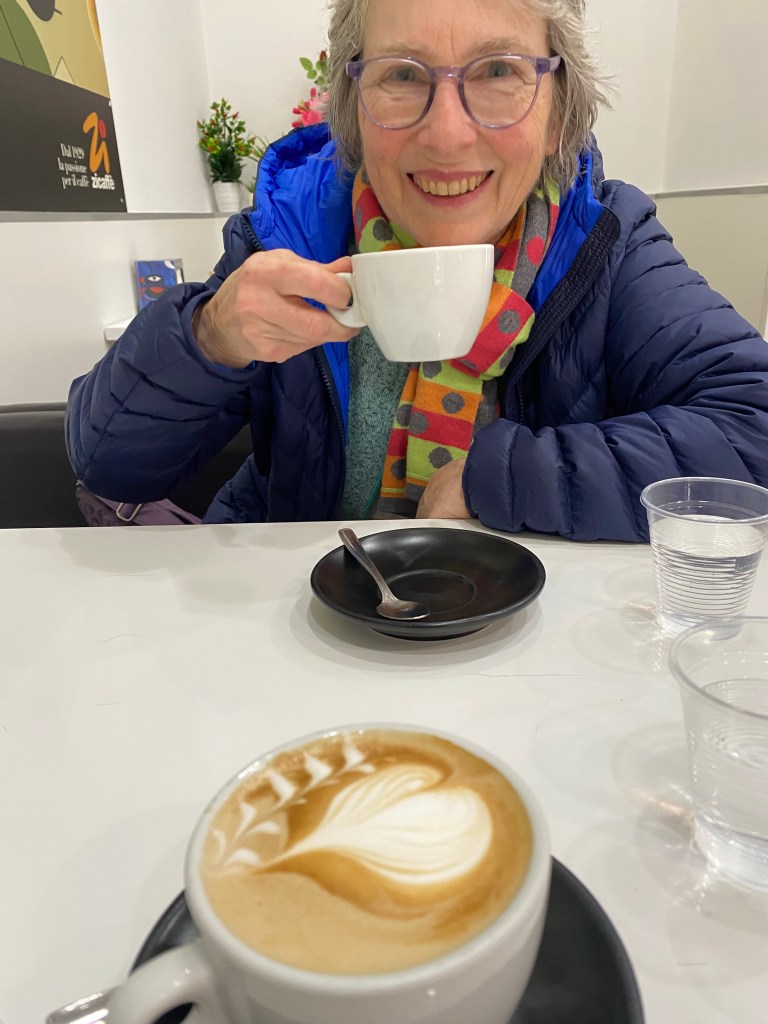
The scene there is friendly and lively. I like to think it’s a little closer to Habermas’s 18th century coffee houses than a Starbuck’s where everyone sits alone with their laptops and iPhones.


 An American journalist heads for Italy to see his country changing from afar.
Leave a comment