And so, finally, Venice!
A full day here is like one of those Italian meals where you realize you’ve eaten too much. And then you have a dolce, and a shot of limoncello.
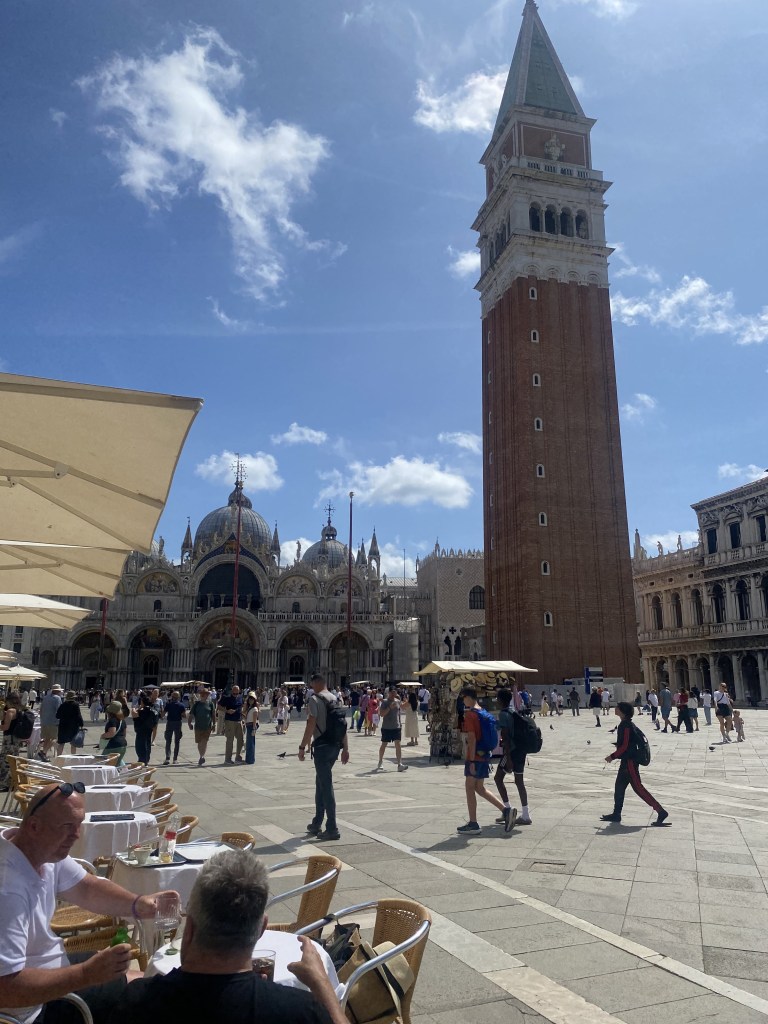
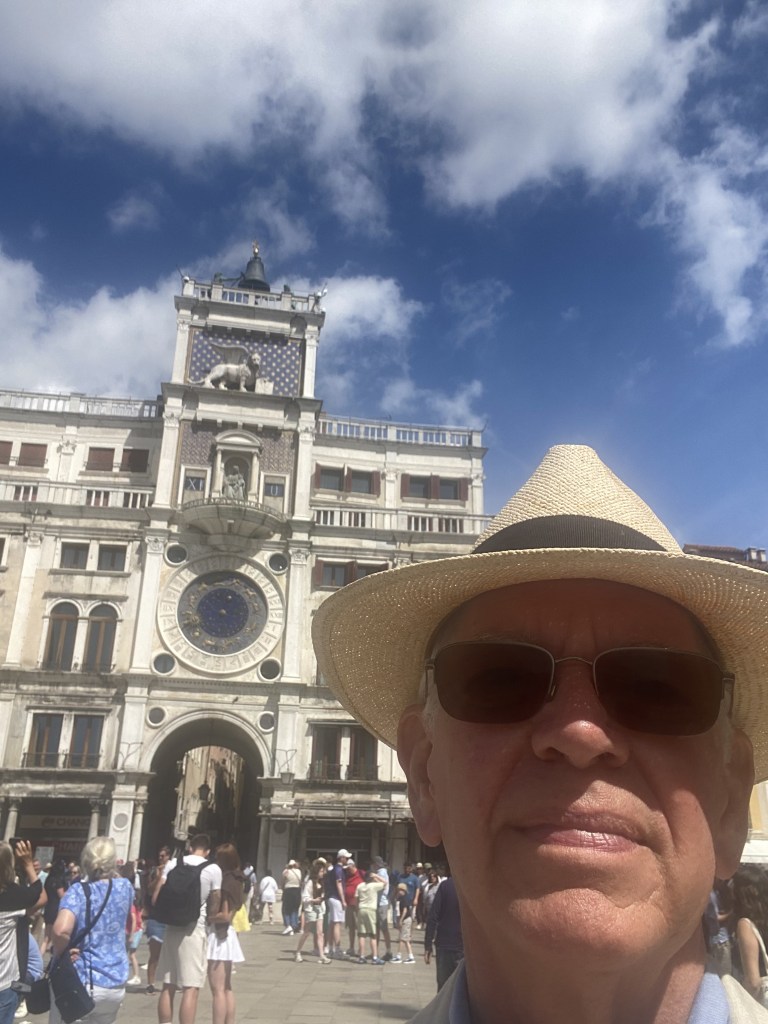
One full day in Venice between two nights in a Torre del’Orologio (Clock Tower) Suite is too rich to describe. It’s our arrivederci Italia, after a total of three months indulging in it. Over the winter holidays, we were in Fano and in Pulgia, the peninsula’s boot heel. Since mid-April, we’ve been hiking in Tuscany, passing through Bologna a few times, living on the Adriatic in Fano and holding a week-long reunion with friends in Urbino.
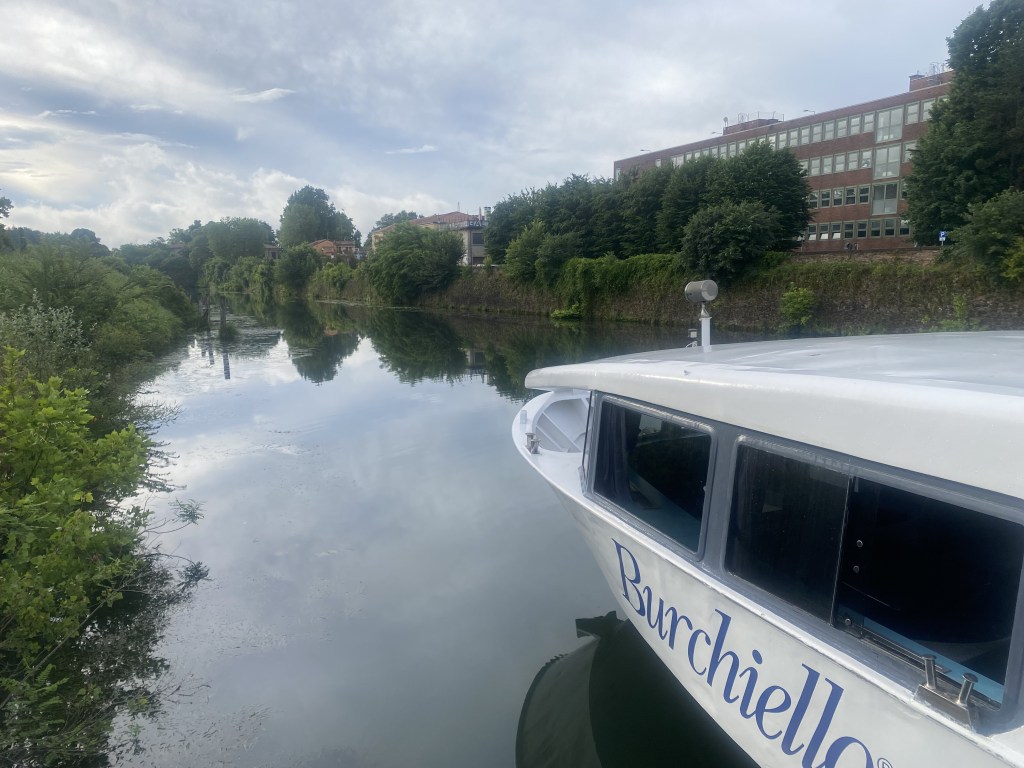
In the end, meeting with my cousin Oliver and his wife Ann, we left Padua in a tour boat, gliding along the tranquil Brenta canal, then over the choppy open waters to the Lion of the Sea.
One way to understand Venice is to grasp its acquisitive wealth that peaked four centuries ago. Venice was a protected water city with a cunning for global trade just when the sea routes were opening to the East. The merchants of Venice were the tech bros of their age, but wealthier, and less religious.
All they needed was a final victory at sea over the Sultan of Byzantium, which they got in 1571 with the Battle of Lepanto. G.K. Chesterton’s rollicking poem about that battle dramatizes it as the last crusade, when the Pope called for swords about the Cross. “The last knight of Europe takes weapons from the wall.”
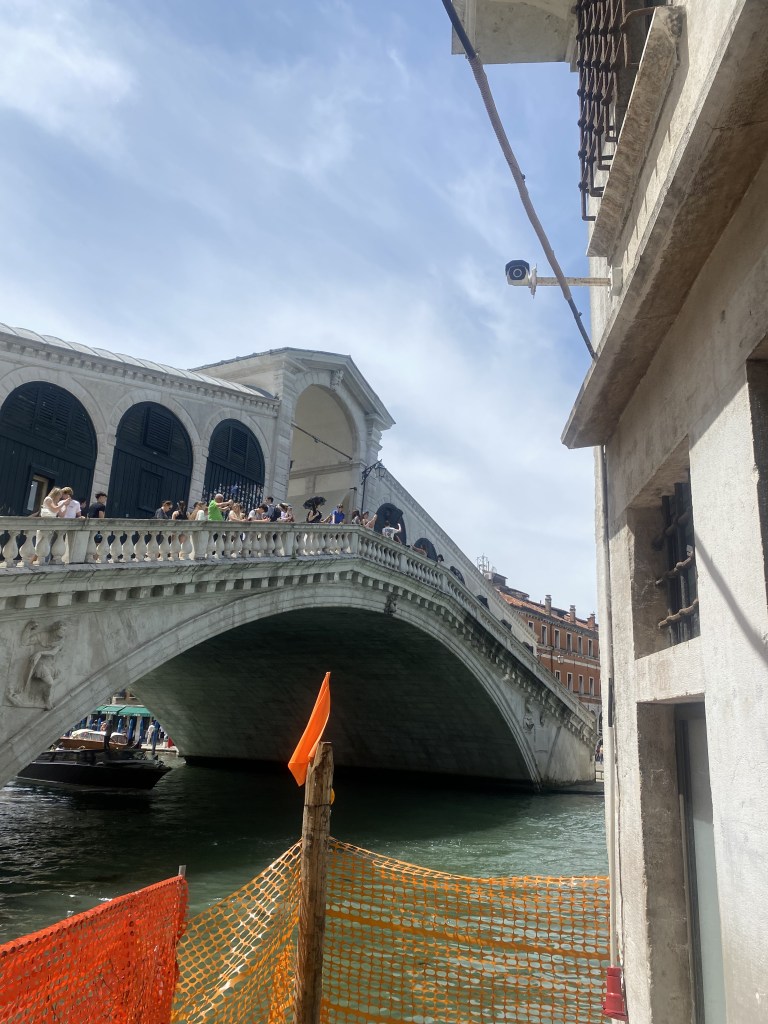
The mercantile wealth of Venice added a beautiful layer of art, Baroque music, architecture and civic power on top of what was already an ancient and unique city of canals and jumbled alleyways.
It remains an extraordinary city today, full of visitors and no cars.
Along the Brenta canal, it’s possible to see the wealth of Venice in isolation. Here are villas that the richest families built or bought for summer homes away from the crowded, hot months in Venice. These villas are like the summer “cottages” along Ocean Drive in Newport, Rhode Island, where Robber Barons of the Gilded Age hosted parties and used Italian craftsmen to adorn mansions.
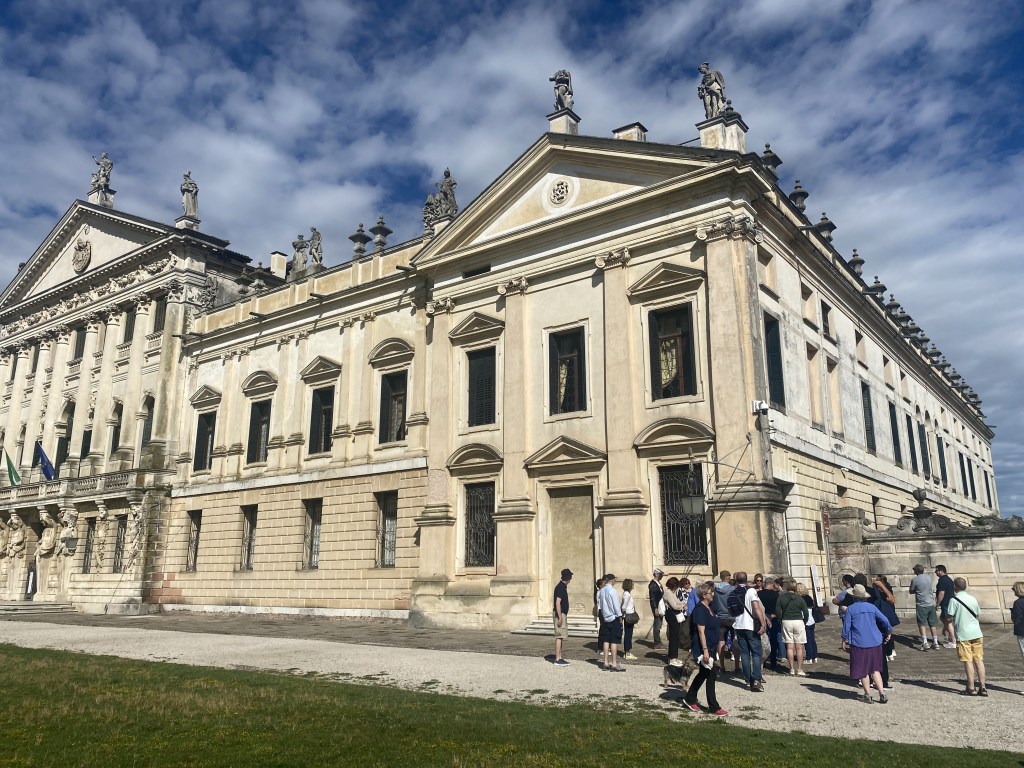
The first villa we toured on our day-long canal ride was grander than anything in Newport. The merchants who had it built in the 1730s had Versailles in mind. In fact, Alvise Pisani, a Doge of Venice, had been Venice’s ambassador to Louis XIV. So the French Court was his model.
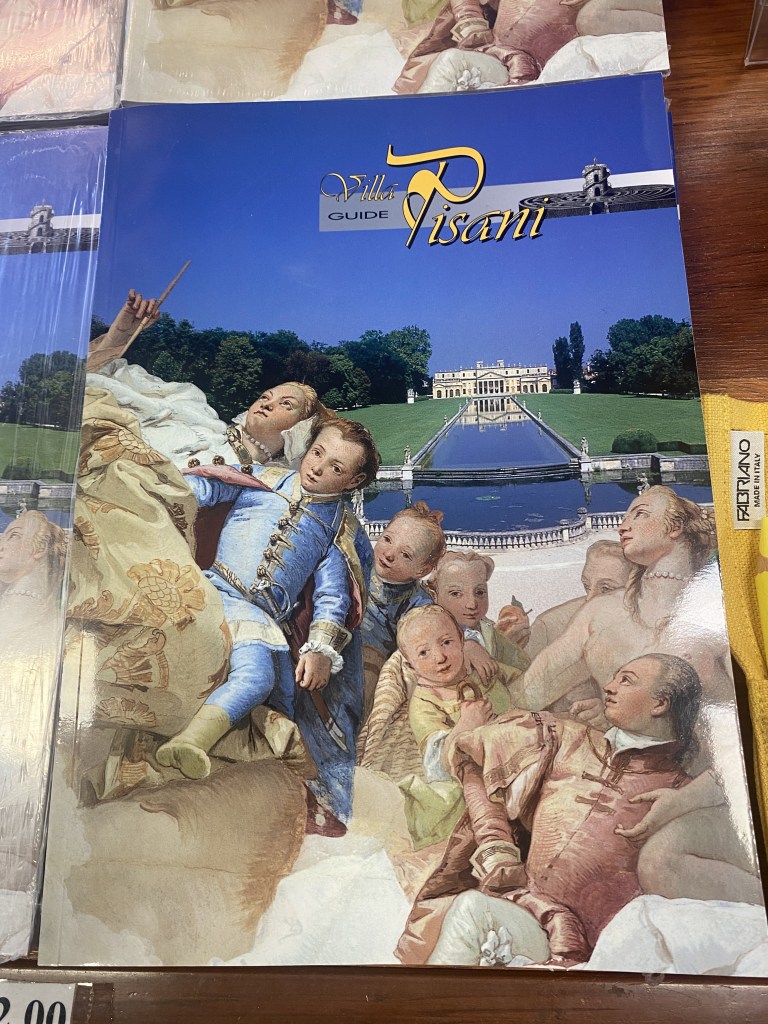
The Pisani villa is a long, three-story palace crowned with statues. The old religious themes of so much art at that time was supplanted by the deification of Pisani family members, as if they had become the saints and angels of the faith. In the giant ballroom in the center, family members are painted in the ceiling being assumed into the clouds of heaven. The entire upper half of the ballroom looks like a Renaissance church interior, but the effect of carvings and 3-D detail is an illusion, created by painted trompe d’oeil.
“Trompe” is French for trickery, like “trump” in a card game. Speaking of which, card games in this villa were played at tables on in-laid wood arranged around two rooms full of frescoes from Roman mythology. Napoleon installed fireplaces and the most modern toilets of their time for the two nights he spent here.
Mussolini and Hitler had their first meeting in another room in 1934.
The word “decadent” wasn’t quite right. The whole place seemed more specifically an expression of power and wealth displayed for its own sake, at the end of an era. Gold ornaments were everywhere, in Rococo flourishes.
A less grand villa further along the canal seemed more welcoming. A German family named Widmann had moved to Venice before 1600 in time to acquire enough upper-class status and wealth to build their villa in Mira, called the Widmann or Foscari Villa.
It has many of the same features of the Pisani villa – Rococo excess, mythological frescoes (the abduction of Helen by Paris was reproduced on our cruise boat, Il Bruchiello), and the apotheosis of the Widmann family.
But our walks under the shade trees in back, among weathered statues and a pond, made it seem more fit for human enjoyment. Inside, the tour guide described the long “summer” months (until November 11th!, the Feast of St. Martin) of parties, games, visits from neighbors and long conversations over wine.
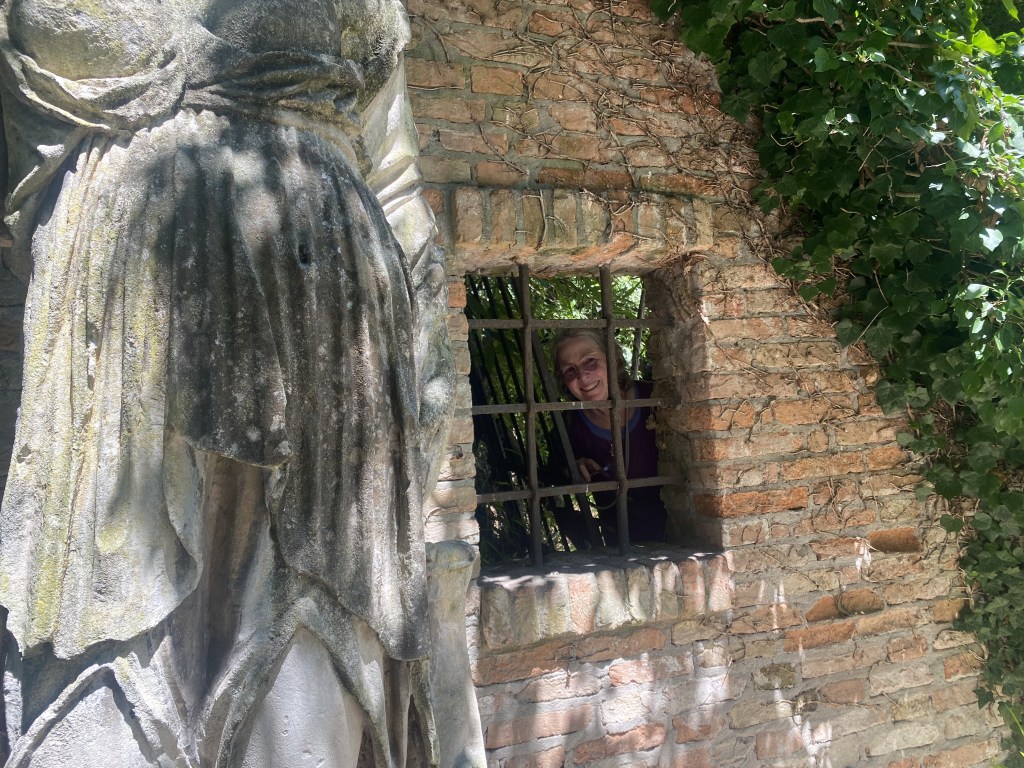
This picture seemed familiar, somehow. It was described by an 18th century playwright from Venice named Carlo Goldini, who spent happy times in this villa. The Widmanns had commissioned Goldini to write a series of plays called “Smanie per la villeggiatura,” on the theme of “pining for vacation” in the country. The writer recalled those days of leisure in his memoir.
I’d never heard of Goldini, so I read about him later online. He was a lawyer, but loved the theater and wrote many successful comedies. Their success, among audiences both rich and bourgeois, was due to the way he captured everyday Italian life and language (including Venetian dialect). Goldoni invented a comic realism that was free of the conventions of Italian theater left over from Commedia del’Arte and Carnevale. He wrote a satire of Mozart’s opera called “Don Juan Tenorio.”
“Here we are in nice Mira, decorated with beautiful gardens and palaces,” Goldoni wrote of the Widmann villa. “We leave the canal and breathe, walk, lunch and then we go back.”
I know a summer place with no villas, but a special joy and ease felt around a lake in the mountains, as it’s been for generations. My late father, like Goldoni, loved the theater so much that he wrote short musicals to be put on at the summer place – and about that summer place. That’s what seemed familiar about the Widmann place.
Don’t we all “pine for vacation,” for relief from the hectic life? Isn’t that what draws these crowds to Venice?
I think it’s time for me to get back to that summer place. Ciao, bella Italia.


Leave a Reply