Sabine Rollberg was the perfect interpreter for us in Germany.
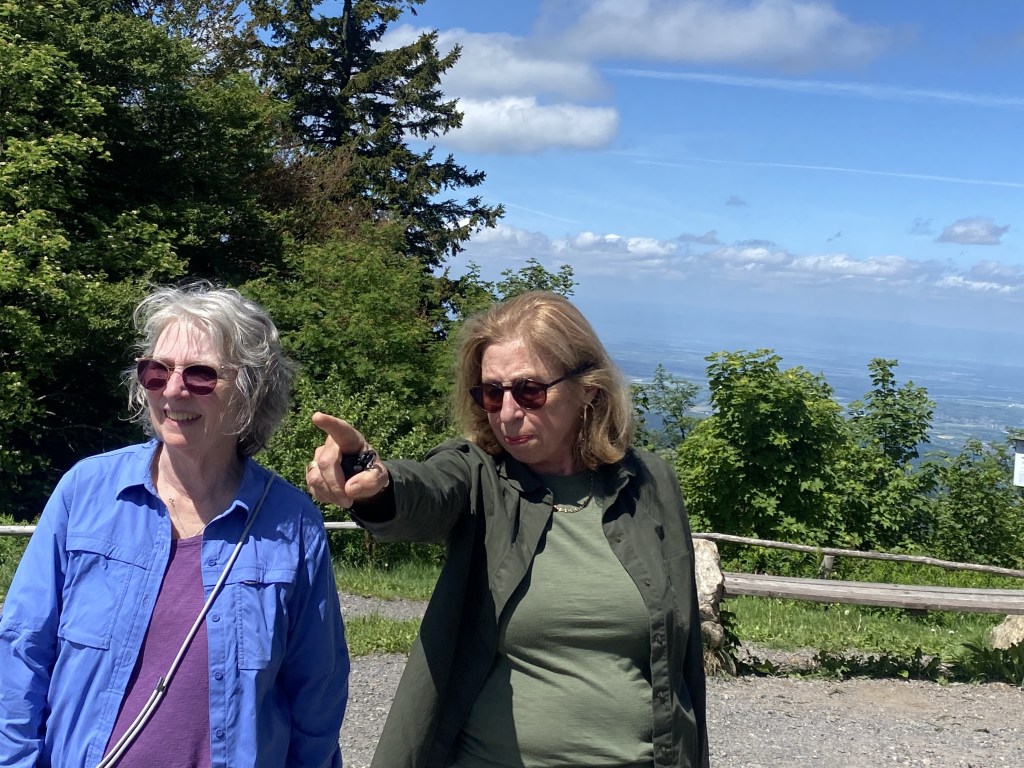
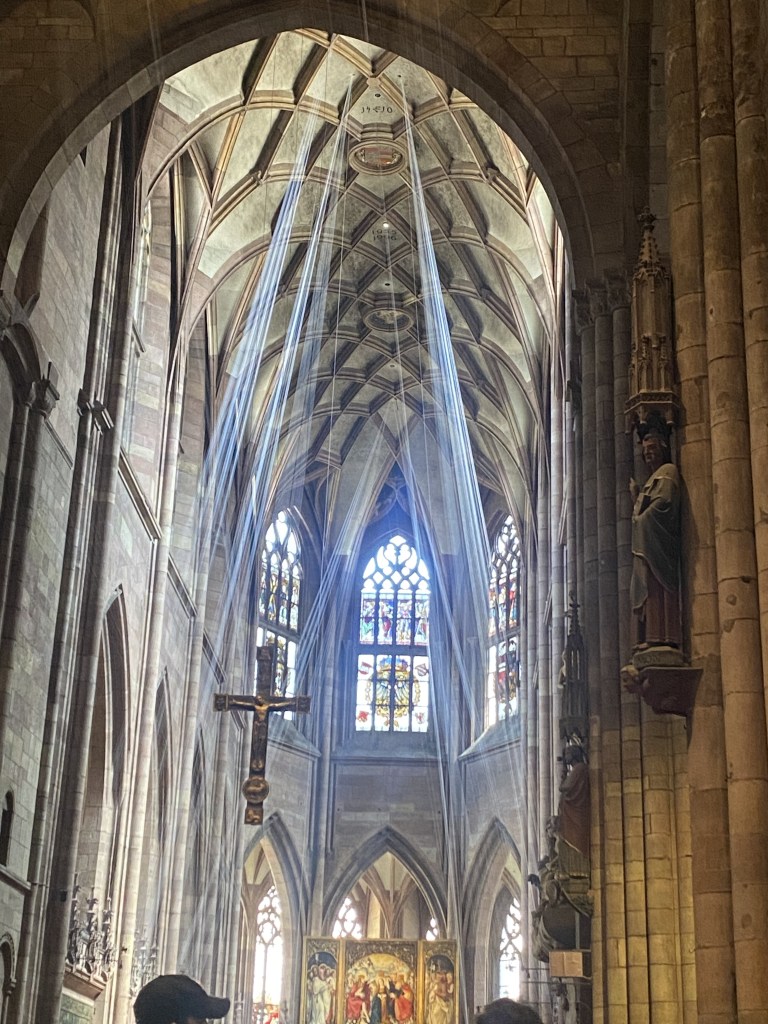
When we were at the Saturday market next to the 13th century Gothic cathedral in Freiburg, she recommended and ordered “The Big Red One,” translating the name for a popular local double hotdog.
When a motorcyclist stopped us in her 1988 Saab 900 to warn of a loose hubcap, she detected from his poor German that he was French, and then they talked in French.
When we ordered Black Forest cake or looked at a historical sign in Staufen, the village where the legend of Doctor Faust originated, she enlightened us with literary and gastronomic information in English.
Sabine is a fellow journalist and our dear friend. Her fluent French came in handy when she was a Cologne-based French correspondent for ARD, the German broadcast network modeled on the BBC. And her English came in handy when she was in a sabbatical for journalists with me at Harvard 40 years ago.
The daughter of an actor (she says he was called “The Cary Grant of Germany”) and a modern dancer, Sabine now lives in the top floors of the 1905 house in Freiburg where she grew up. She learned English and French by living where they are spoken. But her education in Freiburg—high school and university—included more formal language instruction. She had two years of Hebrew, five years of Greek and nine years of Latin.
What?!?!
I asked why she had this kind of training, which sounded like something a Jesuit professor or a 17th century divine might have at Oxford or Paris.
It was just the humanistic education of Freiburg, she said with a shrug. For all her experience in political journalism and this humanistic education, Sabine exudes a curiosity and love that leaves no space for ego-pride. Maybe that’s one effect of a good humanistic education.
There was no science, she says.
The University of Freiburg, where Sabine now teaches, was where Edmund Husserl taught philosophy between 1916 and 1928. Husserl was one of the most important philosophers of the 20th century, the founder of what is called Phenomenology.
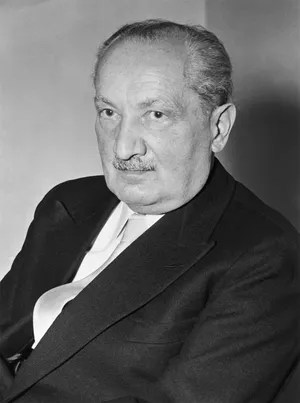
At Freiburg, one of his students was Martin Heidegger, the philosopher who gave Existentialism to Europe with his 1927 work, Sein und Zeit (Being and Time). Heidegger’s lectures at the universities in Freiburg and Marburg made such an impression that the political writer Hannah Arendt said his renown was like a “rumor of a hidden king.” She had a long and close relationship with him.
Heidegger was elected by the faculty to become rector at the University of Freiburg in 1933. His reputation today is tainted by his joining the Nazi party at this time, when Hitler’s “national revolution” was being implemented at German universities. This was when Hannah Arandt had to flee to Paris because she was Jewish and Husserl was banned from the university library because of Jewish ancestry.
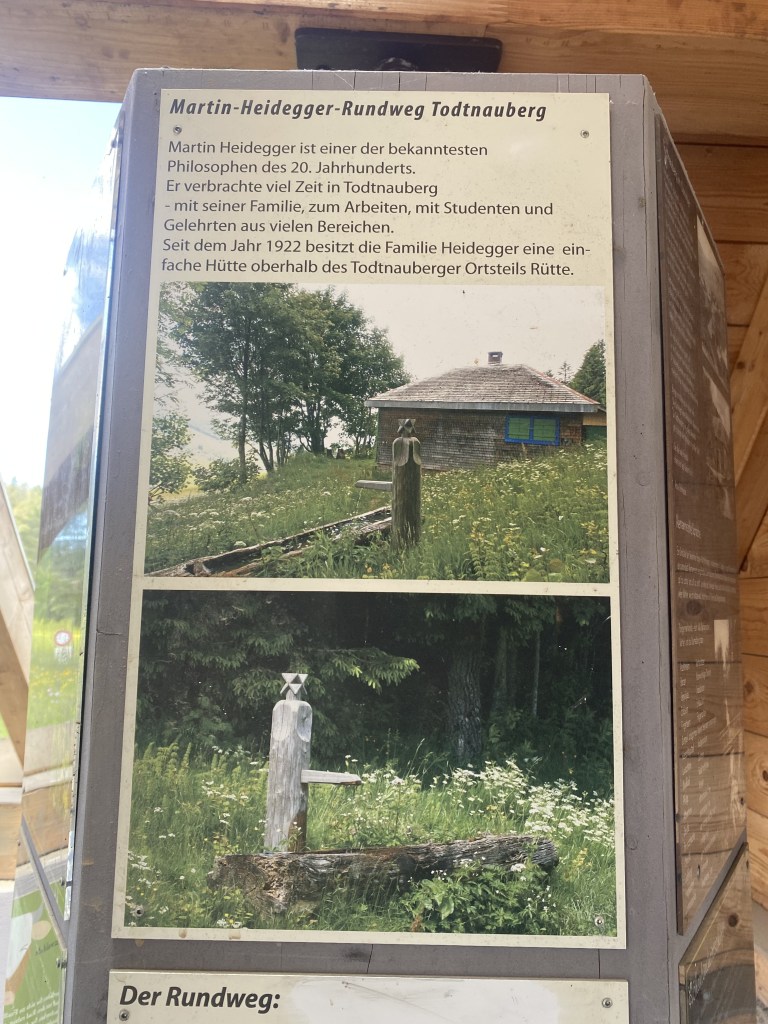
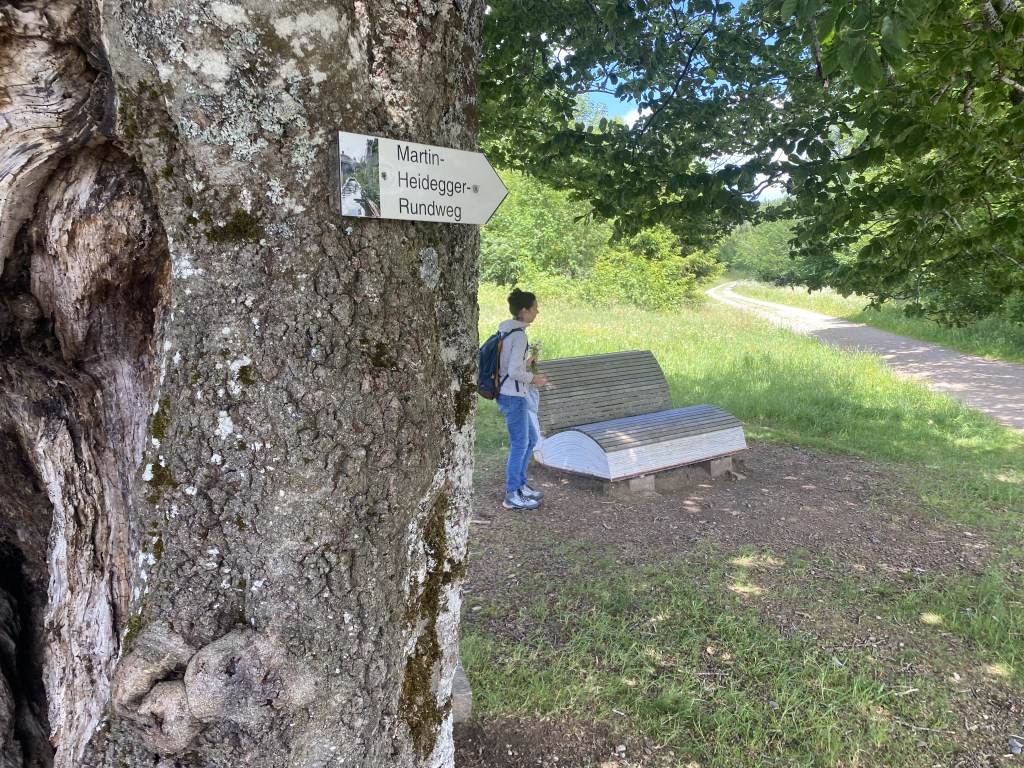
Still, Heidegger is remembered fondly in the pastoral town of Todtnauberg, in steep green pastures of the Black Forest. We hiked part of the “Heidegger Rundweg,” the circuit around where he lived in a “hut” there with his family.
The story of Western philosophy seems to have come to an end here, where Heidegger lived in peace in a cabin not much bigger that Thoreau’s on Walden Pond.
You can get lost in Phenomenology or in Existentialism. But they seem to be side roads off the main highway of Christian theology since the 16th century, after some awfully bloody wars. (Heidegger, raised Catholic, is said to have had a spiritual crisis after reading Martin Luther and John Calvin, then gave up on both Catholicism and Protestantism.)
One thing that sticks with me, after three months of tromping around the churches and museums of old Europe, is the peculiar humanism that distinguishes Catholic Christianity from other religions of the world.
Of the many interesting books in German and English in Sabine’s home – she was surprised to know she had such a book – was one called Catholicism: A Journey to the Heart of the Faith by Robert Baron, a priest. It frames this humanism as the central doctrine of Catholicism, the Incarnation.
“. . .the Word of God – the mind by which the whole universe came to be – did not remain sequestered in heaven but rather entered into this ordinary world of bodies, this grubby arena of history, this compromised and tear-stained human condition of ours. ‘The Word became flesh and made his dwelling among us,’ (John 1:14), that is the Catholic thing.”
Earlier in our travels, a friend told us that the only valuable lesson he remembers from Georgia State University was a distinction that a professor made between Christianity and Buddhism. The professor said Christianity was a religion of “Either/ or,” while Buddhism was “Both/ and.”
This distinction became a running theme for our group in Urbino, where this friend declined to attend a Sunday Mass with the rest of us (none of us Catholic, but awed by it in the Urbino Duomo). We agreed that “Both/ and” is the bigger truth, for those with a gift to embrace paradoxes.
It’s true, I think, that Christianity has moral judgments and scriptural stories that are “Either/ or.” You’re either a sheep or a goat; either the unrepentant thief crucified on one side of Jesus or the one who pleads with Jesus on the other. (Among the beautiful frescos by Giotto in the Scrovegni Chapel in Padua, the Last Judgment features on the right, horrible images of Satan and his obscene subjects and on the left, a line of saints crowded on a ramp rising toward Christ. How about “Neither. . .nor”?)
But this doctrine of the Incarnation is irreducibly “Both/ and,” more than any other philosophy or religion, it seems to me. Philosophers of the church insisted, from early on until today, on the ultimate paradox of Jesus – that he was all God and all man. One hundred percent plus 100 percent equals . . . a Mystery. Both/ and.
Philosophy is still alive at the University of Freiburg. The son of Germany’s beleaguered Chancellor Frederick Merz broke with his father’s conservative politics, Sabine told us. We were walking home from dinner and passed an institute that this younger Merz had started. After getting a Ph.D. in philosophy at Freiburg, he founded Thales Akademie.

“The Freiburg Philosophicum is dedicated to the existential questions of humanity at the intersection of medicine and philosophy,” the Thales website says.
It’s called für angewandte Philosophie, applied philosophy.


Leave a Reply