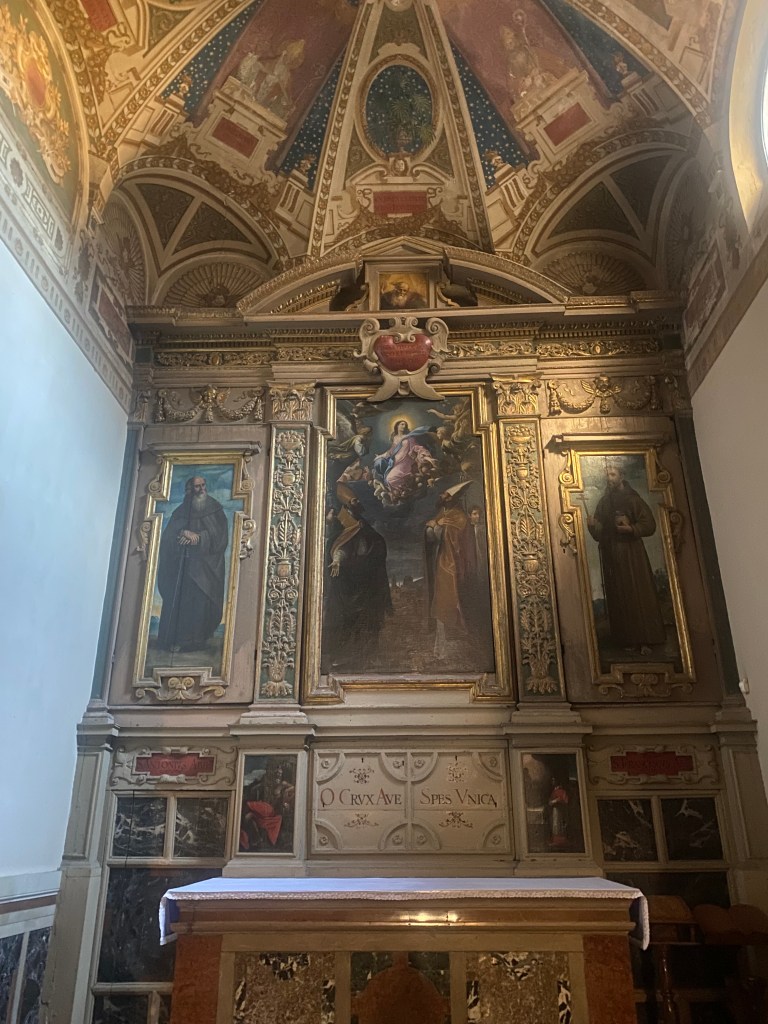
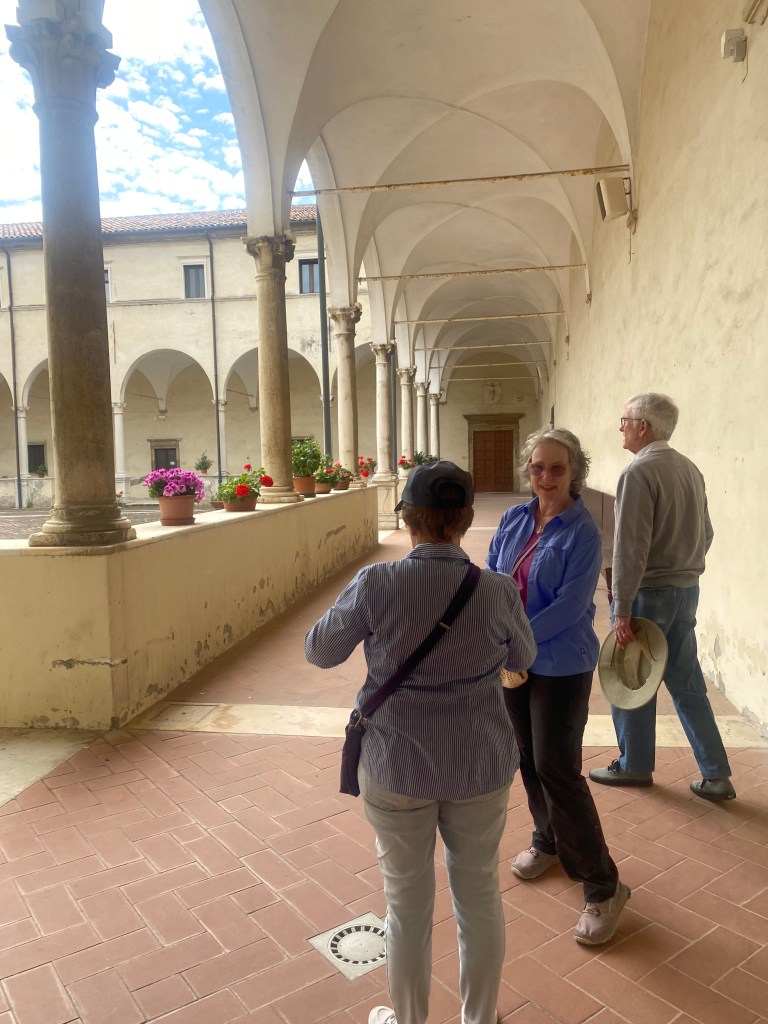
Twice, we have walked a circuit of ancient Catholic churches in Fano when they were not having Mass. We admired the art, the architecture and the emptiness, from one to the next: The 1140 A.D. Cathedral, the 14th century Church of San Tommaso Apostolo (restored, 1897), the Church and Convent of San Paterniano, the Church of San Marco, and a few others.
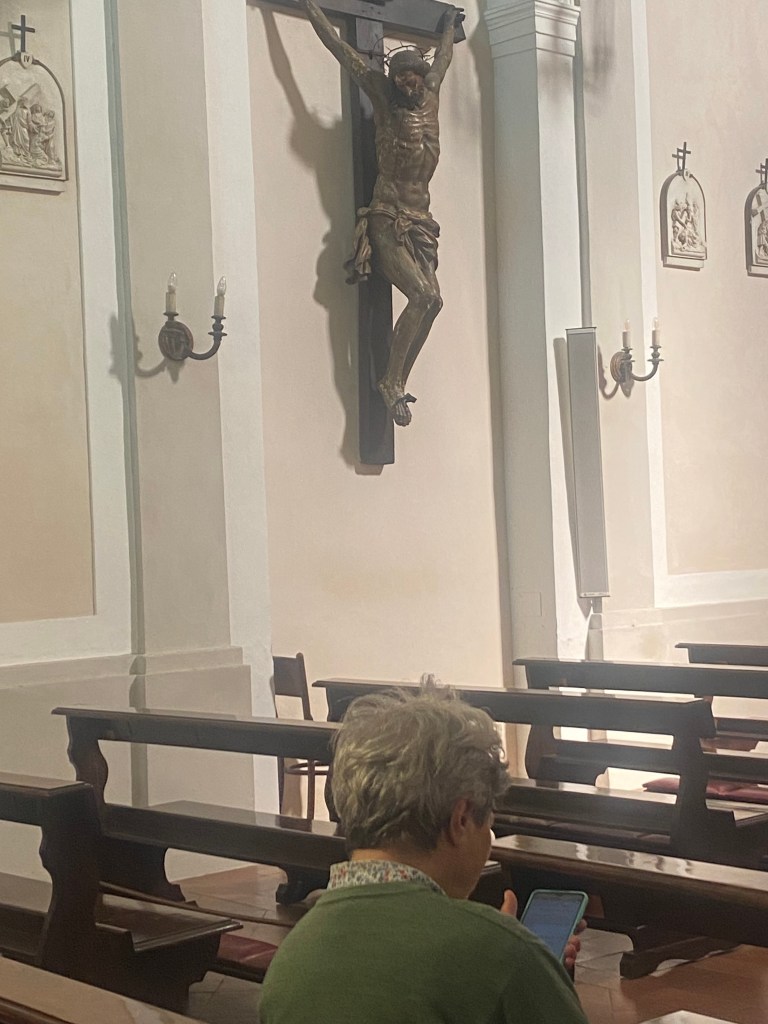
I have tried to understand a couple of Sunday Masses at the Cathedral, without taking Communion. I could barely follow the Italian, made more difficult with the acoustics and the rapid unison of responses from a large congregation.
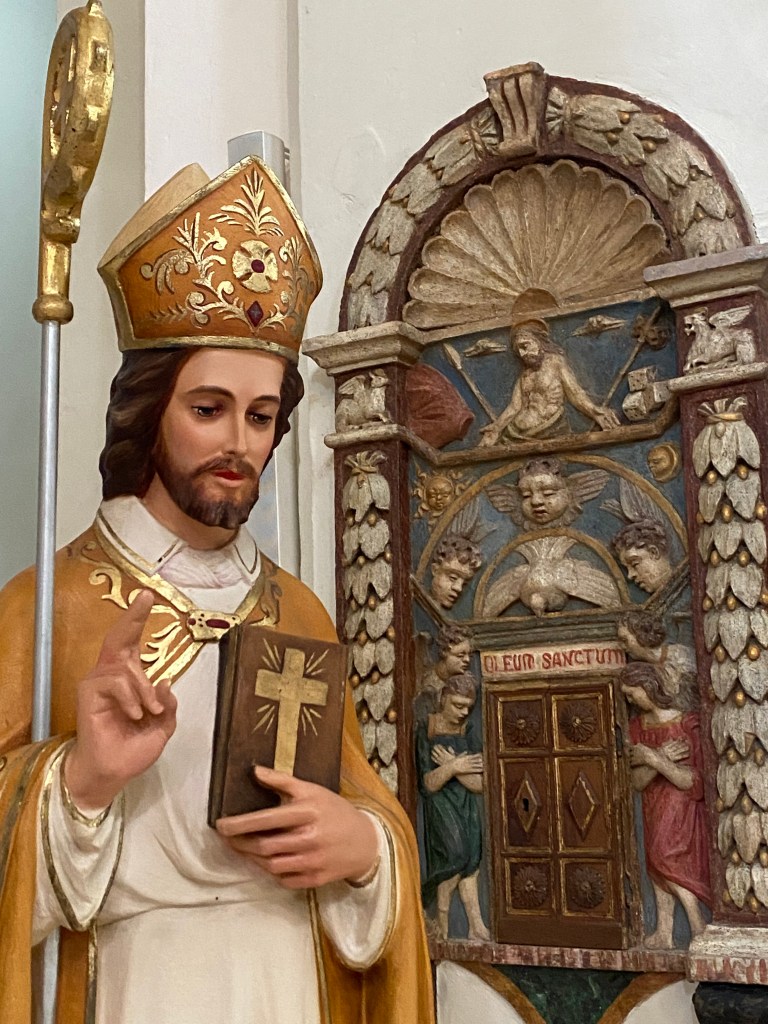
In the empty churches and museums, too many paintings and sculptures of saints, bishops, and Italian versions of Jesus, Mary, and Joseph lost me. The medium seemed too alien.
But tomorrow is Pentecost Sunday. The confusion of tongues on earth since the catastrophe of Babel is reversed. Those gifted with the good news, suddenly, are speaking in the language that a foreign pilgrim like me can understand.
I’m not Roman Catholic, but there is a voice from Rome that speaks to me with surprising clarity.
I first encountered that voice in the encyclical that Pope Francis issued in 2015 called “Laudato Si.” I read it because I am an environmentalist. I was troubled, more spiritually than politically, by our addiction to fossil fuels and the effects we knew it was having on everything – rising seas, cities clogged with cars, expensive military bases for the Strait of Hormuz (even back then, we knew), Russia’s corruption, etc., etc. I decided to read this Roman Catholic position on climate change.
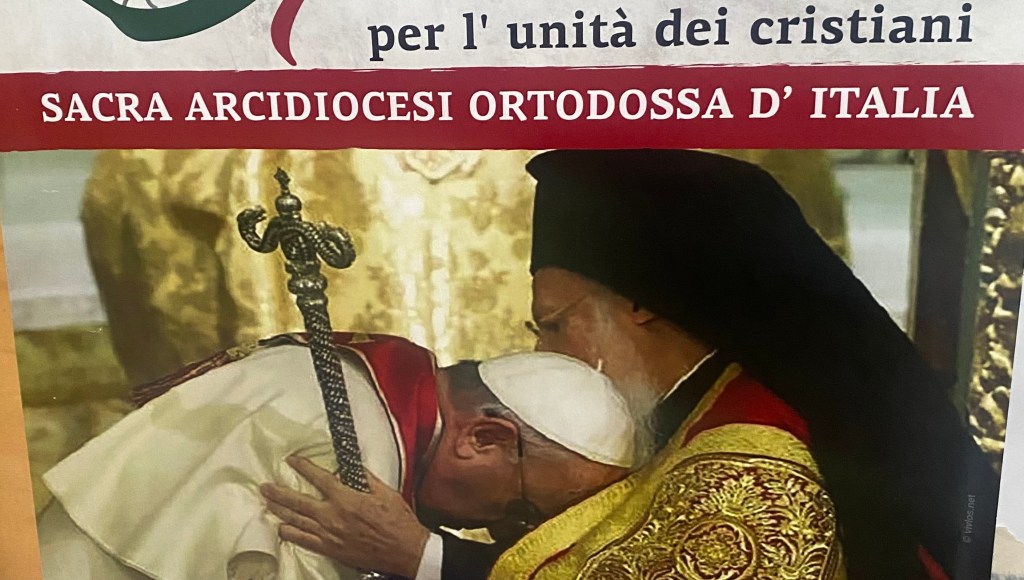
It was so much more. It was a long, logically crafted worldview that tied our addiction to fossil fuels to so many other moral lapses in our behavior and attitudes. Pope Francis, the first pontiff from the religious order of St. Francis of Assisi, spoke in the spirit of St. Francis. The earth and her creatures are our brothers and sisters.
I was struck, even shocked, by how my slow practice of Christian formation, so piecemeal and abstract, had found a real authority in this encyclical. Not only this one, but others that it cited, with hyperlinks that took me back to them. The first encyclical of Pope John Paul II, “Redemptor Hominis,” against exploitation and consumption of natural resources, seemed the deepest sort of truth. And Pope John XXIII’s 1963 encyclical on nuclear weapons, “Pacem in Terris,” seemed not panicked but prescient.
And a much older encyclical, Pope Leo XIII’s 1891 “Rerum Novarum,” on the exploitation of workers by Gilded Age industrialists, refuted both socialism and unregulated capitalism, on the basis on human dignity. I have a Protestant aversion to the scandals and hoardings of Roman Catholic power, but these were amazing. I couldn’t disagree with anything I was reading.
On Monday, the first American pope, Pope Leo XIV, will release his first encyclical, “Magnifica Humanitas.”
I have read some commentary anticipating the release of this document. Jesuit and other Christian writers are excited to note that Pope Leo XIV signed the document on May 15, the anniversary of the pro-worker “Rerum Novarum” of Leo XIII (whose name, “Lion,” he took as a tribute). They note that he is releasing the document with unprecedented intellectual fanfare, speaking at the Vatican along with other authorities about the dangers of Artificial Intelligence (and possible blessings, if controlled for human flourishing).
An op-ed in the New York Times by a professor of religion and culture was headlined, “Pope Leo Favors Social Justice Over Pelvic Theology.” That was a headline writer’s shorthand for a trend in Catholic teaching away from “morals” exclusively about sex (an emphasis that handed pro-life Catholic voters to Trump) to broader moral reflection and wholeness.
The only cautious note I saw came from Catholic-convert J.D. Vance, who said he guessed the encyclical would “contain a lot of insights, some of which I’ll probably agree with, some of which I may not . . .”
Being an American in Italy right now, I like to think about an underlying premise that ramifies in all of the encyclicals I have read – human dignity. This is often phrased in terms of the “innate” and “inviolable” worth of “the human person” made in the image of God, every individual past, present and future. It is what makes sense of the crazy notion that “all men are created equal,” based not on intelligence, good looks, good health, wealth or entertainment value, but simply being human.
When an art critic wrote that Italy was the most “humanized” of European countries, he was talking about the Renaissance. But I find this humanity in a culture of kindness and beauty here, the humanity of families that take care of their generations and their visibly disabled. “I am with you always,” Jesus said, and he could have been referring to the poor, whom also “you will always have.”
I don’t know enough Italian to say how “human dignity” is expressed in their language.
But language itself, to me, is the great mystery that points to what makes humanity human. Something different happened when homo sapiens could share symbols to make meaning. To make jokes, war, money (absurdly symbolic) and love. Other animals may have the seed of this thing – symbolic meaning making – but it is not merely “communication.” Whatever it is, it’s not physical, though it relies on our bodies. It is more than our hardware, and more than software.
We mistakenly think of evolution as changes that we can trace back in time. Even the complexity of human language, culture and meaning, “great as [that complexity] is, certainly is one of degree and not kind,” Darwin wrote in trying to make sense of “the descent of man.” But it isn’t just “descent.” Something radically different, original, seems to have happened when human language broke in. A new dawn, and maybe not the last, in cosmic time. Language is a baffle to science, though scientists can brilliantly explain the surfaces – the neurobiology and linguistics – and engineer this powerful new thing, AI.
But AI is not organic, not conscious. It is not ethical, and not human. To be human is to be liberal (i.e. “free”), to be “magnificent.”
Let’s see what Rome has to say about it, and where humanity stands at this point in our evolution.


Leave a Reply