I am sitting on a bench facing the giant trunks of two tall trees twice my age – a Norway spruce and a Ginkgo.
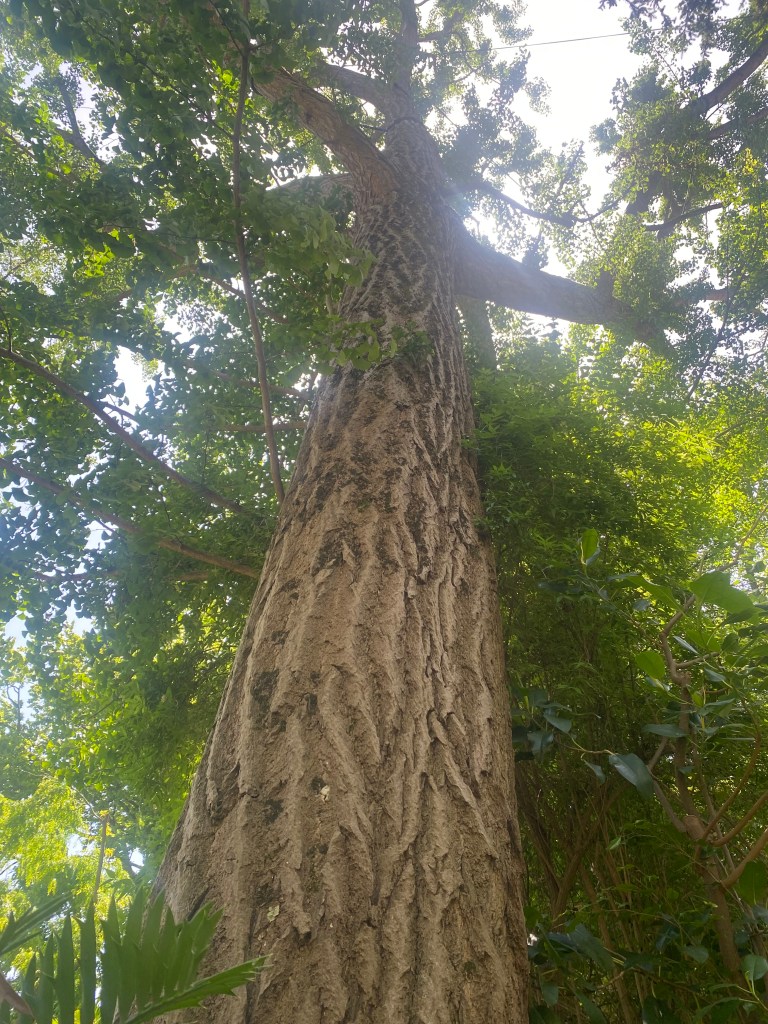
The Norway spruce, native as far south as the Italian Alps, was called picea excelsa (very tall pine) by the Romans. This Ginkgo is only 150 years old, but might live another 1,000 years here in Urbino. Its ancestors were around in the Jurassic era.
This is the Botanical Garden of Urbino, originally the garden of an 13th century Franciscan monastery. It was turned into a botanical laboratory in 1809, the year a Pope gave up the university here to Napoleon. I have written in this blog about the way rural Italy seems to us to turn nature into a garden, metaphorically. Here, a garden is metaphorically turned into a library.
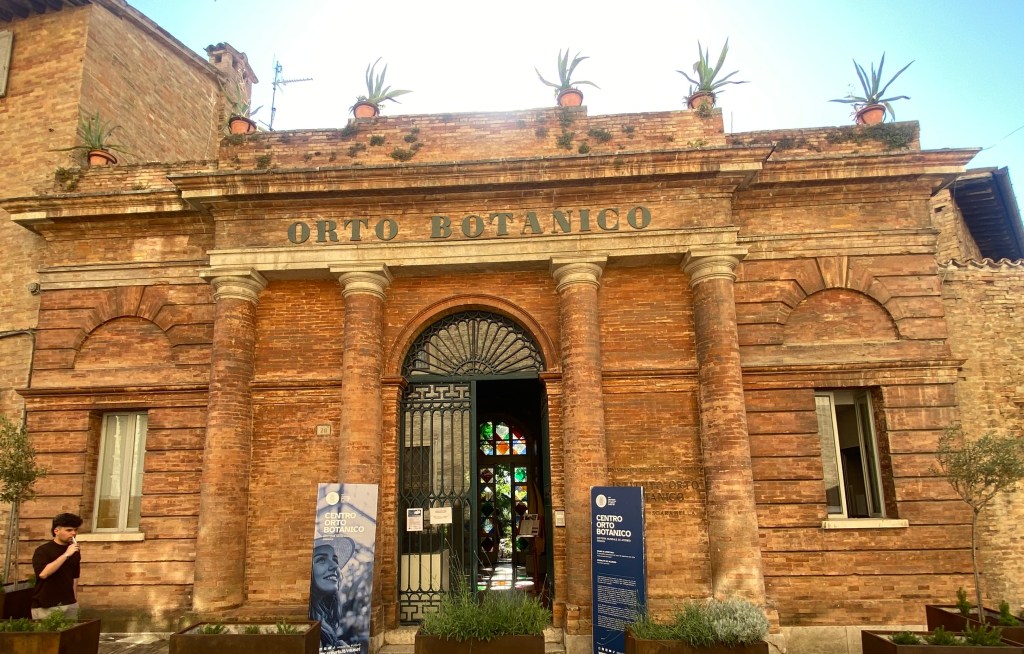
Outside, the terracotta façade of “Orto Botonico” is as fanciful as any neoclassical church’s, with aloe or agave plants on top like tufts of hair. In the vestibule inside, you find fresco murals and an office with hundreds of glass bottles holding dried extract of plants with beautiful hand-written identifications. The collections on one wall are from the 20th century, and those on the other wall from the 19th century.
Then you enter an outdoor maze of flowerbeds, trees, sunlight, shade, sculptures, a greenhouse and a green hush that is kept by the few visitors. The flowers, cacti, trees and other plants are identified and explained in signs, in Italian and English. The emphasis is on the history and medicinal uses of the various parts of each plant, like improving the heart, blood circulation, brain metabolism and the aging process.
In this “library” of plant life, I fell into remembering lines from a 17th century poem by Andrew Marvell, “The Garden.” The mind, it goes, withdraws into its happiness. . .
Annihilating all that’s made
To a green thought in a green shade.
I called up the poem on my iPhone. Fifty years after learning it in college, it all made sense now.
Society is all but rude,
To this delicious solitude.
The poem opens with the idea that the wreaths that winners of contests (athletic, poetic or political) wear on their heads merely degrade the “palm, the oak, or bays.” I’ve seen these wreaths on the heads of Dante and Petrarch in the ducal palace, and on the heads of graduate students in their wild graduation celebrations in the piazza. Marvell reverses this symbolizing of plants to return them to their pure pre-civilization essence. In itself, the plant that victors wear on their head “does prudently their toils upbraid.”
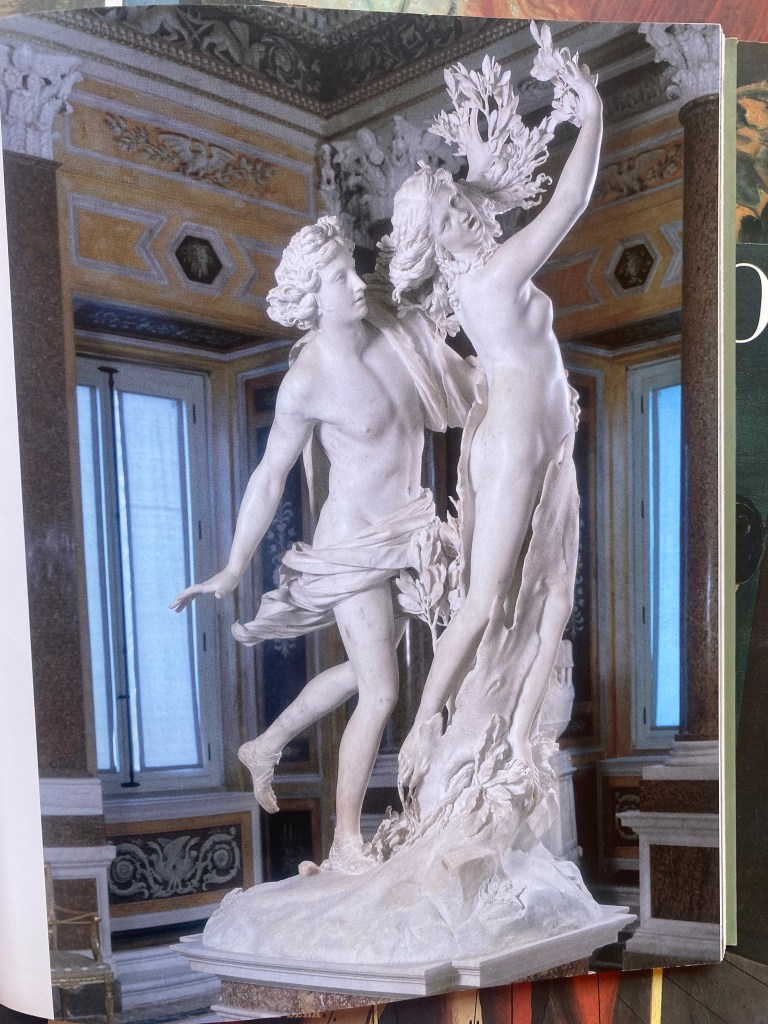
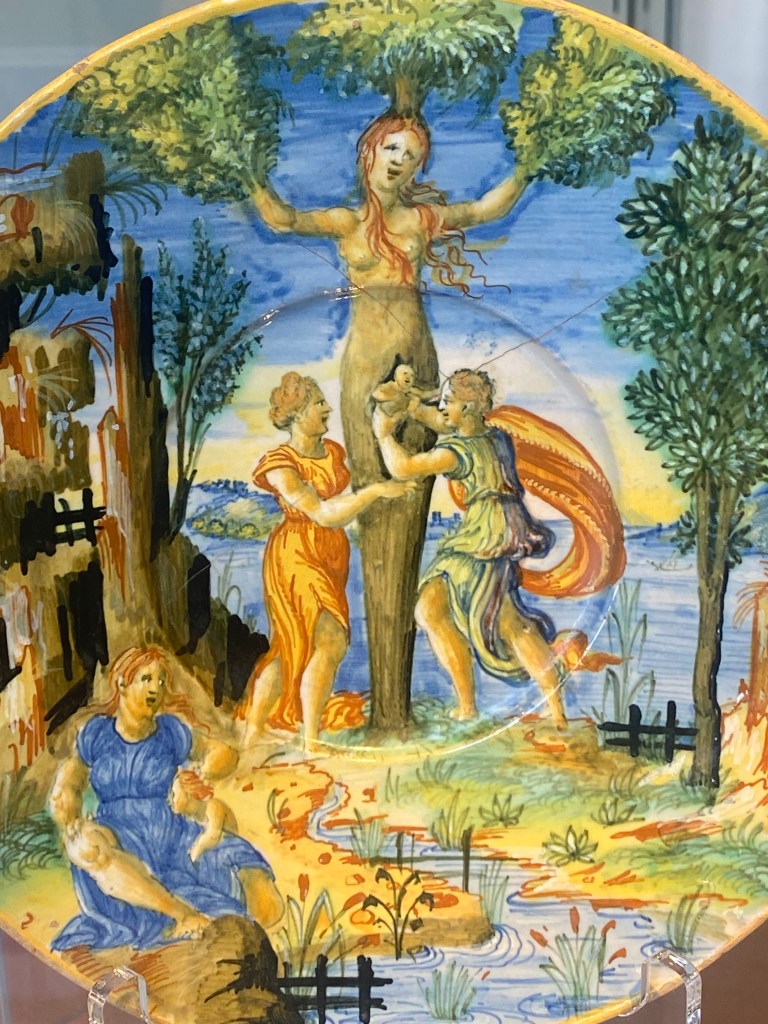
I have seen in Urbino’s museum art the myths of women turning into a tree or a reed, rather than be seduced by some wayward god. Better to be a tree, Marvell says. Any tree is more beautiful than the beloved whose name is carved in it. I think he stole that from Shakespeare.
And then there’s this intoxicating stanza:
What wondrous life is this I lead!
Ripe apples drop about my head;
The luscious clusters of the vine
Upon my mouth do crush their wine;
The nectarine and curious peach
Into my hands themselves do reach;
Stumbling on melons as I pass,
Insnared with flowers, I fall on grass.
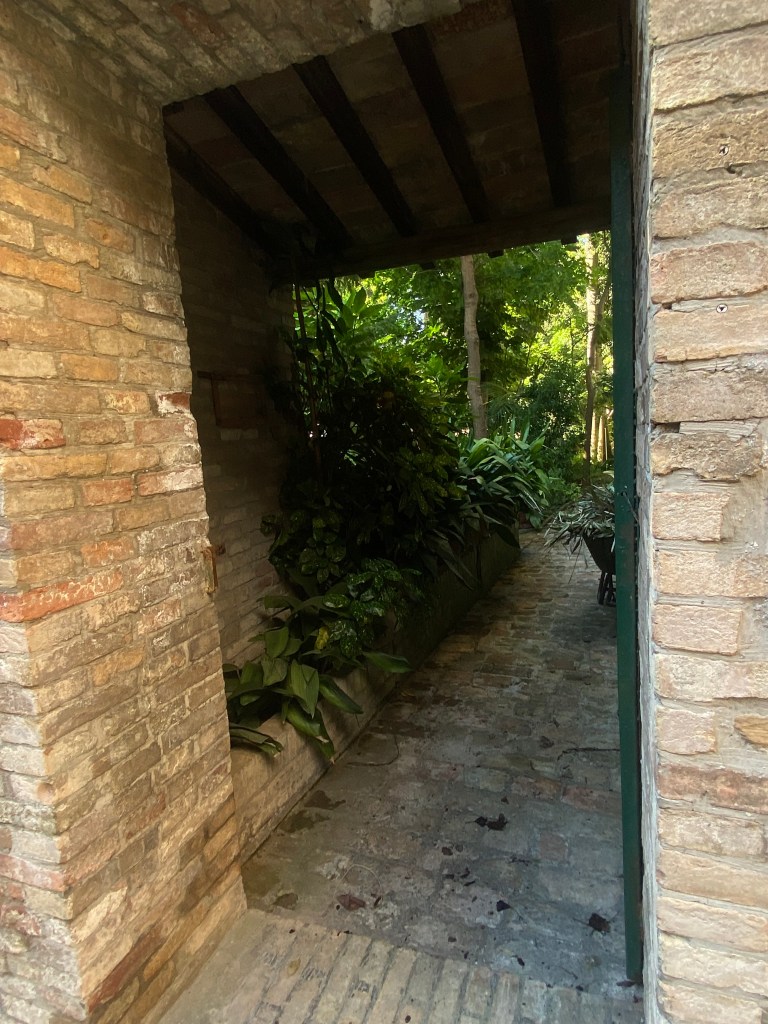
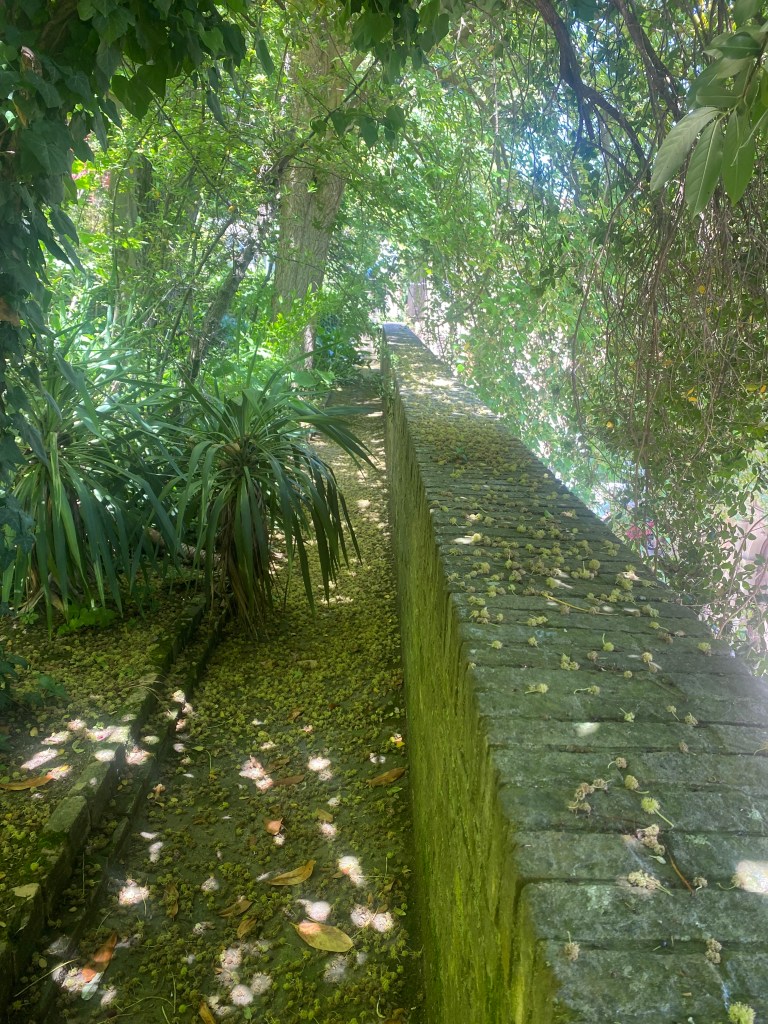
Wandering the tranquil paths of the “Orto Botanico” was like being inside that 17th century poem. I especially love the peek into this Botanical Garden from outside, through a brick wall’s opening on the steep side, or looking up at it when you’re on the low cobblestones behind it. It’s a cloister of wisdom. The science of plants seems more timeless here, like Chinese medicine or other ancient knowledge of how plants relate to the human body. The effect is as old as the old story of our innocent origin in a garden.


Leave a Reply